Did China warn Nepal about deadly flash floods in advance?
What's the story
Three months before devastating flash floods hit the Nepal-Tibet border, Nepali and Chinese officials discussed disaster risks in Kathmandu. However, two Nepali officials told Reuters they didn't receive as much data as desired on glacier movements and extreme events, and they feared insufficient data sharing could hinder them from anticipating and preparing for major disasters. China maintains it shared important information "in a timely manner" and made "substantial progress" in cross-border disaster information-sharing.
Disaster aftermath
Glacier collapse killed over 800 people
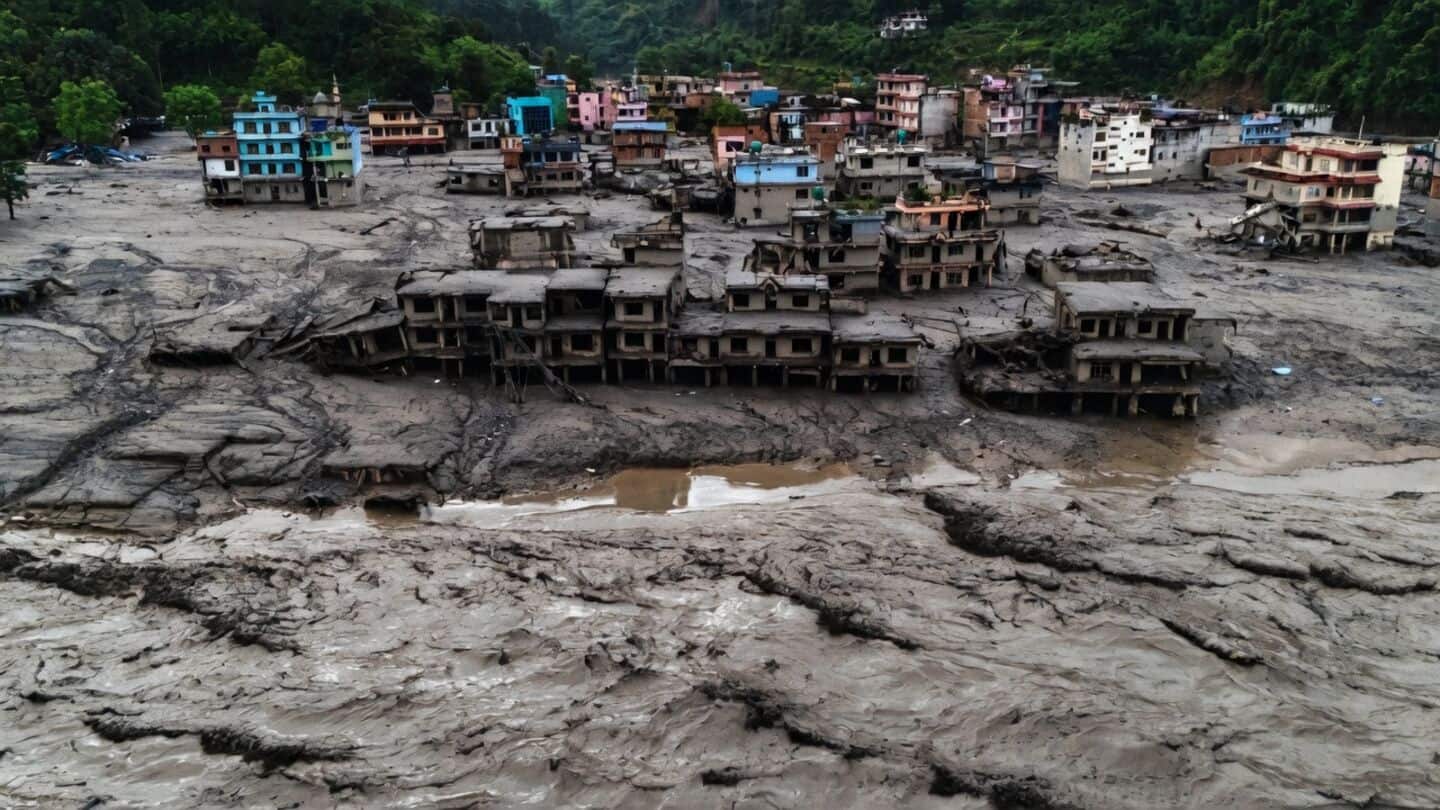
The disaster struck on August 26, when a glacier collapse sent a torrent of water and debris through the region.
The floods killed over 800 people and left more than 3,000 missing.
China has rejected claims of inadequate warnings, stating that monitoring hazards in the remote Himalayan border region is difficult.
Data demand
China provides heavy precipitation forecasts
Nepal's government hydrologist Binod Parajuli said China provides heavy precipitation forecasts, but this did "not" include information on "avalanche and, water level, landslides, extreme events."
China started sharing these forecasts about a month ago through WeChat and email.
Twelve days before the disaster, China's World Meteorological Centre warned of enhanced rainfall and possible secondary hazards.
Future measures
Nepal wants glacier-related information every 10 minutes
Nepal now wants glacier-related information every 10 minutes to better prepare for future disasters.
Parajuli said they plan to propose a data-sharing agreement similar to the one with India.
However, experts caution that slow progress in bilateral data-sharing wasn't a major factor in this disaster, which was caused by a glacier collapse in a relatively unmonitored area.
Construction impact
Chinese construction around Gyirong 'damaged' Himalayan ecosystem
According to Down To Earth, social media-based handle Nepal Correspondence claimed that Chinese construction around Gyirong had damaged the Himalayan ecosystem, contributing to the floods.
The account alleged hills were cut, and construction was done along natural water courses.
However, these claims haven't been independently verified.
Nepali and Chinese authorities have blamed a glacier collapse for the flash floods, involving an estimated five million cubic meters of ice and rock.