'Unprecedented crisis' after India's Indus Treaty move: Pakistan tells UN
What's the story
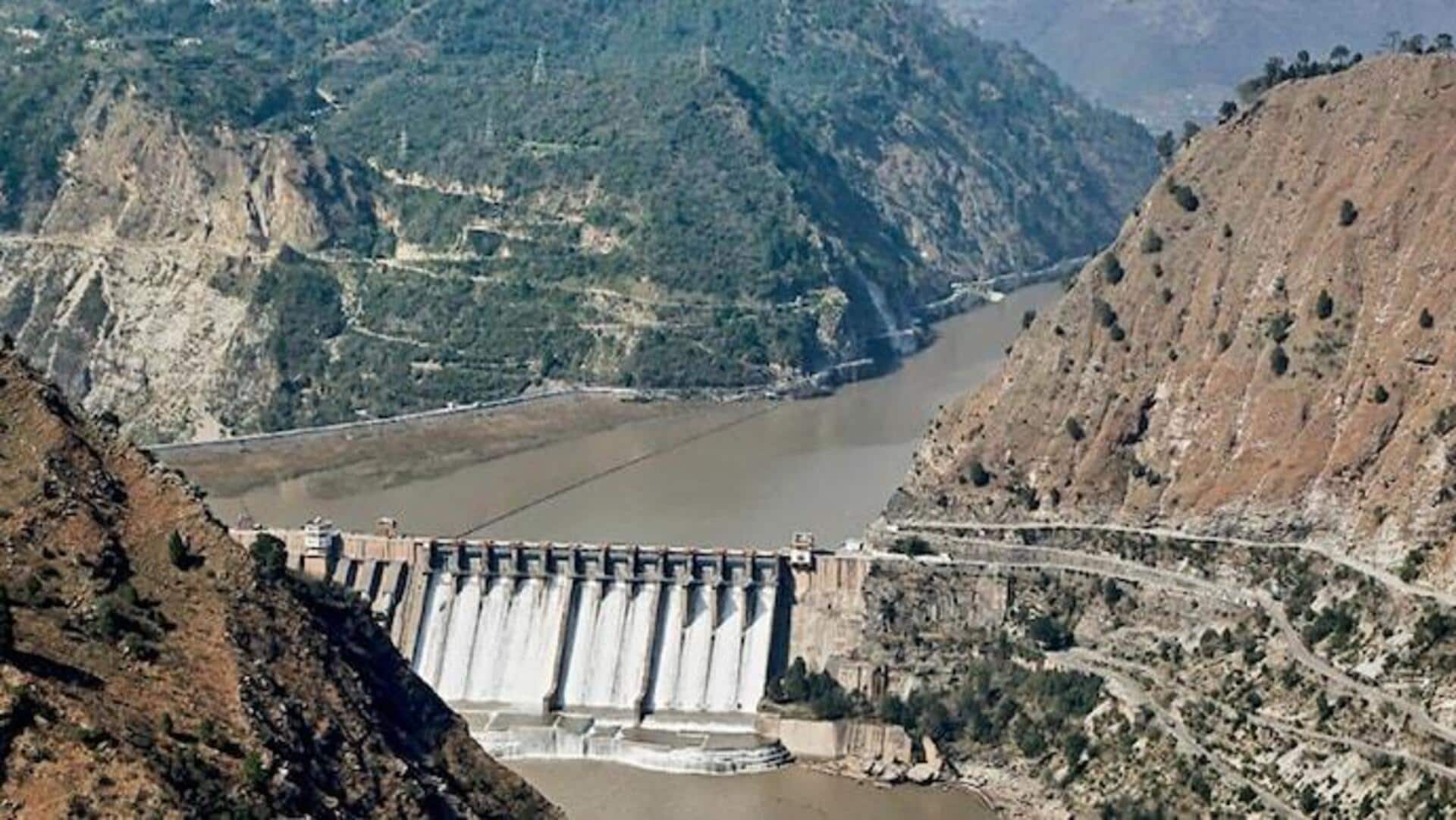
Pakistan has approached the United Nations, expressing grave concerns over India's suspension of the Indus Waters Treaty. Usman Jadoon, Pakistan's UN representative, called India's move a "weaponization of water" and a violation of the 1960 treaty. The treaty allowed India unrestricted use of eastern rivers (Sutlej, Beas, Ravi) while Pakistan received water from western rivers (Indus, Jhelum, Chenab). However, since April last year, Islamabad claims it has been unable to anticipate water levels and plan agricultural demands effectively.
Treaty suspension
India's treaty suspension follows Pahalgam terror attack
India suspended the treaty after a Pakistan-based terrorist attack in Jammu and Kashmir's Pahalgam on April 22, 2025. The attack killed 26 civilians and was carried out by a group linked to Lashkar-e-Taiba. Following this, India stopped sharing flood warning messages and irrigation statistics with Pakistan from April 23, 2025, onward.
Water dependency
Pakistan's water security at risk, agriculture dependent on Indus waters
At an international water policy meeting, Jadoon emphasized that the treaty was crucial for equitable management of the Indus River basin. He warned that "water insecurity" is a pressing concern in Pakistan due to climate challenges and population growth. "It is our considered view that water insecurity should be acknowledged as...systemic global risk in the run-up to the 2026 UN Water Conference, thus placing cooperation and respect for international water law at the center of shared water governance," he said.
Comments
'Treaty permits no unilateral suspension'
"For Pakistan, this is a lived reality. We are a semi-arid, climate-vulnerable, lower-riparian country facing floods, droughts, accelerated glacier melt, groundwater depletion, and rapid population growth; all of which are placing immense pressure on already stressed water systems," he maintained. He argued that "Pakistan's position is unequivocal; the treaty remains legally intact and permits no unilateral suspension or modification."
Stance
India's stance: No talks until Pakistan acts on terrorism
India's decision to suspend the treaty is part of its new strategy against terrorism from Pakistan. Prime Minister Narendra Modi last year made it clear after Operation Sindoor that India won't engage with Pakistan on the IWT until they act against terrorists in their territory. He said "blood and water" cannot flow together, highlighting India's tough position.