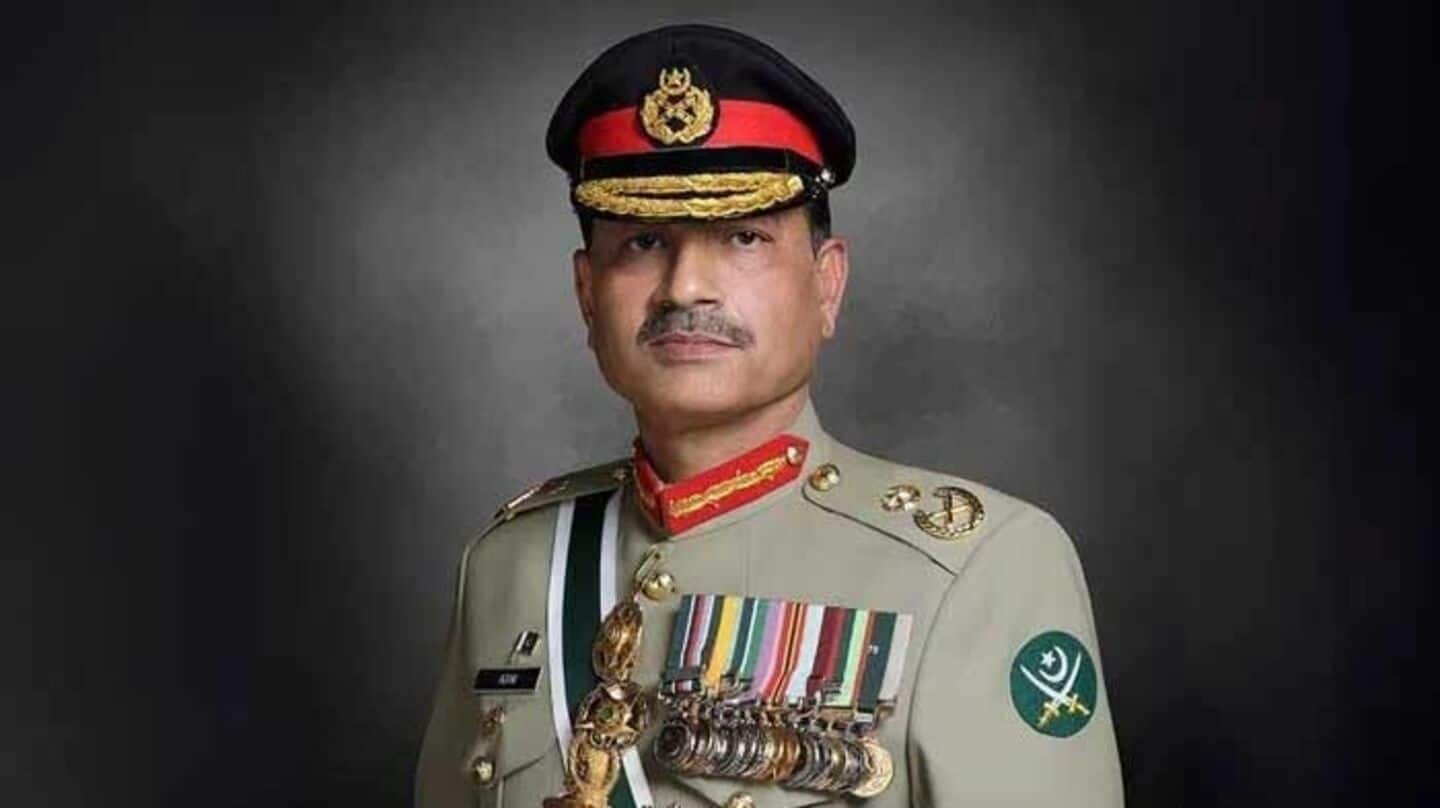
Pakistan's military chief Munir in spotlight over Trump's Gaza plan
What's the story
Asim Munir, Pakistan's most powerful military chief in decades, faces the hardest test of his newly acquired powers as Washington presses Islamabad to contribute troops to the Gaza stabilization force. The Pakistan Chief of Army Staff is likely to visit Washington soon to discuss President Donald Trump's proposed Gaza stabilization force, Reuters reported. The visit will be Munir's third to Washington in six months and is expected to center around the controversial plan.
Plan
Trump's 20-point Gaza plan
Trump's 20-point Gaza plan seeks a force from Muslim nations to oversee a transition period for reconstruction and economic recovery in Gaza, which has been ravaged by Israeli military bombing for more than two years.
Many countries are concerned that the mission to demilitarize Gaza's Islamist group Hamas may drag them into the conflict and alienate their pro-Palestinian and anti-Israeli populations.
Diplomatic relations
Munir's close ties with Trump amid Gaza plan
But Munir has managed to build a close relationship with Trump.
In June, he was invited to a White House lunch, which was the first time a US president hosted Pakistan's army chief alone.
"Not contributing (to the Gaza stabilization force) could annoy Trump, which is no small matter for a Pakistani state that appears quite keen to remain in his good graces, in great part to secure US investment and security aid," Michael Kugelman from the Atlantic Council noted.
Domestic concerns
Munir's unprecedented power and potential domestic backlash
Munir was recently appointed chief of defense forces, extending his term till 2030.
He now heads the air force and navy as well, enjoying lifetime immunity from prosecution under recent constitutional amendments.
However, this unprecedented power comes with risks at home.
Analysts warn that deploying Pakistani troops in Gaza could trigger protests from Islamist parties opposed to the US and Israel.
Regional diplomacy
Munir's consultations with Muslim nations on Gaza force
In recent weeks, Munir has held talks with military and civilian leaders from Indonesia, Malaysia, Saudi Arabia, Turkey, Jordan, Egypt and Qatar.
These meetings seem to be consultations on the proposed Gaza force.
Pakistani Foreign Minister Ishaq Dar had said last month that while Islamabad could consider peacekeeping contributions, disarming Hamas is "not their job."
Internal dynamics
Munir's power and potential domestic unrest
The prospect of Pakistani troops in Gaza under a US-backed plan has sparked fears of domestic unrest.
Islamist parties, which have significant street power, could mobilize against such involvement.
A violent anti-Israel Islamist party was banned in October amid a crackdown on its leaders and supporters.
Abdul Basit from Singapore's S Rajaratnam School of International Studies warned that if tensions escalate with the Gaza force, it could lead to problems for Munir at home.