'Not like India...': Pakistan minister admits zero strategic oil reserves
What's the story
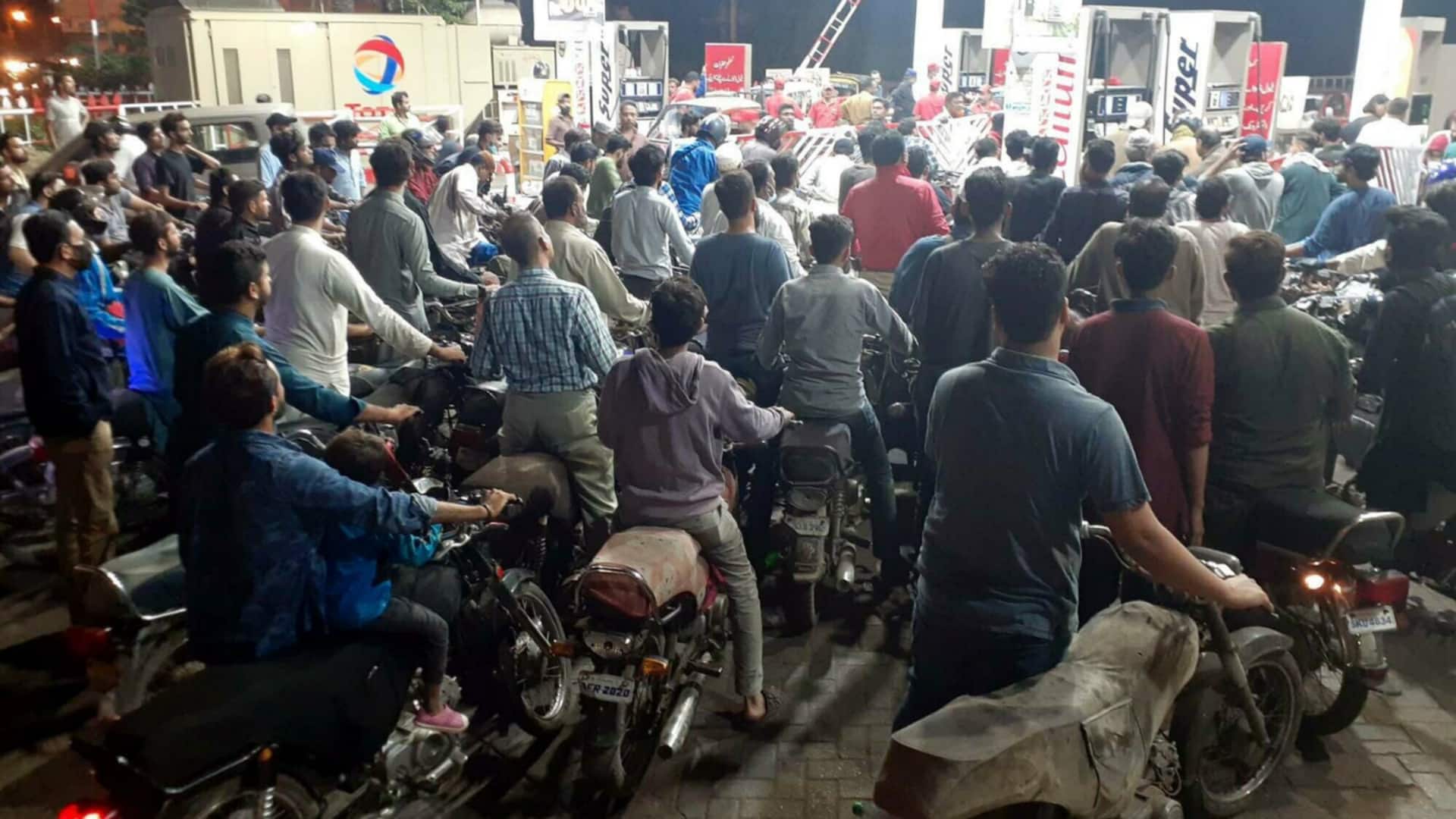
Pakistan is facing a fuel crisis as global oil prices hit $126 per barrel, the highest since 2022. The spike is due to tensions in the Strait of Hormuz. Speaking to Samaa TV, Petroleum Minister Ali Pervaiz Malik admitted that Pakistan lacks strategic oil reserves like India. He said Islamabad has only a few days of crude reserves and commercial stocks that can last for 20-21 days, compared to New Delhi's estimated 60-70 days of combined strategic and commercial stocks.
Energy vulnerability
Petrol reserves for even a day not available: Minister
Malik stressed that Pakistan doesn't have strategic petrol reserves for even a day, making its energy system vulnerable to external shocks.
He compared this with India, saying, "We are not like India, which has 60-70 days of reserves and can release it with just a single signature."
"India doesn't just have 600 Arab dollars worth of reserves, but they also maintain strategic reserves," he added.
Economic impact
Pakistan's economic constraints limit policy flexibility
Malik also highlighted that India's stability is due to its strong foreign exchange position and not being part of an International Monetary Fund (IMF) program.
He said Pakistan's economic constraints have limited its policy flexibility.
Islamabad had to negotiate with the IMF for relief amid rising fuel costs, agreeing to impose levies on petrol and diesel during budget discussions.
Government response
PM Shehbaz announces petrol price reduction
Amid the crisis, Prime Minister Shehbaz Sharif announced a reduction in petrol prices by PKR80 per liter.
This came after a steep hike of 42.7% had pushed petrol prices to ₹485 per liter.
The reduction was aimed at easing public anger over rising fuel costs and long queues at stations across the country.
Supply disruption
US-Iran tensions affect global oil supply chains
The global oil supply chains are under strain due to US-Iran tensions that have choked shipping through the Strait of Hormuz.
The tensions have escalated since February 28 with US and Israeli air strikes on Iran.
Iran has restricted access through the strait, while the US has targeted Iranian oil exports, further constraining flows.