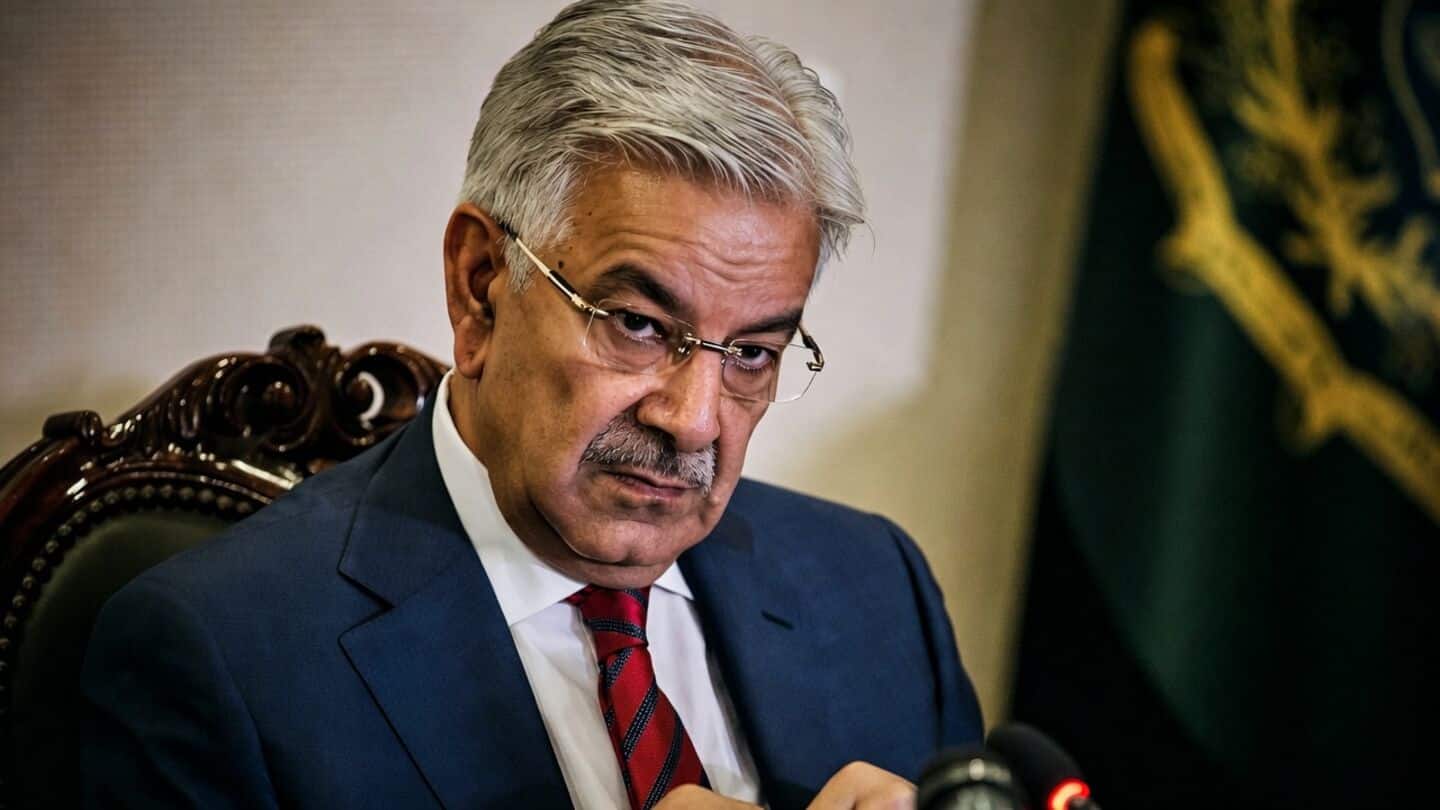
Pakistan threatens war with India over water-sharing dispute
What's the story
Pakistan's Defense Minister Khawaja Asif has threatened military action against India if it feels its water security is at risk. The warning comes amid rising tensions after India suspended the 1960 Indus Waters Treaty. "The moment we feel that our national security—and water is part of our national security—is being threatened, we will go to war against India. Definitely," Asif said in an interview with ARY News.
Treaty suspension
Treaty suspended after terrorist attack in Pahalgam
India suspended the Indus Waters Treaty after a terrorist attack in Pahalgam, Jammu and Kashmir, in April 2025.
The attack killed 26 people and was blamed on Pakistan-backed terrorists.
New Delhi has said the treaty will remain suspended until Islamabad takes credible action against cross-border terrorism.
The treaty allocates around 80% of the Indus River system's waters to Pakistan, making it vital for its agriculture and economy.
Water manipulation
Asif accuses India of manipulating water flows
Asif accused India of using water as a weapon and manipulating flows in the Chenab River.
He claimed Pakistani authorities conducted "around 115 inspections" related to water-sharing arrangements but admitted he was unaware of any developments in the past year.
Pakistan is facing an internal water crisis, with severe shortages across major canal networks such as the North West Canal and Rice Canal.
Twitter Post
Pakistan's Defence Minister's interview clip
We will go to war with India 🇮🇳 if they do not change their behavior regarding water.
— برهان الدین | Burhan uddin (@burhan_uddin_0) June 20, 2026
Because water is life, and they are taking it away from us.
• Pak Defence Minister: Khawaja Asif pic.twitter.com/GAuwUqtdVO
Water crisis
Pakistan facing severe internal water crisis
According to data cited by Sind's irrigation department, the North West Canal is running with a 64.1% deficit, while the Dadu Canal faces an 82% shortfall.
Regional leaders have warned of serious economic consequences due to falling water levels and unresolved disputes over distribution.
The Sukkur Barrage, a key part of Pakistan's irrigation system, is also under threat from declining water levels.