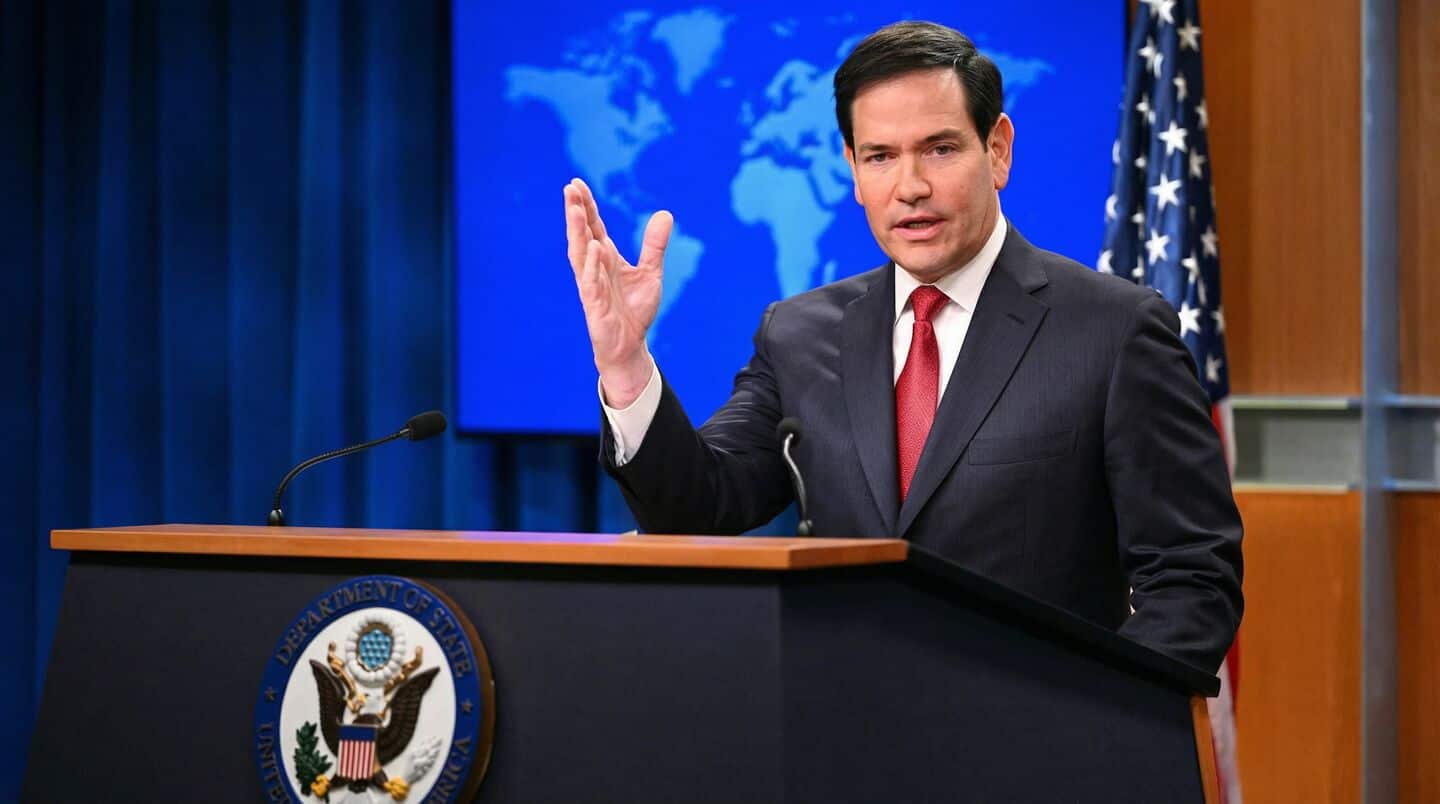
Marco Rubio to visit India 'very soon': US Ambassador
What's the story
United States Secretary of State Marco Rubio will be visiting India "very soon," Ambassador Sergio Gor told CNN‑News18. The visit is expected to strengthen ties between Washington and New Delhi on economic, strategic, and diplomatic fronts. It will also be part of the Quadrilateral Security Dialogue (Quad), which includes Japan and Australia. Gor confirmed, "This visit will be part of the Quad as well as other initiatives."
Quad importance
Visit to advance bilateral interests, says Gor
Gor emphasized that the visit is aimed at advancing bilateral interests along with the broader architecture of Indo‑Pacific cooperation with Japan and Australia. External Affairs Minister S Jaishankar recently addressed concerns at the Munich Security Conference over the Quad's effectiveness, saying its absence from summit-level meetings shouldn't be overinterpreted. He highlighted that several working groups and institutional mechanisms under the Quad continue to function effectively.
Diplomatic developments
Possible presidential visit, trade agreement in the works
Gor also hinted at a possible visit by US President Donald Trump to India, citing Prime Minister Narendra Modi's invitation. "The President would love to visit India soon," he said. On the economic front, he said a bilateral trade agreement was close to being finalized. The agreement is expected to lower tariffs on Indian exports and increase market access for both countries.
Economic collaboration
Concerns over India's Russian oil purchases
India has also joined the US-led Pax Silica initiative for cooperation on semiconductors, artificial intelligence, and critical technology supply chains. According to a statement released by the Centre, the initiative is envisioned as a strategic coalition of trusted nations committed to securing the "silicon stack." However, Gor reiterated long-standing US concerns over India's purchase of Russian oil, which complicates efforts to isolate Moscow economically amid sanctions, although he framed it as part of a broader global stance.