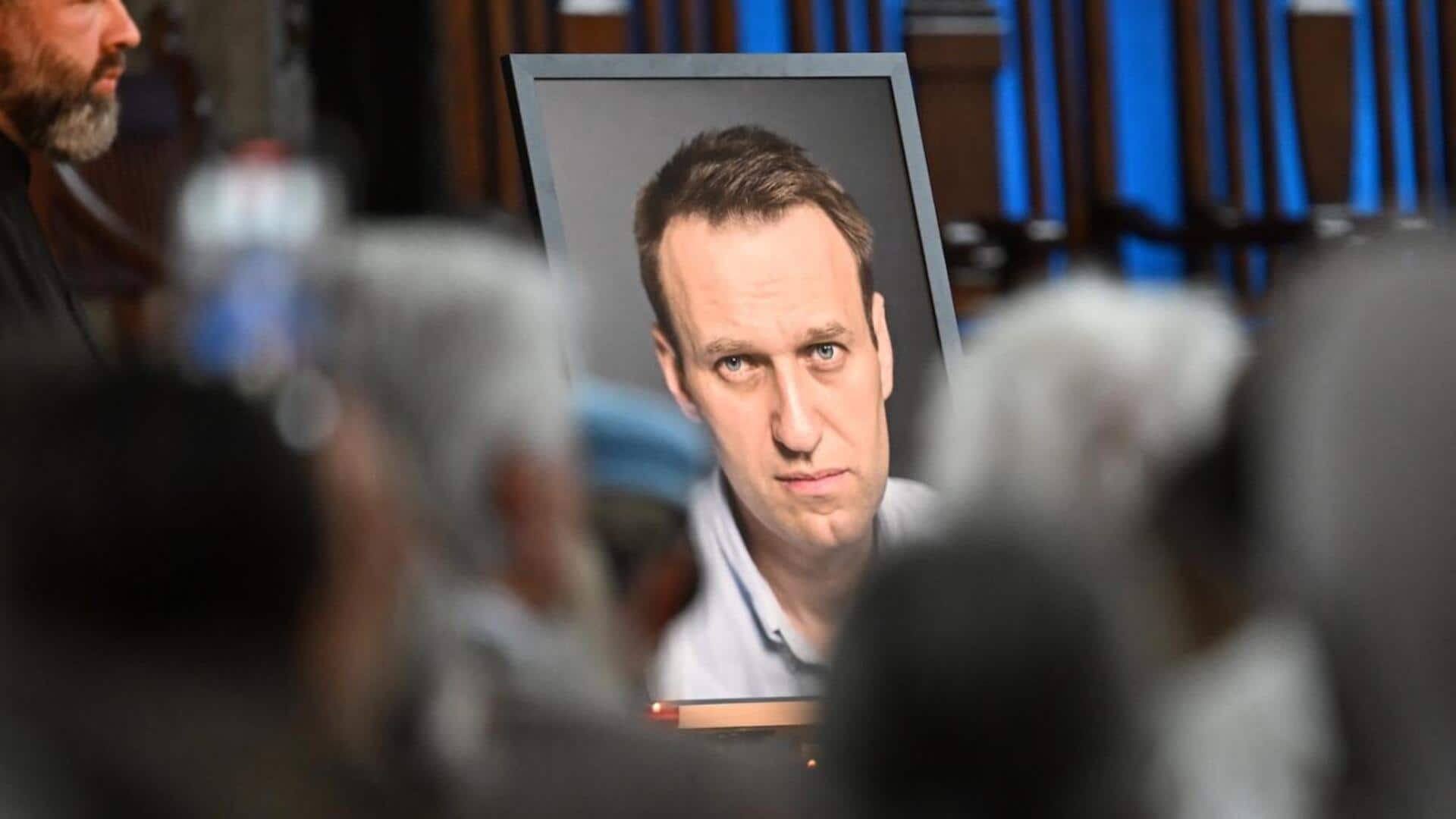
Russia used frog toxin to poison Alexei Navalny: Report
What's the story
Five European countries have determined that pro-West Russian opposition leader Alexei Navalny was poisoned with a deadly toxin, implicating the Russian state. The United Kingdom, France, Germany, Sweden, and the Netherlands conducted laboratory tests on samples taken from Navalny, AFP reported. In a joint statement at the Munich Security Conference, the countries announced the presence of epibatidine, a potent neurotoxin derived from Ecuadorian poison dart frogs, which is not naturally found in Russia.
Accusations made
Russia saw Navalny as threat, says British foreign secretary
British Foreign Secretary Yvette Cooper said Russia saw Navalny as a threat and the use of such a poison showed "the despicable tools it has at its disposal and the fear it has of political opposition."
She added that "only the Russian government had the means, the motive and the opportunity to use that toxin."
The countries have decided to report Moscow to the Organisation for the Prohibition of Chemical Weapons for an alleged violation of the Chemical Weapons Convention.
Widow's statement
Navalny's widow calls his murder a science-proven fact
Navalny died in an Arctic penal colony in February 2024 while serving a 19-year sentence.
His widow, Yulia Navalnaya, said her husband's murder is now a "science-proven fact."
She spoke at the same press conference during the Munich Security Conference, flanked by foreign ministers from the UK, Germany, Sweden, and the Netherlands.
Media reports said it was likely the toxin was manufactured in a laboratory rather than taken directly from the frogs.
Kremlin's response
Kremlin dismisses allegations as disinformation campaign
The Kremlin has dismissed the allegations as part of a disinformation campaign.
Foreign Ministry spokesperson Maria Zakharova told the news agency TASS that it was aimed at distracting from Western problems.
The Russian Embassy in the UK was more explicit, calling it a "ridiculous circus performance" aimed at stoking "waning anti-Russian sentiment", adding that "if there's no pretext, they [media outlets] laboriously invent one, according to Sky News.
Previous incident
Navalny had survived poisoning with nerve agent in 2020
Notably, Navalny had accused the Kremlin of a poisoning attempt in 2020 with a nerve agent.
After treatment in Germany, he returned to Russia five months later and was immediately arrested and remained imprisoned until he died in 2024.
Although Navalny was buried in the suburbs of Moscow, Navalnaya has previously claimed samples from his remains were smuggled out of Russia.
Epibatidine is "one of the deadliest" poisons, 200 times stronger than morphine. It causes paralysis, breathing difficulties, and death.