What happens to India if Iran shuts Strait of Hormuz?
What's the story
The Strait of Hormuz, a narrow but strategically important waterway in the Middle East, is at the center of a global crisis after Iran attacked an oil tanker near Oman. The incident is part of a broader escalation of tensions following joint Israeli-United States airstrikes on Iran. The Palau-flagged tanker was hit off Oman's Musandam Peninsula, injuring at least four people.
Oil lifeline
Hormuz strait is world's most important oil chokepoint
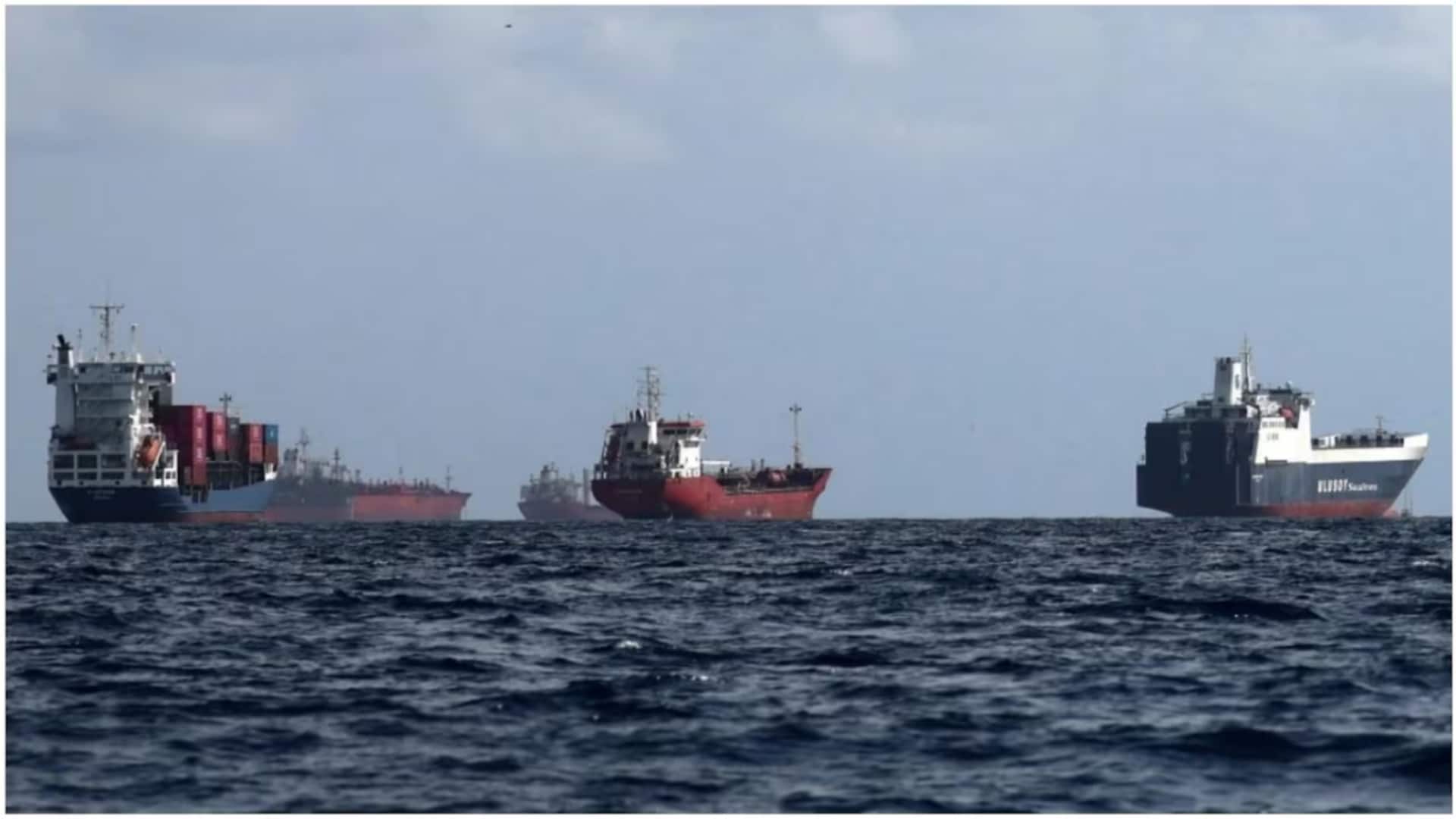
The Strait of Hormuz is the world's most important oil chokepoint, facilitating the transit of about 20% of global oil consumption.
It connects the Persian Gulf to the Gulf of Oman and beyond to the Arabian Sea.
The Strait is only about 167km long, with a width of 33-39km.
Due to this narrow width, vessels must navigate designated shipping lanes, each approximately 2 miles (3km) wide and separated by buffer zones to prevent collisions.
Access ban
Iran has warned vessels against passing through Strait of Hormuz
Iran's Islamic Revolutionary Guard Corps Navy has reportedly issued a VHF radio warning that no vessels are allowed to pass through the Strait of Hormuz.
This comes as traffic through the strait has decreased by around 40-50% amid rising tensions.
The International Energy Agency is also monitoring these developments closely for their potential impact on global markets.
Economic impact
Crisis could severely impact India
The ongoing crisis poses a major risk to India's economy, with nearly 50% of its crude oil imports passing through the Strait of Hormuz.
Aditi Nayar from ICRA warned that this escalation could impact fuel prices and inflation in India.
The country is also heavily dependent on liquefied natural gas imports from Qatar and the UAE via this chokepoint.
Economic fallout
Experts warn of economic fallout
According to News18, experts warn that every $1 rise in crude oil prices could increase India's annual import bill by about $2 billion.
This highlights the potential economic impact of sustained volatility in the Strait of Hormuz.
The situation remains fluid as Iran continues to threaten the closure of this vital shipping lane, which could have far-reaching consequences for global trade and economies dependent on oil imports from this region.