Turkish, Chinese military planes land in Pakistan, triggering weapons speculation
What's the story
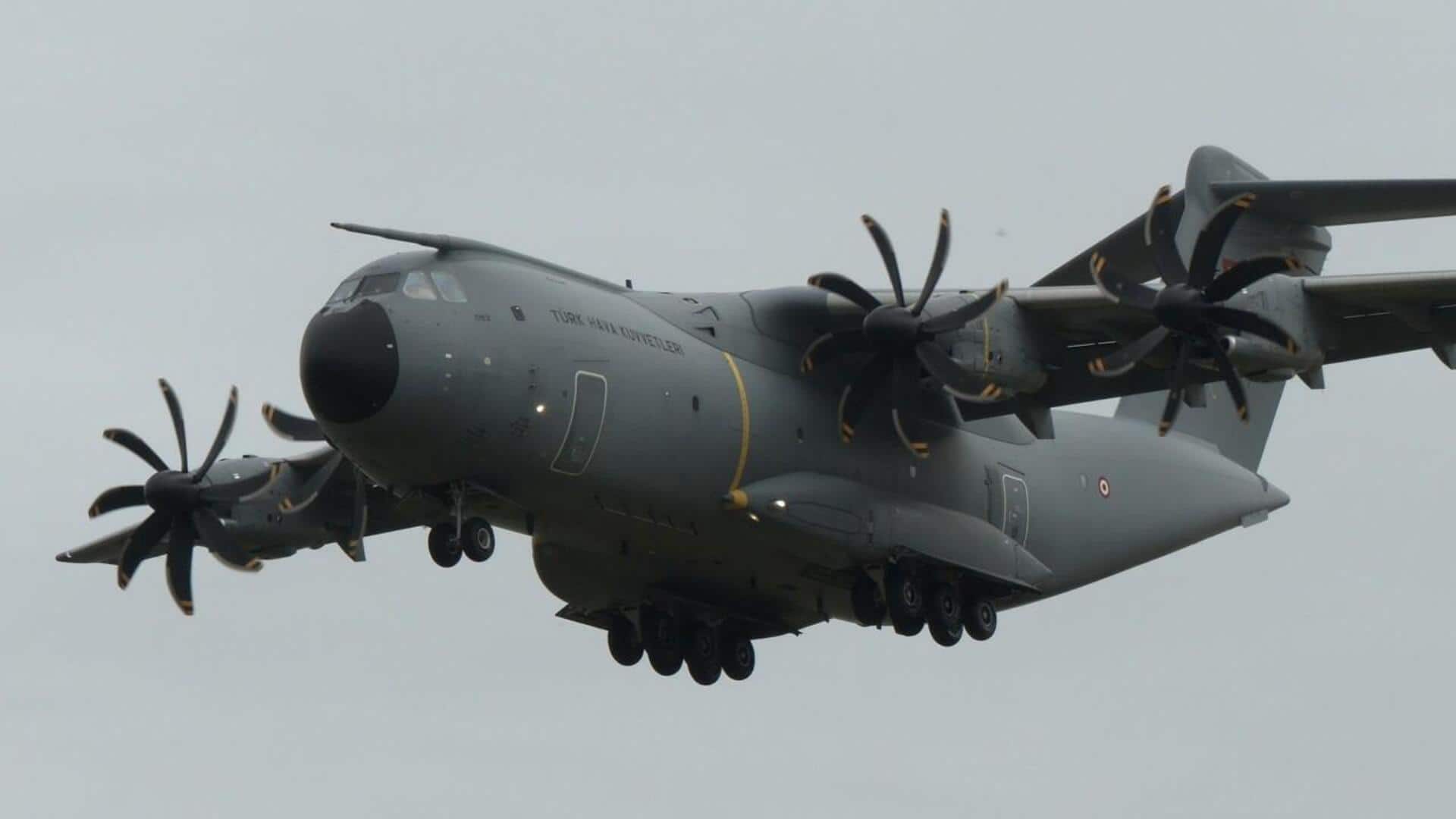
Between August 19 and 21, Turkish and Chinese military transport aircraft made a series of flights into Pakistan. The cargo is believed to include unmanned aerial vehicles (UAVs), loitering munitions, anti-drone systems, and air-defense equipment. However, no official cargo manifests have been released by either the Turkish Ministry of National Defence or the Inter-Services Public Relations (ISPR) of Pakistan.
Strategic landing
Flight details and logistics
The flights were tracked by flight tracking networks and open-source intelligence (OSINT) platforms.
The Turkish Air Force (TuAF) used Lockheed C-130 Hercules transport planes and Airbus A400M Atlas airlifters for the operation.
These were routed to three main Pakistan Air Force bases: PAF Base Nur Khan in Rawalpindi, PAF Base Masroor in Karachi, and PAF Base Murid in Chakwal.
Defence pact
Mecca Joint Defence Agreement
The flights come on the heels of the Mecca Joint Defence Agreement signed by Pakistan, Turkey, and Saudi Arabia on August 7.
The agreement creates a collective security framework among the three nations.
It binds Turkish military technology with Saudi financial resources and Pakistani military manpower into a formal alliance structure.
Cargo details
Cargo details
The cargo is believed to include advanced Bayraktar TB2 drones with satellite communication (SATCOM) terminals for Beyond-Line-of-Sight operations. Also included are Baykar Yiha-3 loitering munitions and Assisguard Songar armed drone platforms.
At PAF Base Masroor, the cargo may have included subsystems for Turkish Aerospace Industries's Anka-3 stealth UCAVs and TAI Super Simsek tactical target drones.
Procurement strategy
Operation Sindoor and its impact on Pakistan's military procurement strategy
Pakistan's aggressive military procurement strategy is linked to lessons learned from "Operation Sindoor," a four-day standoff with India in May 2025.
The operation exposed vulnerabilities in Pakistan's electronic warfare resiliency and air defense depth.
In response, Pakistan has rapidly inducted SATCOM-enabled Turkish UAVs and AI-guided kamikaze drones as part of its post-Sindoor doctrine.
Collaboration growth
Strategic partnership between Turkey and Pakistan deepens
The collaboration between Pakistan and Turkey has evolved from simple military trade to joint research and strategic manufacturing.
Turkish Aerospace Industries has embedded Pakistani engineers at its facilities in Ankara.
Negotiations are underway for Pakistan to become a manufacturing partner in the KAAN stealth fighter project, with plans for sub-assembly plants at the Pakistan Aeronautical Complex.