Thailand, Cambodia agree to ceasefire after weeks of intense conflict
What's the story
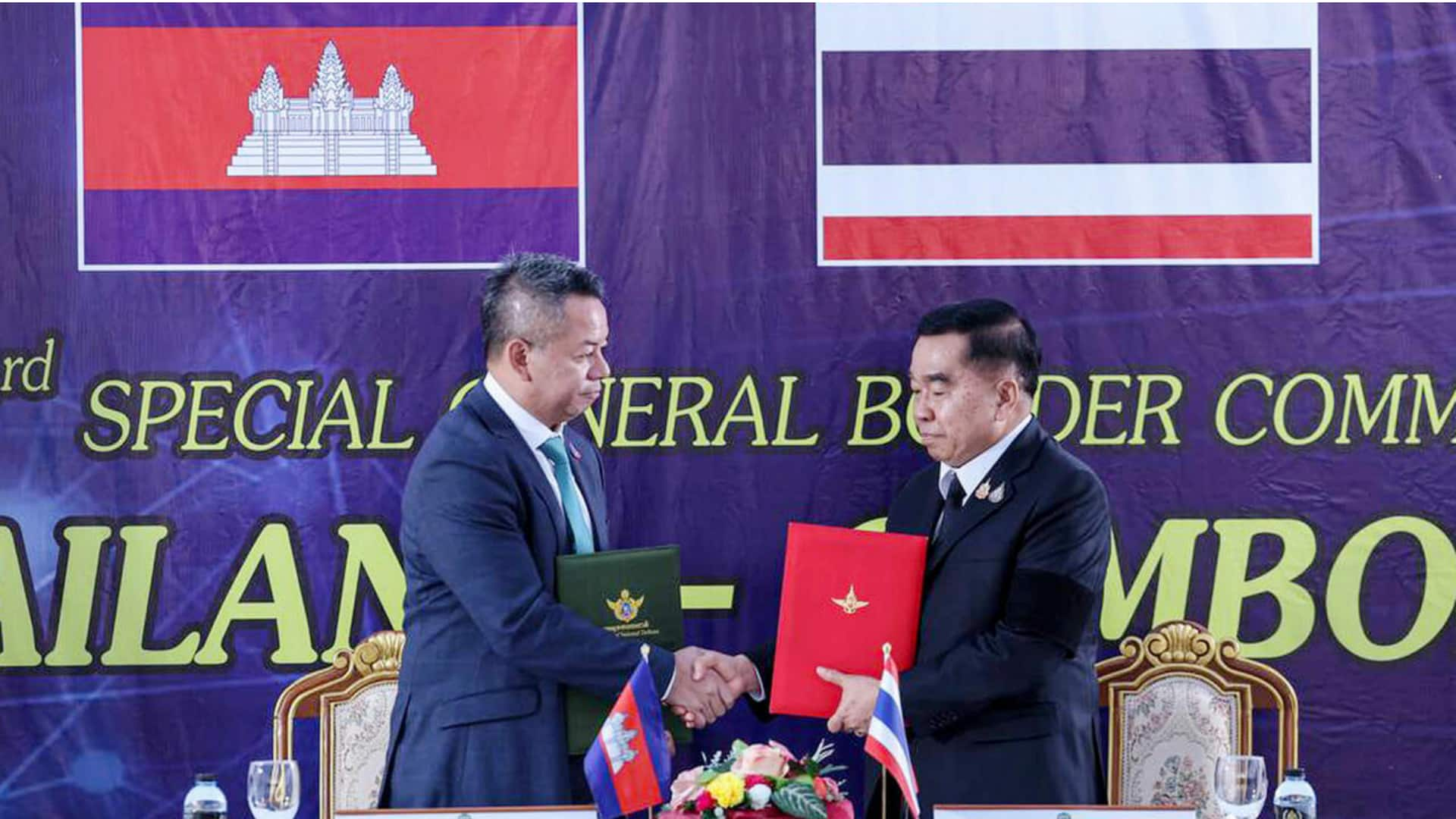
Thailand and Cambodia have signed a ceasefire agreement to end weeks of intense fighting along their border. The conflict, which started in early December, has left over 100 dead and displaced over half a million civilians. The agreement was signed by Thai Defence Minister Natthaphon Narkphanit and Cambodian Defence Minister Tea Seiha during the 3rd Special Meeting of the Cambodia-Thai General Border Committee, according to a report by Al Jazeera.
Agreement details
Ceasefire terms and monitoring mechanisms outlined
The ceasefire agreement includes a commitment to an immediate ceasefire and maintenance of current troop deployments.
It covers "all types of weapons" and prohibits attacks on civilians, civilian objects, infrastructures, and military objectives.
A team of ASEAN observers will monitor the implementation of this agreement.
Both countries have also committed to open communication "to resolve" any possible issues on the ground.
Continued conflict
Cambodia reports airstrikes despite ceasefire agreement
Despite the ceasefire agreement, Cambodia reported airstrikes by Thailand on Saturday.
F-16 fighter jets were used to bomb Serei Saophoan in Banteay Meanchey province.
This came after a bombing on Friday when Thailand dropped 40 bombs on Chok Chey village in the same province.
Each side has blamed the other for breaching the ceasefire and claims its military actions are in self-defense.
Diplomatic efforts
Trilateral meeting to discuss border security
Cambodian Foreign Minister Prak Sokhonn will travel to Yunnan, China, for a trilateral meeting with Thai and Chinese counterparts.
The meeting is aimed at building mutual confidence and restoring peace along the border.
The conflict has been fueled by territorial disputes along the 800-kilometer border, where ancient temples are claimed by both sides, and colonial-era frontier demarcations have been resented for over a century.