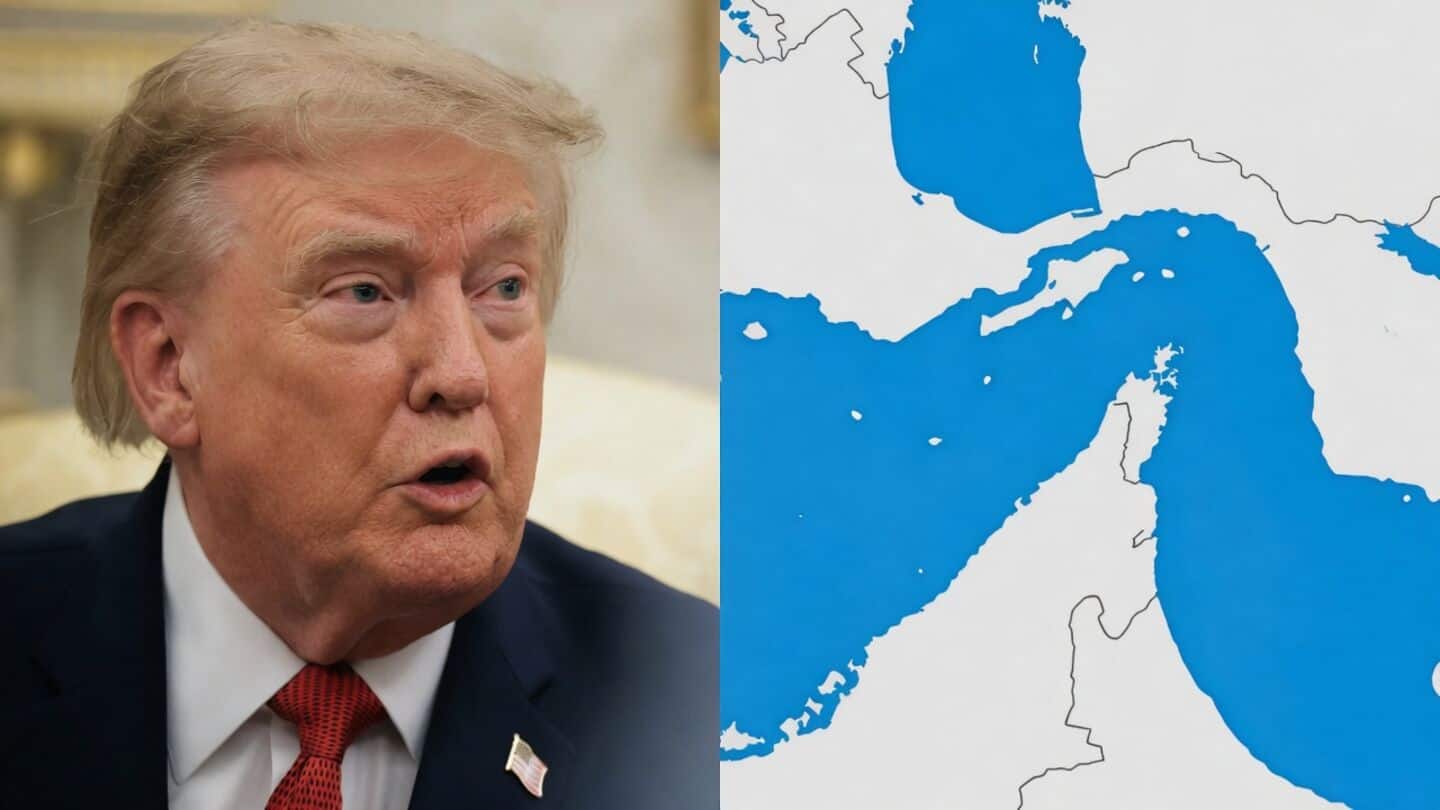
Strait of Hormuz 'new US territory,' Trump says again
What's the story
United States President Donald Trump has once again shared an image calling the Strait of Hormuz "NEW US Territory." The move comes as tensions between Washington and Tehran continue to rise over economic sanctions and control of the key waterway. This is not the first time Trump has made such a claim; he had earlier hinted at declaring the strait a US territory during a speech on August 14.
Sanction backlash
Iran warns neighbors against joining US economic campaign
Iran has condemned the proposed sanctions by Washington, calling them an attempt to impose US authority beyond its borders.
Iranian Foreign Ministry spokesperson Esmaeil Baghaei said these secondary sanctions "find no foundation in international law."
Iran's Supreme National Security Council secretary Mohsen Rezaei also warned neighboring countries against supporting the US economic campaign, saying they would be considered enemies if they joined.
Waterway dispute
Strait of Hormuz closed to unauthorized oil tankers, Iran says
The Strait of Hormuz has become a major flashpoint in the US-Iran confrontation, with Iran claiming it is closed and threatening action against unauthorized oil tankers.
This disruption has severely impacted global energy shipments, with only a few commodity vessels crossing the strait and major crude carriers and LNG tankers largely absent.
However, some Iraqi oil tankers have been allowed to pass through at Baghdad's request.
Military assistance
US military helping to secure oil shipments
US Energy Secretary Chris Wright revealed that the US military had helped move an average of eight million barrels of oil a day through the Strait of Hormuz over a week.
This is significantly less than the over 20 million barrels a day that used to pass through before the crisis.
Despite heavy damage to its military infrastructure, Iran retains significant missile and drone capabilities, raising concerns about its ability to disrupt tanker traffic.
Diplomatic overtures
Iran open to diplomatic solution
However, despite the ongoing tensions, Iran has indicated a willingness to engage in diplomacy.
President Masoud Pezeshkian has called for a diplomatic solution to end the conflict while maintaining Iran's strength and dignity.
Meanwhile, Trump continues to warn countries against providing any support to Iran until an agreement is reached that meets Washington's demands.