Trump says Iran strike would have been 'biggest since WW2'
What's the story
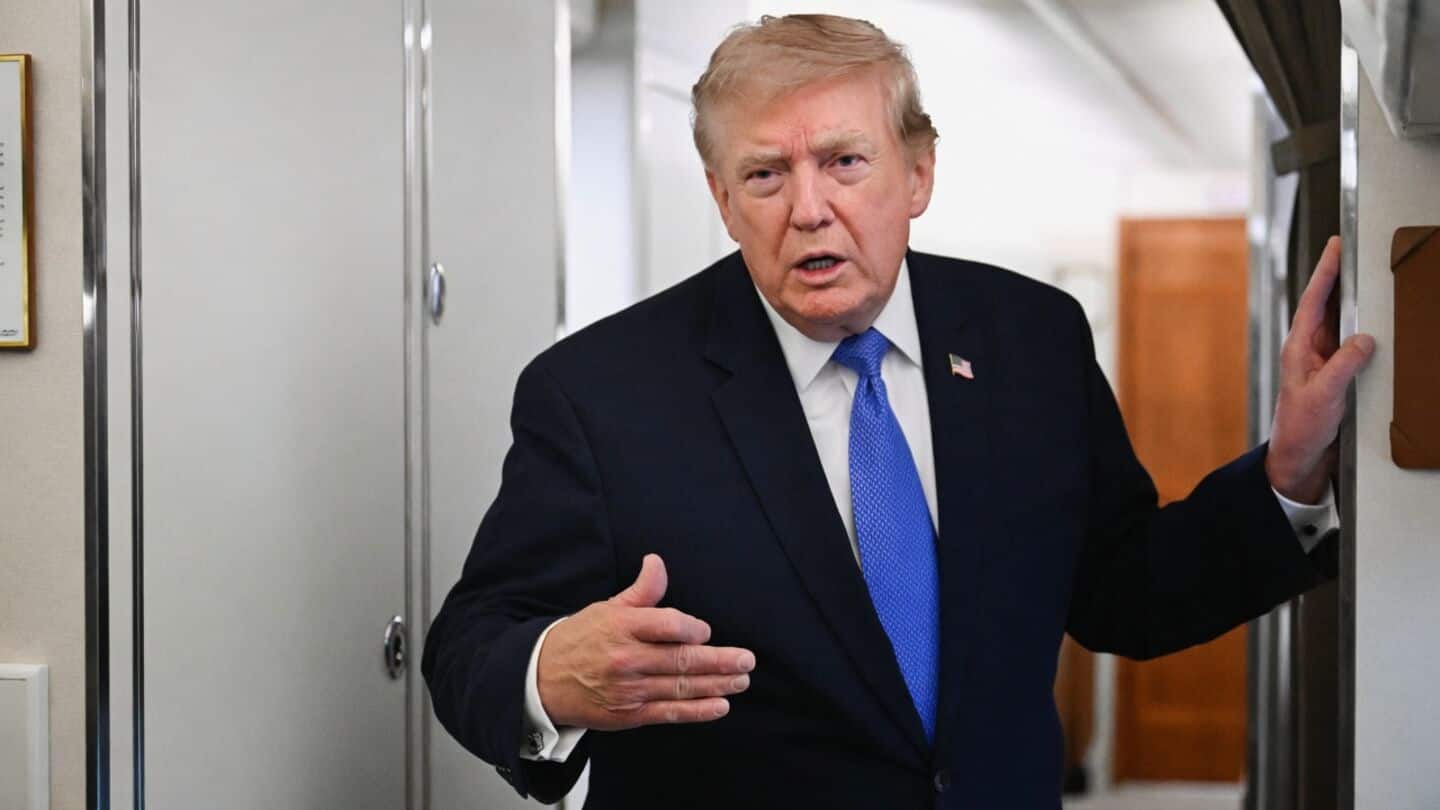
United States President Donald Trump has said that the military strike he had considered against Iran would have been "the biggest attack since World War Two." Speaking aboard Air Force One on Sunday, he defended his decision to pursue diplomacy instead. "We're talking to them in the form of a negotiation. It begins tomorrow afternoon, and we'll see," Trump said without disclosing details of the talks.
Diplomatic hopes
'Prefer making a deal over killing people'
Trump expressed optimism that a diplomatic resolution could save lives and prevent widespread destruction.
He said Iran didn't want the planned military strike and Saudi Arabia favored diplomacy, believing "a deal is imminent."
When asked if there was a deadline for an agreement, he said he preferred making a deal over killing people.
"I'd rather make a deal. I'm not looking to kill people because people die, a lot of people die, and we don't want that," he said.
Key focus
Oil prices fall on hopes of renewed diplomacy
The Strait of Hormuz, through which about one-fifth of the world's oil and liquefied natural gas normally passes, is at the heart of the crisis.
Iran has largely restricted traffic through this strategic waterway during the conflict, raising global energy prices and inflation concerns.
However, hopes for renewed diplomacy have eased fears of further disruption, with oil prices falling over 4% in early trading on Monday.
Diplomatic efforts
Iran, Saudi, and Pakistan discuss diplomatic efforts
Iran's Foreign Minister Abbas Araqchi has held separate phone calls with Saudi Foreign Minister Prince Faisal bin Farhan and Pakistan's Army Chief Asim Munir to discuss diplomatic efforts.
Negotiations between Iran and Oman over the Strait of Hormuz are reportedly in their final stages.
However, these discussions were about a proposed new shipping route and not related to any decision on reopening or closing the strait.
Security concerns
Israel vows to continue acting against Iran
Meanwhile, Israel has said it would continue to act against Iran's nuclear and missile programs, irrespective of the outcome of diplomatic efforts.
Energy Minister Eli Cohen warned that Israel would strike if Iran tried to revive its nuclear program or expand ballistic missile capabilities.
Trump and Israeli Prime Minister Benjamin Netanyahu met last week in Washington to discuss diplomatic, economic, and military options for curbing Iran's nuclear ambitions.