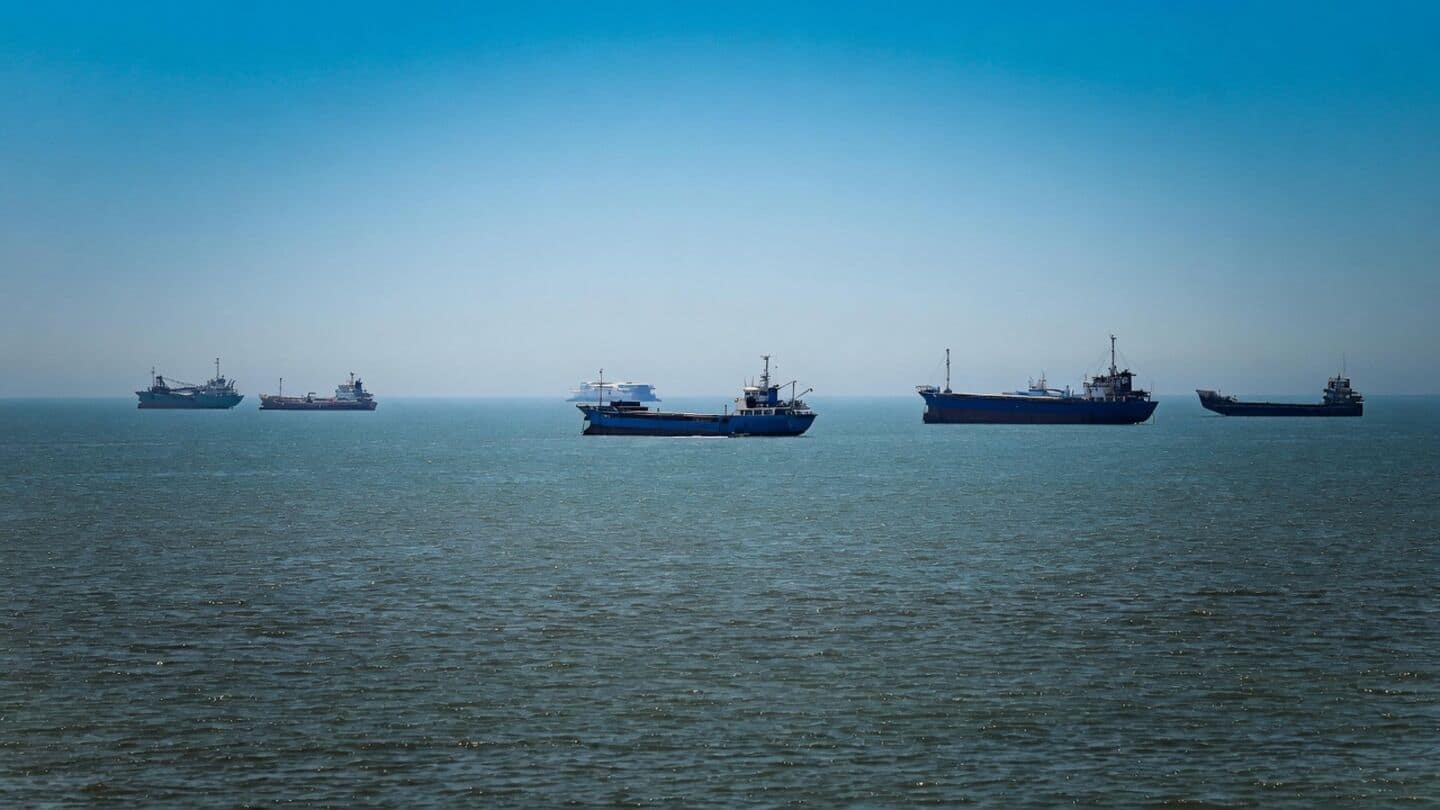
US rejects Iranian claims over control of Strait of Hormuz
What's the story
The United States Central Command (CENTCOM) has publicly rejected Iranian claims over the strategic Strait of Hormuz. The US military stated that Iran does not control or regulate shipping traffic through this vital global trade route. The statement was issued as a "fact check" on social media on July 9, countering claims made by Iranian state media and military leaders. CENTCOM stated on social media: "TRUTH: Iran does not control the Strait of Hormuz."
Twitter Post
CENTCOM's assertion Iran does not control Hormuz
🚫 CLAIM: Iranian state media claims that transit through the Strait of Hormuz is only permitted through routes designated by Iran.
— U.S. Central Command (@CENTCOM) July 9, 2026
✅ TRUTH: Iran does not control the Strait of Hormuz. Since early May, U.S. forces have helped facilitate the successful transit of more than 800… pic.twitter.com/cpnTDBoFEG
Military response
US airstrikes on Iranian military targets
The US statement comes after two nights of airstrikes on Iranian military targets.
CENTCOM said it targeted around 170 sites, including radar systems and Islamic Revolutionary Guard Corps (IRGC) vessels.
These strikes were a response to drone and missile attacks by Iran on commercial tankers in the Strait of Hormuz, which Washington deemed a violation of an agreement between the two countries.
Shipping route
US emphasizes safe passage for commercial vessels
In its statement, CENTCOM emphasized that the international community does not recognize Iran's right to control the Strait of Hormuz or impose transit rules.
The US military also highlighted its efforts in ensuring safe passage for over 800 commercial vessels since early May.
This includes around 380 million barrels of crude oil transported through this key shipping route.
Ongoing tensions
Iran's response to US airstrikes
Despite US airstrikes, Iran continues to challenge commercial shipping. The IRGC has tried to turn back vessels using a temporary UN-backed route along Oman's coast.
Tehran insists ships should use routes under its control in the northern part of the strait.
In response to Western naval operations, Iran's Islamic Revolutionary Guard Corps (IRGC) has threatened a "powerful and swift response" and fired missiles at US-linked bases in Jordan, Bahrain, and Kuwait.