US lifts Iran naval blockade after peace deal
What's the story
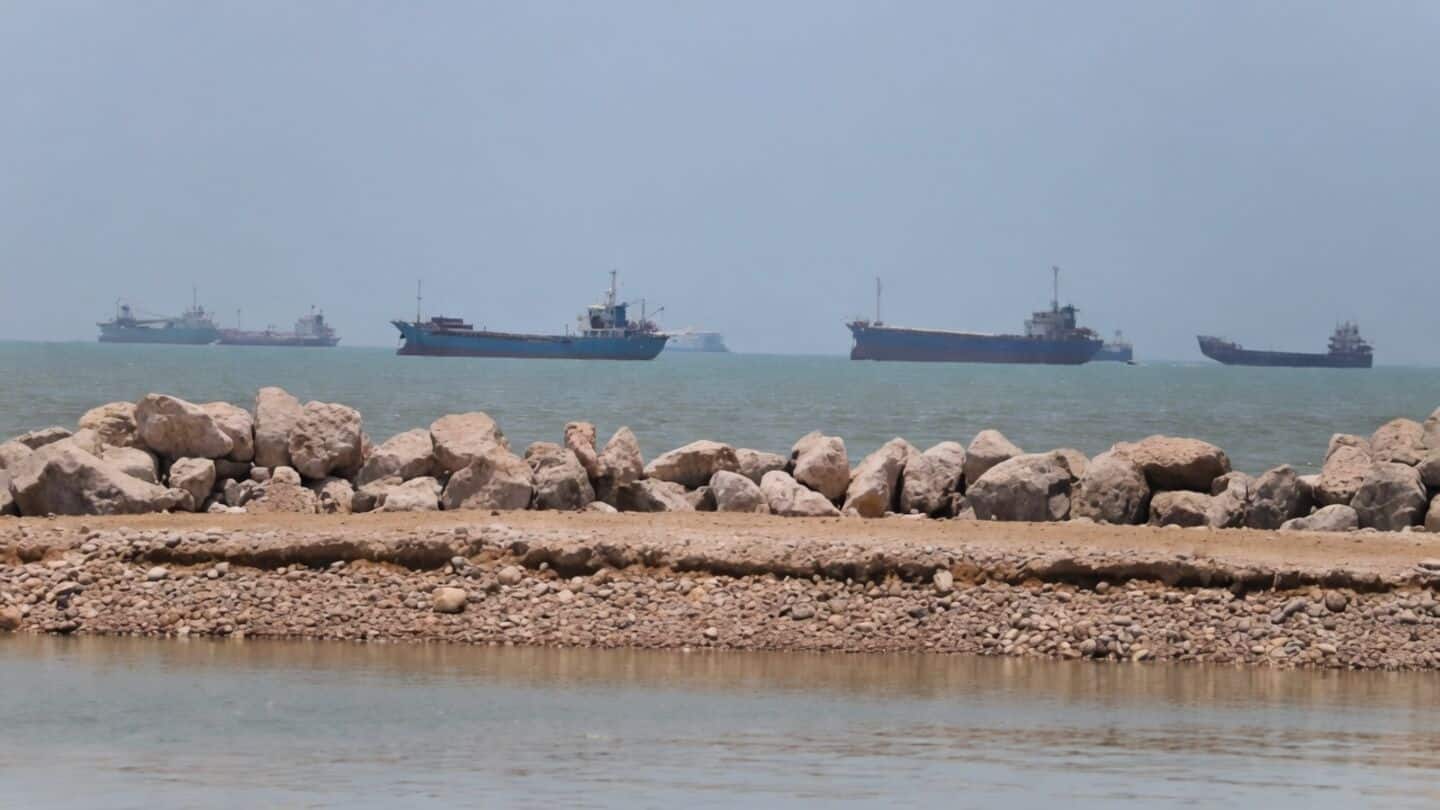
The United States has lifted its naval blockade of Iran following the signing of a peace agreement to end hostilities in the Middle East. The US Central Command announced the end of the blockade on social media platform X, saying it was done "in accordance with the President's direction." However, some US vessels will continue to remain "in the general area."
Deal approval
Khamenei approves US-Iran deal
Iran's Supreme Leader, Mojtaba Khamenei, has approved the deal with the United States, despite having a "different view."
He said he allowed it to go ahead after assurances from Iran's President Masoud Pezeshkian that he would "protect the rights of the Iranian nation."
Khamenei accused President Donald Trump of using leverage "out of desperation" to bring about this deal.
Agreement details
Deal terms include reopening Strait of Hormuz
The US-Iran deal includes 14 key points, such as reopening the Strait of Hormuz and a commitment to a $300 billion fund for Iran's reconstruction and economic development.
However, the US is not obligated to contribute to this fund.
Both sides are committed to finalizing a deal within 60 days, extendable by mutual consent.
Negotiation plans
Technical negotiations to begin in Switzerland soon
Technical negotiations are expected to start soon in Switzerland. The official signing ceremony was canceled as the deal was signed remotely.
US Vice President JD Vance confirmed he would likely head to Switzerland for these talks.
He defended the deal, especially the reconstruction fund provision for Iran, despite criticism from some Republicans who opposed its terms, such as Republican Senator Bill Cassidy, who described the agreement as the "worst foreign policy blunder in decades."
Criticism
Vance questions Israeli approach
In an interview with the New York Times, Vance mentioned Israel's national security minister, Itamar Ben Gvir, and finance minister Bezalel Smotrich for criticizing the US-Iran deal.
He said: "I guess my response to them would be—what is your exact proposal? You're a country of nine million people. You can't just kill your way out of solving every single national security problem that you have."
Regional tensions
Israel and Hezbollah reject US-Iran deal
Israel has criticized the US-Iran deal, with Israeli officials questioning its effectiveness in curbing Iran's nuclear ambitions.
Hezbollah has also rejected the deal's terms and continued attacks on Israel.
Despite these tensions, Vance told reporters that Israel would have to respect the peace process with Iran, which he said was good for them, stating that attacks in Lebanon's capital, Beirut, that have killed civilians are "not acceptable."