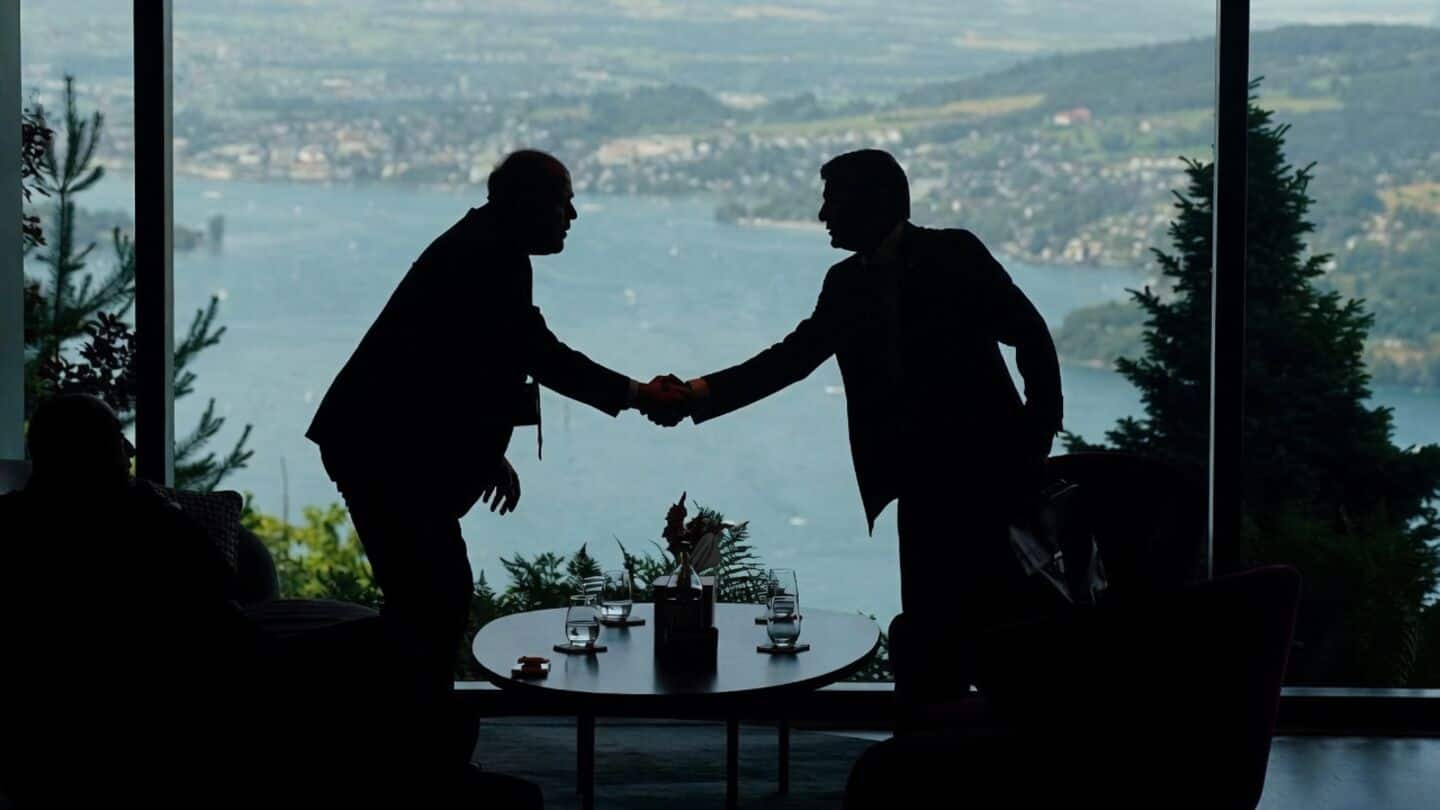
Inside 1st round of US-Iran talks in Switzerland
What's the story
The first round of negotiations between the United States and Iran to finalize a peace deal has ended with "encouraging progress," according to mediators Qatar and Pakistan. The talks, which started on Sunday in Switzerland, came after an initial agreement last week. In a joint statement on Monday, Qatar and Pakistan announced that a "High Level Committee" had agreed on "a roadmap toward reaching a final deal within 60 days." Technical talks will continue in the coming days.
Discussion details
Talks focused on reopening Strait of Hormuz, Lebanon ceasefire
The discussions were centered on "clarifying some of the confusing messaging from Iran" regarding the reopening of the Strait of Hormuz and enforcing a ceasefire in Lebanon, a US diplomat involved in negotiations said.
Discussions also focused on "elements" of a nuclear deal, according to the US diplomat, who said that both teams will use "today's work as a starting point for ongoing technical talks going forward."
Twitter Post
Joint statement by mediators
Tireless Pakistani and Qatari mediation has delivered major progress to end Lebanon War. Oil and petrochem exports are waived, blockade lifted, some frozen assets released, and major reconstruction & development plan launched for Iran.
— Seyed Abbas Araghchi (@araghchi) June 22, 2026
1st real test: Lebanon deconfliction cell https://t.co/q0okD2qwSO
Conflict escalation
Parties agreed on creation of deconfliction cell
The joint statement also said that a "communication line" had been formed "to avoid incidents and miscommunication with the aim of safe passage for commercial vessels through the Strait of Hormuz."
Furthermore, "the parties agreed on the creation of a deconfliction cell, between the parties, the Lebanese Republic and facilitated by the Mediators, to ensure the adherence of the termination of military operations in Lebanon."
Iran
Iranian representatives initially walked out of negotiations
The negotiations, held in Burgenstock, Switzerland, started on a strained note after Iranian representatives walked out in protest against threats made by US President Donald Trump.
Trump had warned of bombing Iran and even threatened to kidnap the Iranian negotiating team unless the Strait of Hormuz was reopened.
"You close it and you won't have a country. You won't even make it back to your f***ing country," he said.
Diplomatic stance
Iran responds to Trump's threat
Iran's lead negotiator, Mohammad Bagher Ghalibaf, responded by saying, "Don't they think that if their threats had any effect, they wouldn't be in this desperate situation today?... No matter how much they talk, it is we who take action."
Last week's MoU between Iran and the US includes a commitment to reach a final deal within 60 days, as well as an end to fighting on "all fronts," including in Lebanon.
Agreement details
Other key developments
However, clashes between Hezbollah and Israeli soldiers in southern Lebanon have only escalated in the past few days, with Hezbollah leader Naim Qassem rejecting any Israeli military presence in southern Lebanon and saying Hezbollah would defend itself.
Iran announced on Saturday that it has closed the Strait of Hormuz due to ongoing clashes and Israeli airstrikes.
But tracking data shows some vessels have continued to pass through the Strait of Hormuz despite Iran's claims of closure.