Why US, Israel aren't conducting Iran operation under unified command
What's the story
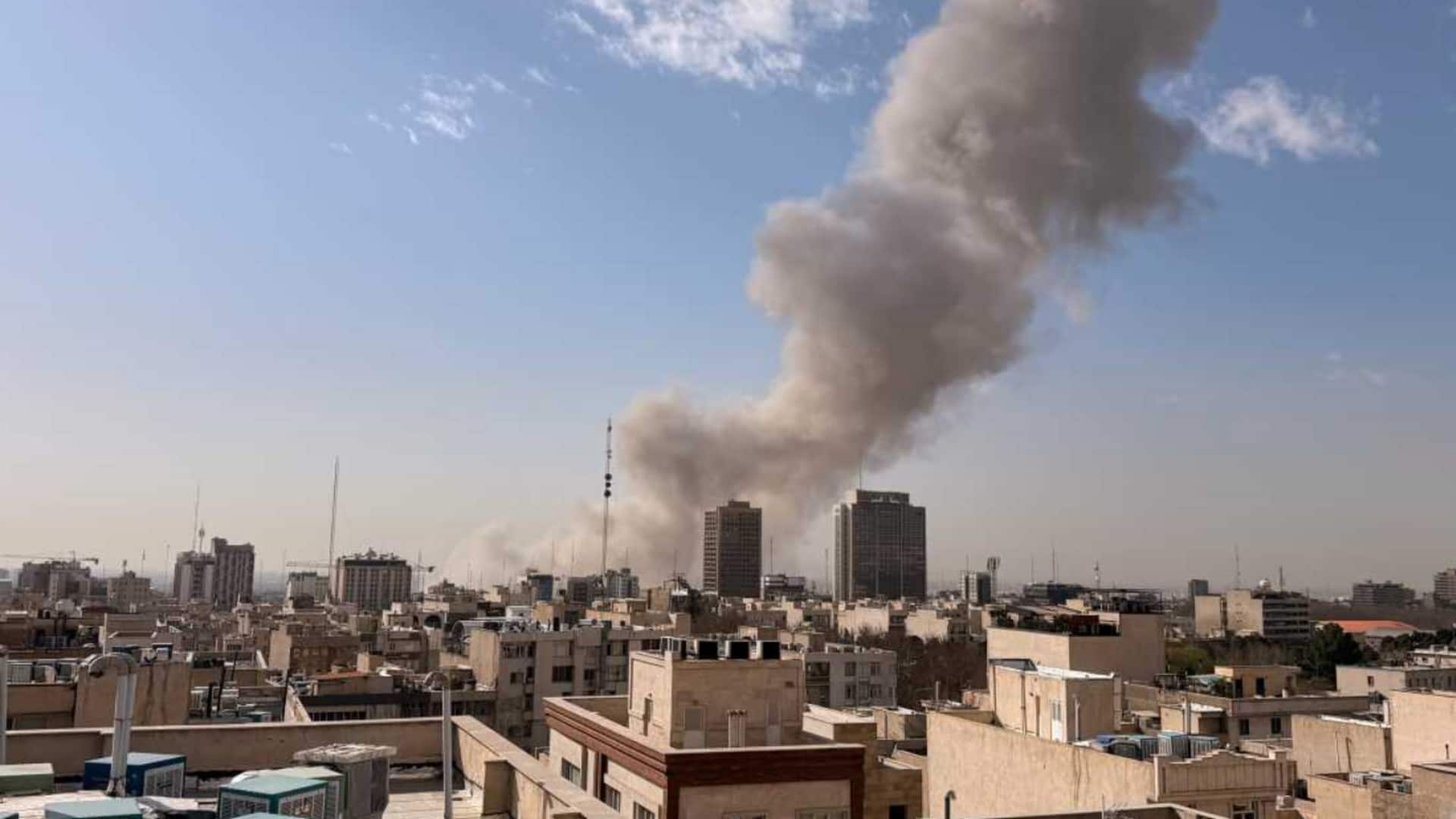
The United States and Israel have launched large-scale, simultaneous attacks on Iranian territory. However, the two nations are not conducting the operation under a single unified military command. The United States is undertaking "Operation Epic Fury," while Israel is spearheading "Operation Lion's Roar." The divergence in their strategies stems from differing definitions of victory and target prioritization between the two countries.
Strategic divergence
Different definitions of victory and target lists
The different definitions of victory have led to the two nations having different target lists.
Israel's operation focuses on eliminating Iran's nuclear program and missile threats, while the US aims to restore global deterrence and cripple Iran's Revolutionary Guard Corps (IRGC).
The US military is also tasked with protecting oil flow through the Strait of Hormuz and creating conditions for regime collapse in Iran.
Target focus
Targeting Iranian military assets and nuclear sites
The Israeli Defense Forces (IDF) are focusing on deep-underground enrichment sites like Fordow and Natanz, as well as missile silos in the Zagros mountains.
Meanwhile, the US military is targeting Iranian early-warning radars, naval bases along the Persian Gulf, and regime leadership compounds in Tehran.
The separate operations also allow both militaries to follow their own domestic and legal Rules of Engagement without compromising each other.
Political implications
Addressing domestic pressures in the US and Israel
The separate operations also allow both nations to address their domestic pressures.
For the US, "Epic Fury" can be justified under specific War Powers resolutions as defense against attacks on American troops in the Gulf.
Israel's operation needs to be seen as an independent initiative to assure its population of direct action for national security.
The split operations also mean that both countries will likely exit the kinetic phase of war at different times.
Security measures
Protecting sensitive intelligence sources and methods
The separate command structures also help protect sensitive intelligence sources and methods of both nations.
Israel relies on deep-cover Mossad operatives for ground intelligence in Iran, while the US depends on classified signals intelligence and space-based early warning networks.
Keeping operations distinct ensures neither side has to expose their localized spy networks or cyber-warfare tools to each other's military apparatus.