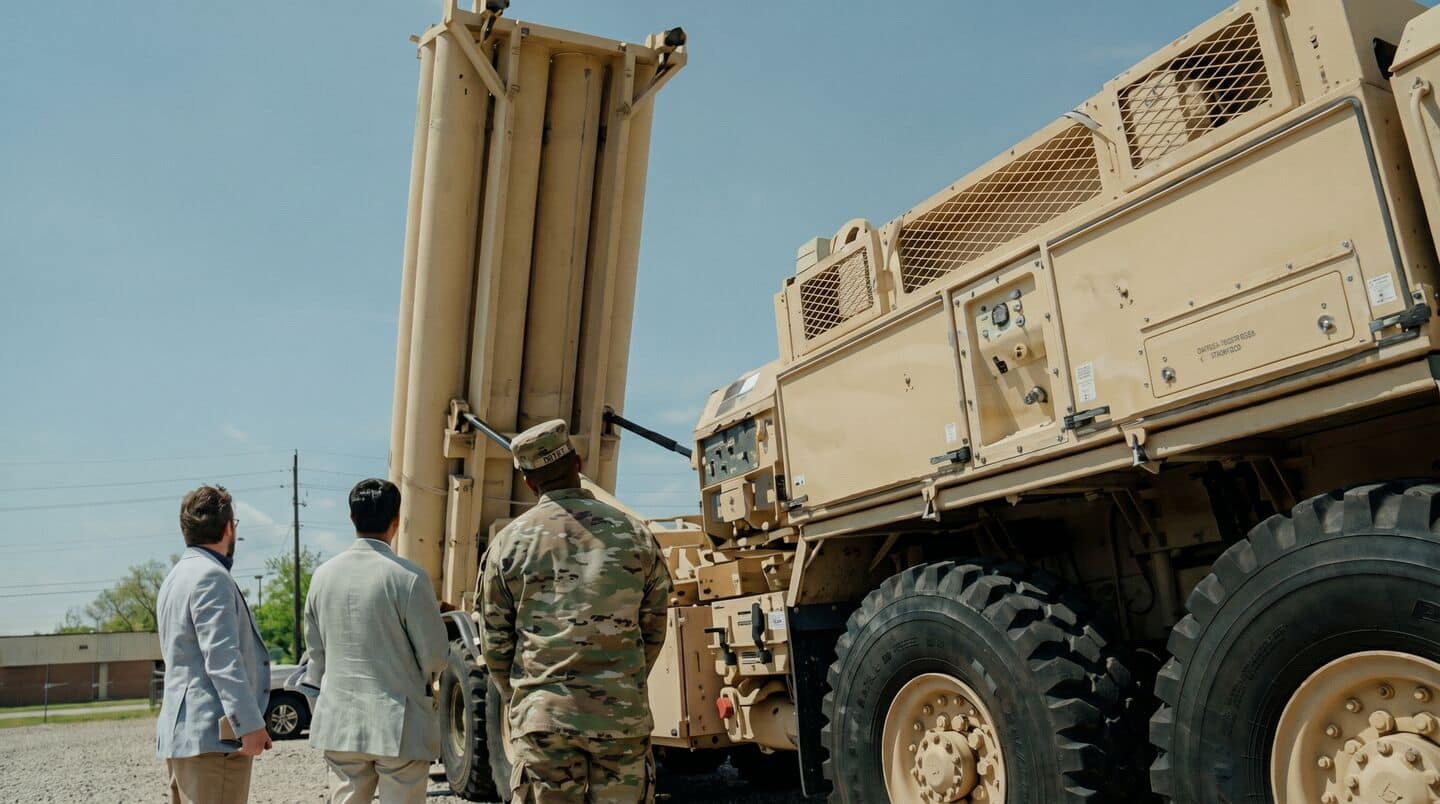
'We are relatively undefended against missile threats': Pentagon official admits
What's the story
Top Pentagon officials have admitted that the United States is "relatively undefended" against missile threats from China and Russia. They said the current defense systems are only capable of countering small-scale attacks and provide minimal protection against hypersonic or cruise missiles. This admission comes as concerns over China's growing military capabilities force Washington to acknowledge major gaps in its homeland missile defense.
Testimony details
US adversaries developing non-ballistic threats
Senior US defense and military officials testified on fiscal year 2027 budget requests, emphasizing the need for advanced missile defense against threats from China, Russia, Iran, and NorthKorea.
They warned adversaries are developing "non-ballistic threats" like hypersonic and long-range cruise missiles.
US Secretary of War Pete Hegseth will testify before a Senate Armed Services subcommittee on Thursday to advocate for the Pentagon's $1.5 trillion budget proposal and President Donald Trump's Golden Dome plan, a proposed $175-185 billion shield.
System shortcomings
Limited capability to defend against attacks
During the Senate hearing, US Assistant Secretary of War for Space Policy Marc J Berkowitz testified that the current defense system was not designed for such threats.
He said, "Today, we have a very limited ground-based single-layer homeland defense system that was specifically designed against a small-scale rogue attack from North Korea."
"We have very limited capability against any other attack with ballistic missiles. We have no defense against hypersonic weapons or cruise missiles today, advanced cruise missiles," Berkowitz concluded.
Proposed solution
Golden Dome plan to integrate space-based sensors, interceptors
To address these vulnerabilities, US officials are backing Trump's "Golden Dome" plan.
The system would integrate space-based sensors, terrestrial interceptors, AI-driven command systems, and emerging technologies like directed energy weapons.
It aims to counter a full range of threats, including drones, cruise missiles, hypersonic weapons and ballistic missiles across the entire US mainland.
Funding debate
Proposed funding model for Golden Dome criticized
The proposed funding model for the Golden Dome was criticized during the Senate hearing.
Senator Angus King questioned using budget reconciliation, arguing it reduces congressional oversight. He said, "So the president gets to say we're going to do a $150 to $200 to $300 billion project and Congress can sit meekly by and say, 'OK, we'll write the check for you.'"
Pentagon officials defended this approach, saying it allows faster decision-making against evolving threats.
China threat
China military's pacing competitor
Throughout the hearing, US officials described China as the military's "pacing competitor." They warned its expanding missile arsenal and advances in cyber and electronic warfare could threaten US infrastructure.
Berkowitz said, "The Golden Dome will strengthen deterrence by denying adversaries the ability to achieve their objectives through coercion or aggression."
He emphasized that while costly, this investment is necessary to protect citizens' lives and the territorial integrity of the nation.