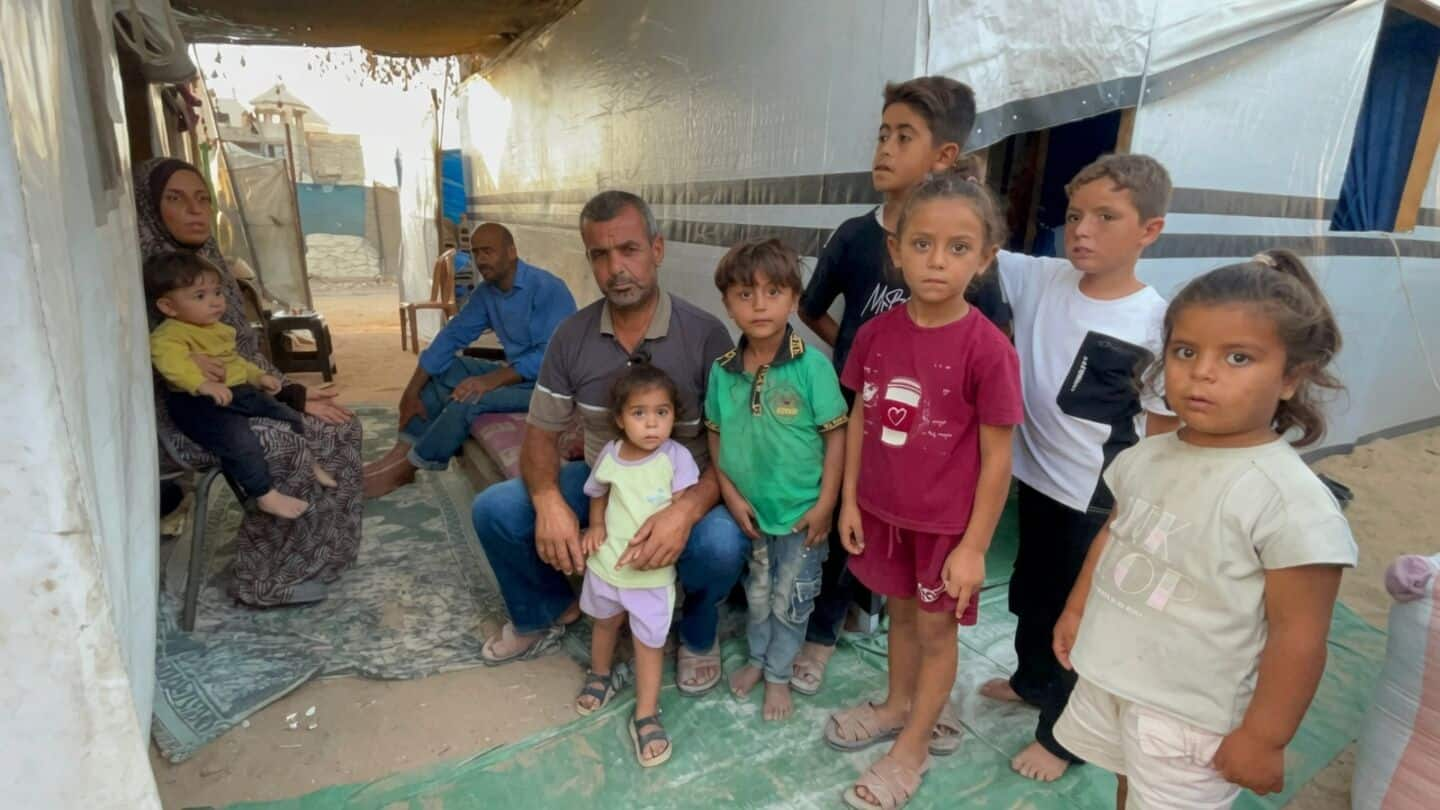
World Food Programme cuts aid to Gaza amid funding crisis
What's the story
The World Food Programme (WFP), a key provider of food assistance to the Gaza Strip, has announced drastic cuts to its operations due to a severe funding crisis. The number of people receiving aid from the United Nations agency will be reduced from 1.6 million to 1.1 million. These cuts come as winter approaches and many families in Gaza continue to struggle with food insecurity.
Aid reduction
Hot meals served by community kitchens will be slashed
The number of hot meals served by community kitchens will be slashed from 250,000 to 150,000 a day.
Families in remote areas will now receive meals every other day instead of daily.
The WFP's Palestine director, Shaun Hughes, clarified that these cuts are due to financial constraints and not because humanitarian needs have decreased or access has been restricted.
Financial crisis
Cash transfers and ration boxes to be reduced
Since July, cash transfers to around 500,000 people have been reduced, limiting their purchasing power in local markets.
The number of Gazans receiving flour bags and ration boxes will also be cut from 1.1 million to 600,000 a month.
The WFP has received less than half the funding it did in previous years for its Palestinian operations in 2026 and urgently needs $450 million to keep "critical" operations running over the next six months.
Ongoing crisis
Unemployment at over 80% in Gaza
Despite a year-old ceasefire between Hamas and Israel, humanitarian conditions in Gaza remain dire. There has been no reconstruction and little recovery as Israel closely controls goods entering through crossings.
While food markets are stocked, most people can't afford to buy from them due to high unemployment rates.
Over 80% of Gaza's population is unemployed and relies on aid for survival.
Public reaction
Humanitarian workers warn famine risks remain high
Families currently receiving WFP food handouts have complained about insufficient and monotonous diets.
Dalal al-Dahdouh, living in the ruins of her home with a family of eight, fears new cuts will have "a major impact."
She recalls life before the war with fresh vegetables and proper sanitation facilities.
Humanitarian workers say despite slight improvements since last year, acute food insecurity and famine risks still loom over Gaza.