White House denies US Navy escorted tanker in Hormuz
What's the story
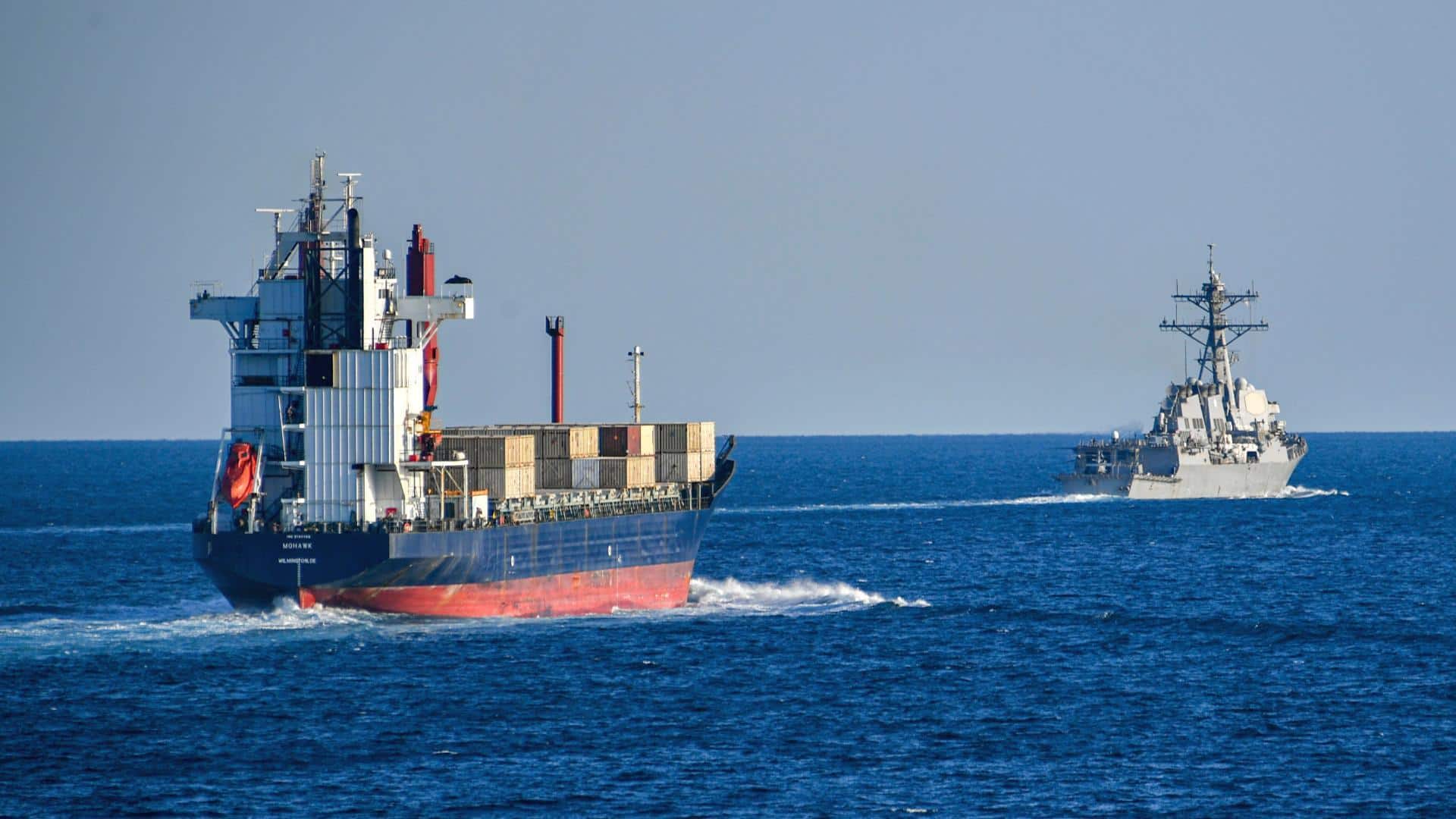
The United States military did not provide an escort for a tanker through the Strait of Hormuz, the White House has confirmed. This comes after Energy Secretary Chris Wright had posted and deleted a claim on social media that the US Navy had escorted an oil tanker in the vital waterway. White House Press Secretary Karoline Leavitt later clarified that no such military escort took place.
Post controversy
Wright's deleted post credited Trump for tanker escort
Wright's now-deleted post had erroneously credited President Donald Trump's administration for the alleged escort of a tanker through the Strait of Hormuz.
In his post, he had written, "President Trump is maintaining stability of global energy during the military operations against Iran."
"The US Navy successfully escorted an oil tanker through the Strait....to ensure oil remains flowing to global markets."
The post was quickly deleted with no explanation.
White House
'US Navy has not escorted a tanker or a vessel'
Addressing the post in a news briefing, Leavitt denied the claim.
"I can confirm that the US Navy has not escorted a tanker or a vessel at this time," she said. "Though, of course, that's an option the president has said he will absolutely utilize if and when necessary at the appropriate time."
Over 20% of the world's oil travels through the strait, a tiny maritime channel connecting Iran, Oman, and the UAE.
Market manipulation
Iran accuses US of spreading fake news
However, since the United States and Israel launched an attack on Iran on February 28, traffic via Hormuz has come to a halt because of worries of Iranian strikes.
Iranian Foreign Minister Abbas Araghchi accused US officials of spreading fake news to manipulate global oil markets.
He wrote on social media, "US officials are posting fake news to manipulate markets. It won't protect them from the inflationary tsunami they've imposed on Americans."
Shipping support
Trump promises to help with global shipping operations
The Trump administration had earlier promised to help with global shipping operations affected by the conflict.
On March 3, Trump said the US Development Finance Corporation would provide "political risk insurance and guarantees" for vessels passing through Hormuz.
He had also hinted at military support if needed, saying that the US Navy would begin escorting tankers through the strait.
But considering the waterway's proximity to Iran and Tehran's pledge to close it, it is uncertain how effective that would be.
Economic impact
Americans oppose military action against Iran as oil prices spike
The inability to move oil through the strait has been blamed for skyrocketing oil prices.
The American Automobile Association reported a spike in US oil prices, with the average price reaching $3.54 per gallon (94 cents per liter).
The conflict with Iran is unpopular among Americans, according to recent polls.
A Quinnipiac University survey found that 53% of US voters opposed military action against Iran, while a Reuters-Ipsos poll showed even higher disapproval at 60%.