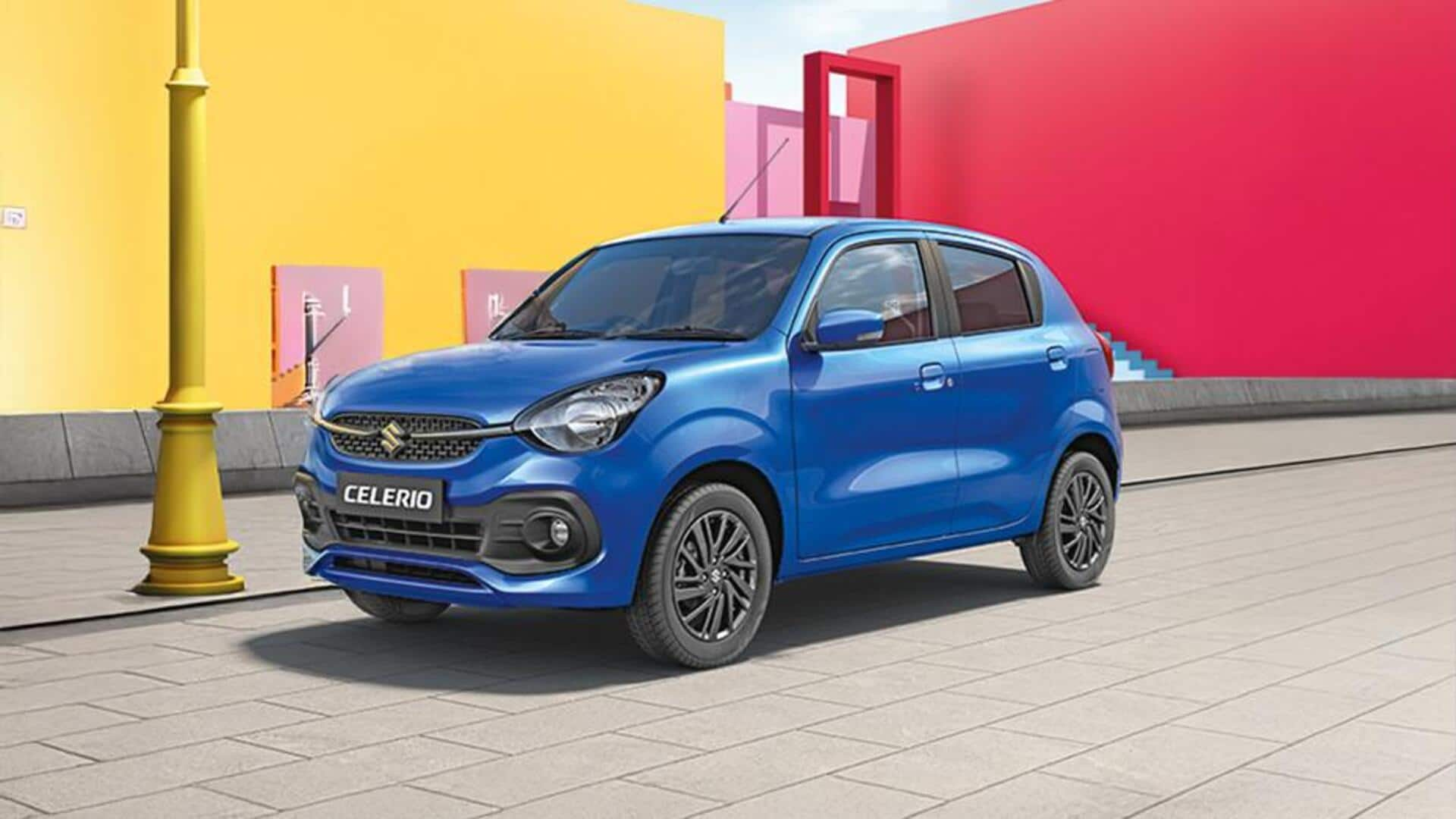
Will Modi government offer incentives for buying small cars?
What's the story
The Indian government is looking into the incentives provided by the US, China, European Union (EU), Japan, and South Korea for small cars under Corporate Average Fuel Efficiency (CAFE) regulations. The move comes as a way to align India's automotive policies with those of developed nations. This comes amid a debate between major Indian carmakers such as Maruti Suzuki and Tata Motors over proposed weight-based concessions for small cars in the upcoming CAFE 3 norms.
Data submission
SIAM presents global data on CAFE norms
The Society of Indian Automobile Manufacturers (SIAM) has submitted detailed information to the government on CAFE incentives for small cars in major auto markets.
This is the first time such a comprehensive data set has been provided.
The move comes after differences were observed between brands over the draft norms issued by the Bureau of Energy Efficiency (BEE).
International standards
Global norms and their impact on small cars
SIAM's data shows that China gives relaxations under CAFE for small cars weighing less than 1,090kg.
In Europe, emission targets are relaxed for cars below 1,115kg while South Korea has similar provisions for vehicles under 1,100kg.
Japan follows a continuous parabolic curve where the delta in target reduces with weight, while the US provides incentives to vehicles with a footprint of less than 41 square feet.
Regulation timeline
CAFE 3 norms will come into effect from April 2027
The CAFE 3 norms, aimed at curbing fuel consumption and emissions, will come into effect from April 2027.
A car's CO2 emissions are directly proportional to its fuel consumption.
The draft rules issued by BEE for CAFE 3 have divided the industry.
Market leader Maruti Suzuki has argued that emission norms should be relaxed for small cars as they are more fuel-efficient than larger vehicles, and play a key role in increasing motorization among entry-level consumers.
Industry divide
Tata Motors opposes concessions for small cars
On the other hand, Tata Motors has opposed any concessions for any category of cars in the upcoming norms.
The draft rules proposed an advantage while calculating CO2 emissions for cars shorter than four meters, weighing less than 909kg and powered by sub-1,200cc engines.
However, sales of such lightweight cars have been declining over the years, accounting for just 7.5% of all passenger vehicles sold in India last fiscal year.