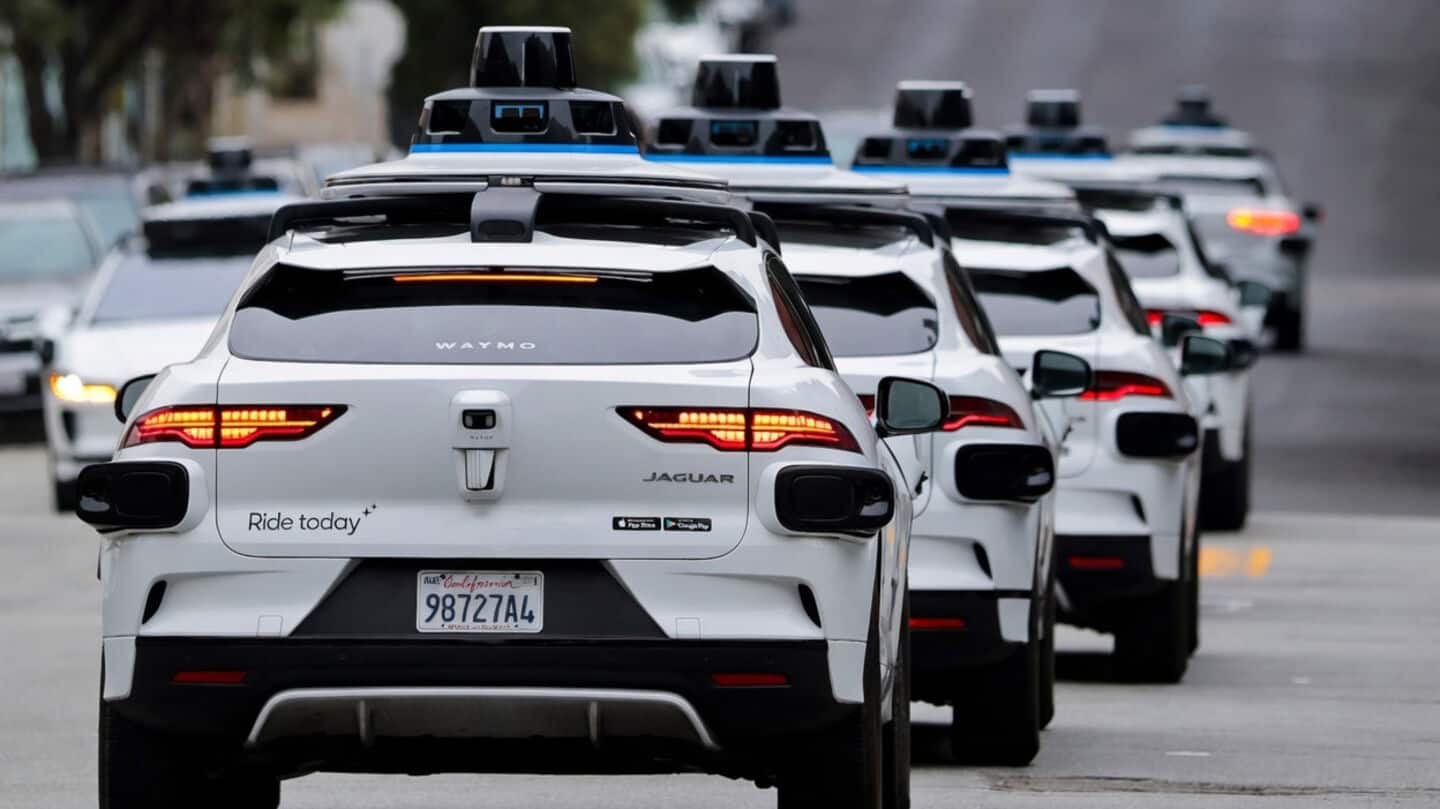
California passes new law to tackle robotaxi disruptions
What's the story
In a bid to enhance public safety, California has passed a new law requiring autonomous vehicle (AV) technology companies such as Tesla, Zoox, and Waymo to provide on-ground support for first responders. The legislation comes after several high-profile incidents in the state where robotaxis have caused traffic disruptions or impeded police and firefighters.
Legislative action
Waymo at center of incidents
The new law, known as Senate Bill 1246, was signed into law by Governor Gavin Newsom.
It comes in response to a series of incidents involving robotaxis disrupting traffic or interfering with emergency responders.
Waymo, the largest US robotaxi operator with some 4,000 autonomous vehicles in its commercial fleet across the country and around 1,200 in San Francisco Bay Area alone, has been at the center of these incidents.
Operational challenges
Waymo relied on 1st responders to manually drive vehicles
A TechCrunch investigation earlier this year revealed several instances where Waymo had to rely on first responders to manually drive its vehicles when they encountered problems.
This sparked calls from state and federal lawmakers for stricter rules governing robotaxis, especially their behavior around first responders.
The National Highway Traffic Safety Administration (NHTSA) even wrote to AV developers demanding "solutions" to these issues.
Staffing requirements
Remote drivers must be US-based and hold US driver's license
The new law mandates that AV developers can only hire remote drivers who are based in the US and hold a valid US driver's license.
This is aimed at addressing concerns over how companies use remote operations when autonomous vehicles run into trouble.
The term "remote operations" has been interpreted broadly, but the law's term "remote drivers" is much more specific.
Notification obligations
AV companies could be fined if vehicle blocks first responders
The law also mandates AV companies to inform cities, towns, and other local jurisdictions about the location and status of vehicles during system-wide failures.
They are also required to provide "local incident technicians" who can assist with AV accidents and obstructions.
Companies could be fined if an AV blocks first responders during an emergency for more than 30 minutes.