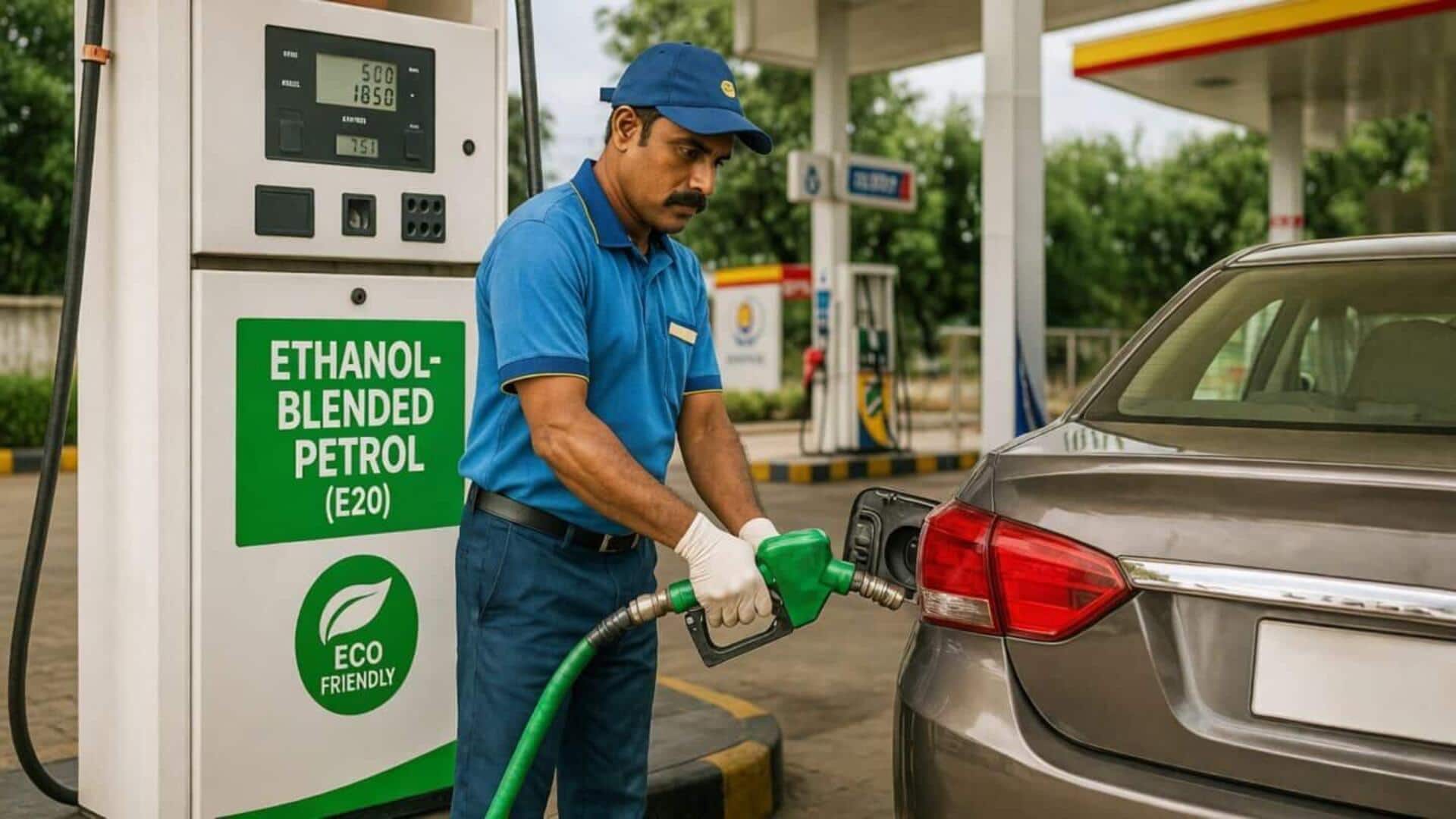
Centre may delay E25 petrol rollout amid E20 concerns
What's the story
The Indian government is likely to delay the rollout of petrol blended with 25% ethanol, or E25. The decision comes amid concerns over vehicle compatibility and mileage issues. A graded approach is being considered for the introduction of this new fuel type. The government wants to give automakers and the entire fuel ecosystem more time to adapt and prepare for these changes.
Fuel composition
What is E25 petrol?
E25 petrol is a mixture of 75% petrol and 25% ethanol.
While no official timeline has been given for its rollout, recent policy decisions have hinted at the government's readiness to move beyond E20.
These include an excise duty exemption for petrol containing 22-30% ethanol and specifications notified by the Bureau of Indian Standards for such blends.
Concerns addressed
Addressing concerns
A senior-level government meeting last week discussed the need to scientifically address concerns raised by vehicle owners about mileage, performance, and potential damage to components.
While some complaints were deemed "overblown," there was an acknowledgment that original equipment manufacturers need to respond to consumer concerns.
The government is leaning toward a phased transition beyond E20, in line with feedback from vehicle manufacturers.
Fuel transition
Initial plans for E20 rollout
The government had initially planned to introduce E20 petrol nationwide by 2030, but the target was advanced by five years.
Now, E20, which contains 80% petrol and 20% ethanol, is the standard fuel blend available across India.
However, this accelerated transition has led to complaints from some owners of older cars and two-wheelers designed or certified for E10 petrol.
Performance issues
Potential impact on mileage and vehicle components
Ethanol has a lower calorific value than petrol, which can affect mileage. The extent of this impact depends on the vehicle's age, engine design, and certification.
Ethanol is also hygroscopic (absorbs moisture), which may lead to corrosion in components not designed for higher blends.
Transitioning to E25 would require automakers to work on engine calibration, fuel-system durability, material compatibility, and corrosion resistance.
Industry adaptation
Automakers and ethanol blending push
Several automakers have started developing engines with higher compression ratios for better performance on higher ethanol blends.
However, these changes will mostly be seen in future models rather than older vehicles already in use.
The government has been promoting ethanol blending to cut down petroleum imports and reduce the carbon content of transport fuels.
It has assured that higher blends will only be introduced after testing and stakeholder consultations.