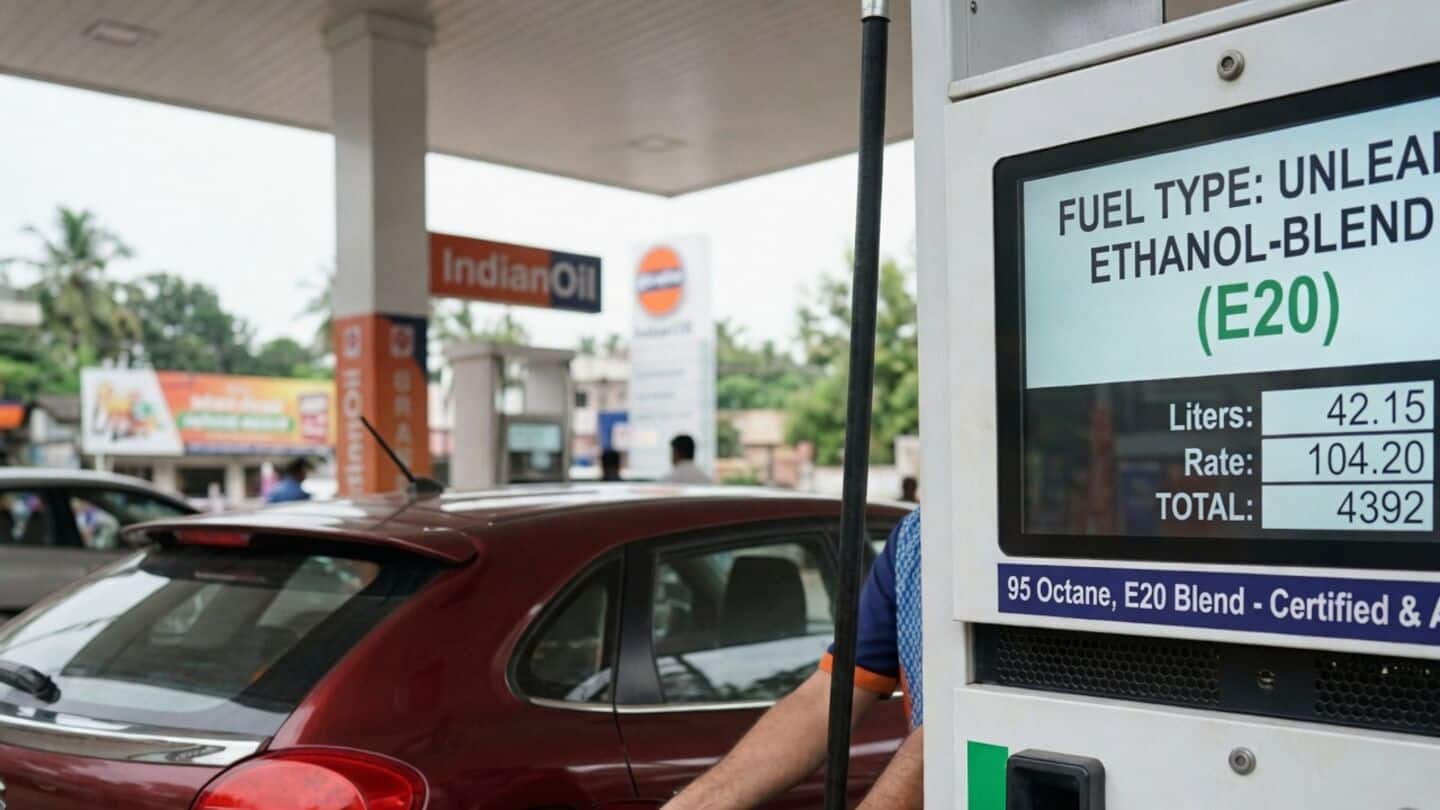
E20 woes: 67% of pre-2023 car owners report mileage drop
What's the story
A recent survey by LocalCircles has revealed that a majority of pre-2023 petrol vehicle owners have seen a major drop in their cars' mileage. The study found that 67% of respondents reported their vehicles were giving more than 10% lower mileage since early 2025. Nearly one-fourth of the participants even reported a decline exceeding 20%. These findings highlight the persistent concerns over E20 petrol, which is blended with ethanol to reduce reliance on fossil fuels.
Maintenance concerns
Maintenance issues on the rise
The LocalCircles survey also highlighted a rise in maintenance issues among pre-2023 petrol vehicle owners.
A whopping 45% of respondents reported an unusual increase in wear and tear or repairs involving components like the engine, fuel line, fuel pump, injectors, and fuel tank since early 2025.
This is a significant jump from the 29% reported in May 2026.
The findings point to growing concerns among motorists over their vehicles' performance amid increasing ethanol blends in petrol.
Widespread impact
Impact on newer E20-compatible vehicles
The survey's findings aren't just limited to older cars.
A parallel LocalCircles study of over 22,000 petrol vehicle owners who bought their cars in 2023 and 2024 found that as many as 59% of them have also seen a mileage drop of over 10% since early 2025.
One-fourth of the respondents even said the reduction was more than 20%, despite these vehicles being marketed as E20 compatible.
Fuel quality concerns
Possibility of petrol adulteration or contamination
The scale of the reported mileage loss exceeds the government's own estimates, which may indicate fuel quality issues beyond ethanol blending alone.
LocalCircles has flagged the possibility of petrol adulteration or contamination, including ethanol concentrations above the mandated 20% and cases of water contamination within the fuel supply chain.
It has called for an independent investigation and regular, transparent testing of ethanol content at fuel stations to ensure compliance with standards.
Official response
Government acknowledges potential impact on mileage
The government has acknowledged that E20 petrol can reduce fuel efficiency in older vehicles not calibrated for the blend, estimating a decline of around 3% to 5%.
However, it maintains there is no conclusive evidence linking E20 to engine damage.
Government agencies including ARAI, Society of Indian Automobile Manufacturers (SIAM), Indian Institute of Petroleum (IIP), and Indian Oil Corporation Limited (IOCL) have said their studies found no abnormal engine wear when E20 is used in vehicles built to applicable standards.
Legal implications
E20 debate reaches consumer court
The debate over E20 petrol has also reached the courts.
On July 16, 2026, the Raipur District Consumer Disputes Redressal Commission ordered Maruti Suzuki and its dealer to replace a Grand Vitara Strong Hybrid purchased in 2024 after the owner reported repeated stalling, misfiring, and declining performance after using E20 petrol.
If not replaced within the stipulated period, Maruti Suzuki was directed to refund ₹20.50 lakh along with ₹1 lakh as compensation for mental harassment and ₹10,000 toward litigation expenses.