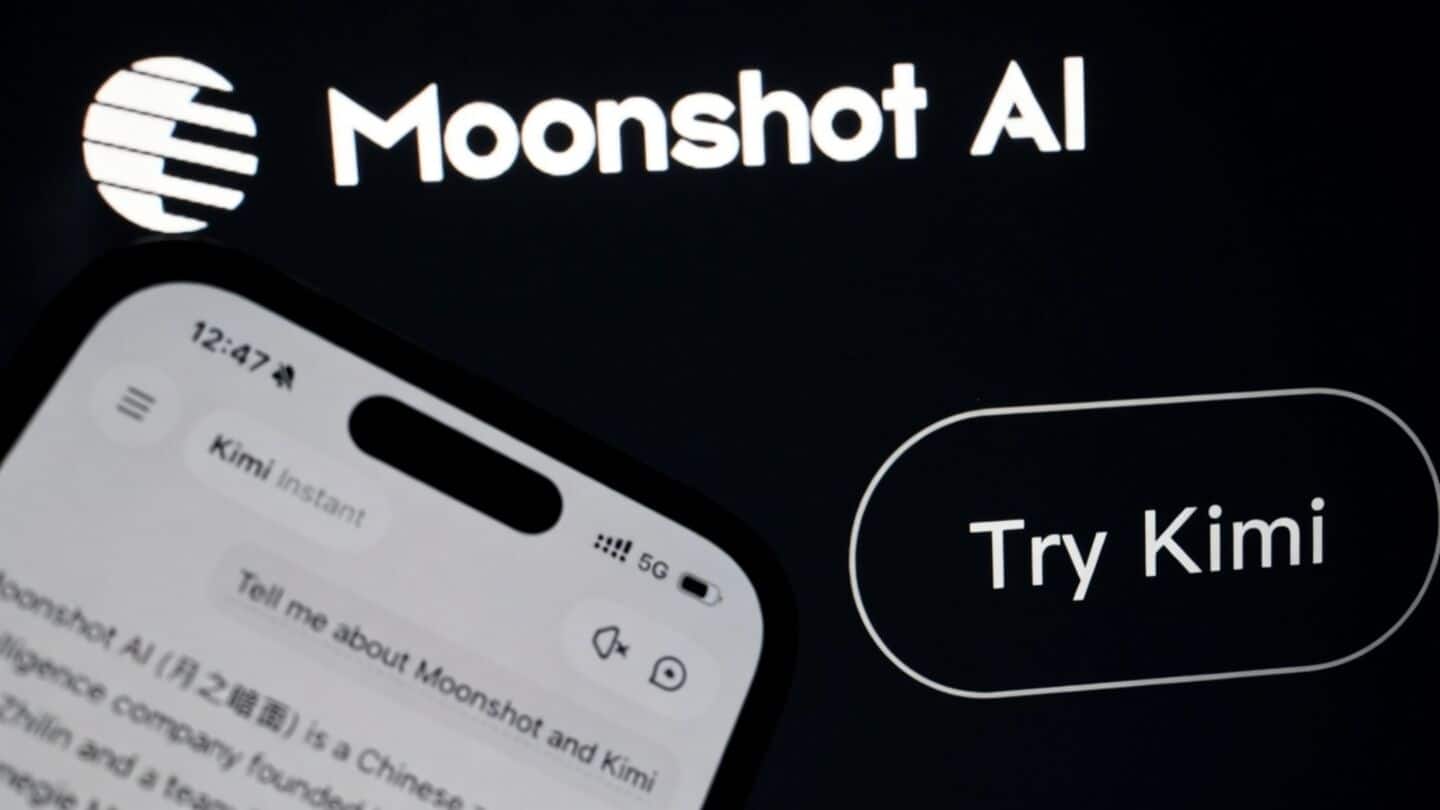
China's Moonshot AI makes Kimi K3 model publicly downloadable
What's the story
In a major development, China's Moonshot AI has announced the public release of its Kimi K3 model. The Beijing-based company will make the model's weights available for download on Monday. This move comes as US fears over Chinese infiltration into top-tier artificial intelligence (AI) development continue to grow. Yang Zhilin, founder of Moonshot AI, hopes this strategic decision will attract more users by offering better accessibility and transparency than competing US proprietary systems.
Market impact
Competing on a smaller budget
The launch of Kimi K3 is seen as a sign that Chinese companies can compete with those having full access to NVIDIA's AI accelerators on a smaller budget and with fewer advanced resources.
The release could also boost cloud AI computing providers who specialize in hosting third-party open models.
These Made-in-China AI models, led by DeepSeek, have gained global popularity due to their cost-effectiveness and similar performance to US models.
Business expansion
Moonshot AI's rapid growth and future plans
Since the launch of Kimi K3, Moonshot AI's daily sales have reportedly increased at least sixfold.
The company is now looking to raise a new investment round at a $50 billion valuation. This comes as part of its preparations for a potential IPO in Hong Kong later this year.
The move highlights Moonshot AI's rapid growth and ambition to expand its footprint in the global open software community.
AI capabilities
Kimi K3's capabilities and advantages
Kimi K3, which boasts a 2.8 trillion parameter set, is said to be on par with US companies' best AI models, Anthropic's Claude Fable and OpenAI's GPT-5.6 Sol.
The model's open weights will allow users to run it locally on their devices without worrying about token costs.
However, given its size, enterprise-grade infrastructure may be required to run this advanced AI model instead of just a laptop.
Security fears
US fears over Chinese AI advancements
The rise of Chinese open-weight AI models like Kimi K3 and Zai's GLM 5.2 has raised concerns among US companies. These models are getting closer to US frontier models and are much cheaper to run for users.
Anthropic and OpenAI have been lobbying the Trump administration for tighter restrictions on these Chinese open-weight AI models, citing potential risks of intellectual property theft and national security threats.