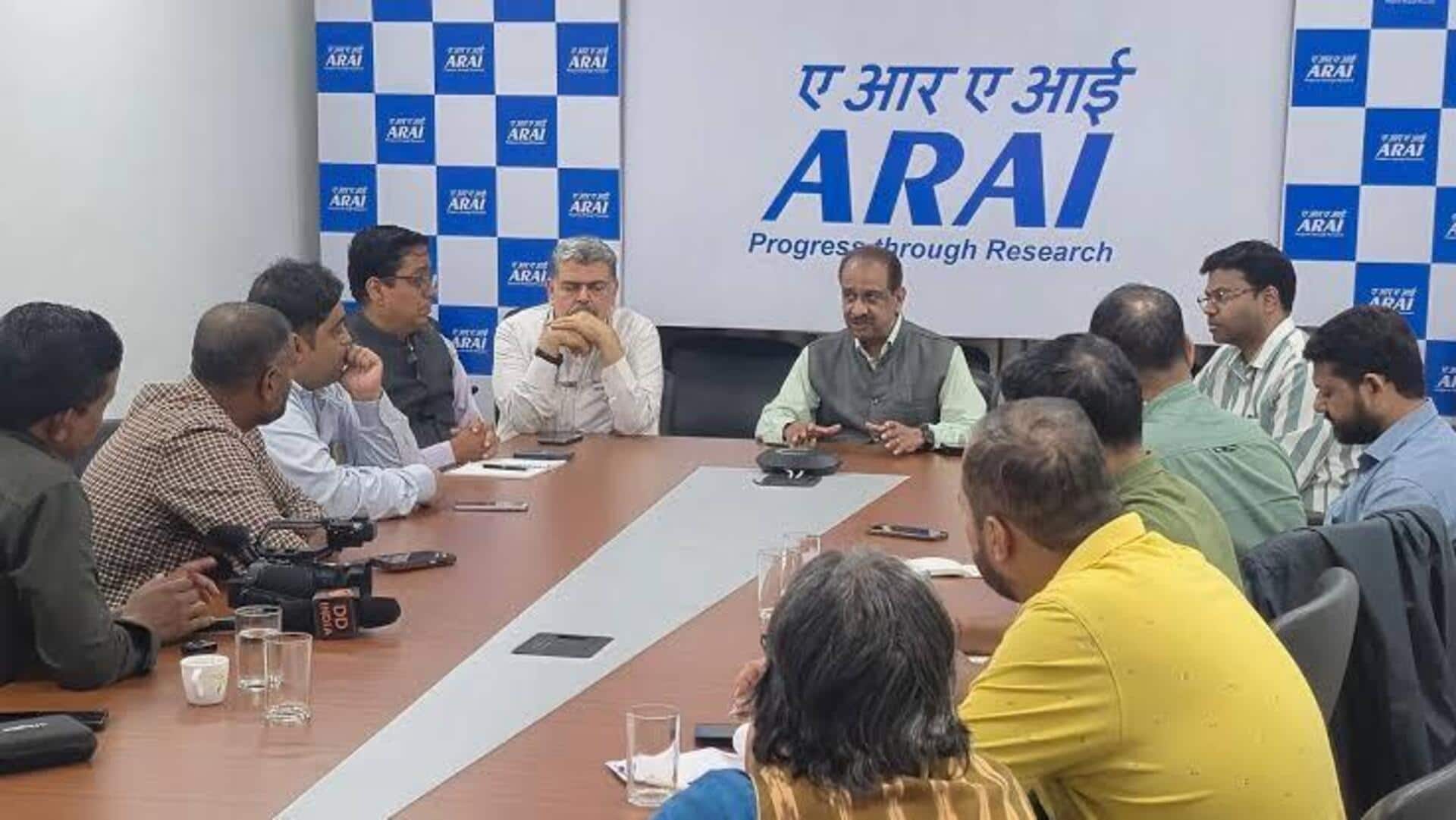
E20 fuel not damaging vehicles, claims ARAI
What's the story
The Automotive Research Association of India (ARAI) has debunked claims that the new E20 fuel is damaging vehicles. The association's director, Reji Mathai, said there was no evidence to support these allegations. He urged customers facing issues with their vehicles to visit authorized dealers for inspection instead of relying on unverified social media claims.
Testing results
Extensive testing conducted on old and new vehicles
Mathai stressed that the introduction of E20 fuel was based on extensive scientific studies and rigorous testing.
The ARAI tested both old and new vehicles, including two-wheelers, four-wheelers, and eight- to 10-year-old BS-IV vehicles over long distances.
The findings revealed that E20 fuel does not negatively impact vehicle performance or damage critical components.
Efficiency concerns
Ethanol-blended fuel may reduce mileage by 2% to 6%
Mathai admitted that ethanol-blended fuel can reduce fuel efficiency by 2% to 6%, owing to its lower energy content than petrol.
However, he clarified that this reduction in mileage does not affect engine performance or vehicle reliability.
He also highlighted that vehicle manufacturers had already made necessary engineering changes in newer vehicles to ensure compatibility with E20 fuel.
Kit caution
Mathai warns against installing aftermarket ethanol conversion kits
Mathai also warned consumers against installing aftermarket ethanol conversion kits, as their use has not been approved by the government and no regulatory framework exists.
He further clarified that these concerns are not reflected in large numbers at authorized dealerships, indicating no evidence of a widespread technical problem with older vehicles using E20 fuel.
Future steps
Adoption of WLTP for vehicle emission certification from April 2027
Mathai revealed that ARAI was tasked in 2022 with studying the impact of E20 fuel on existing vehicles.
The study involved BS-IV and older vehicles running on E10 and E20 fuels, looking at performance, fuel economy, durability, long-term use, accelerated aging and material compatibility.
He also announced India's adoption of the Worldwide Harmonized Light Vehicles Test Procedure (WLTP) for vehicle emission certification from April 1, 2027.