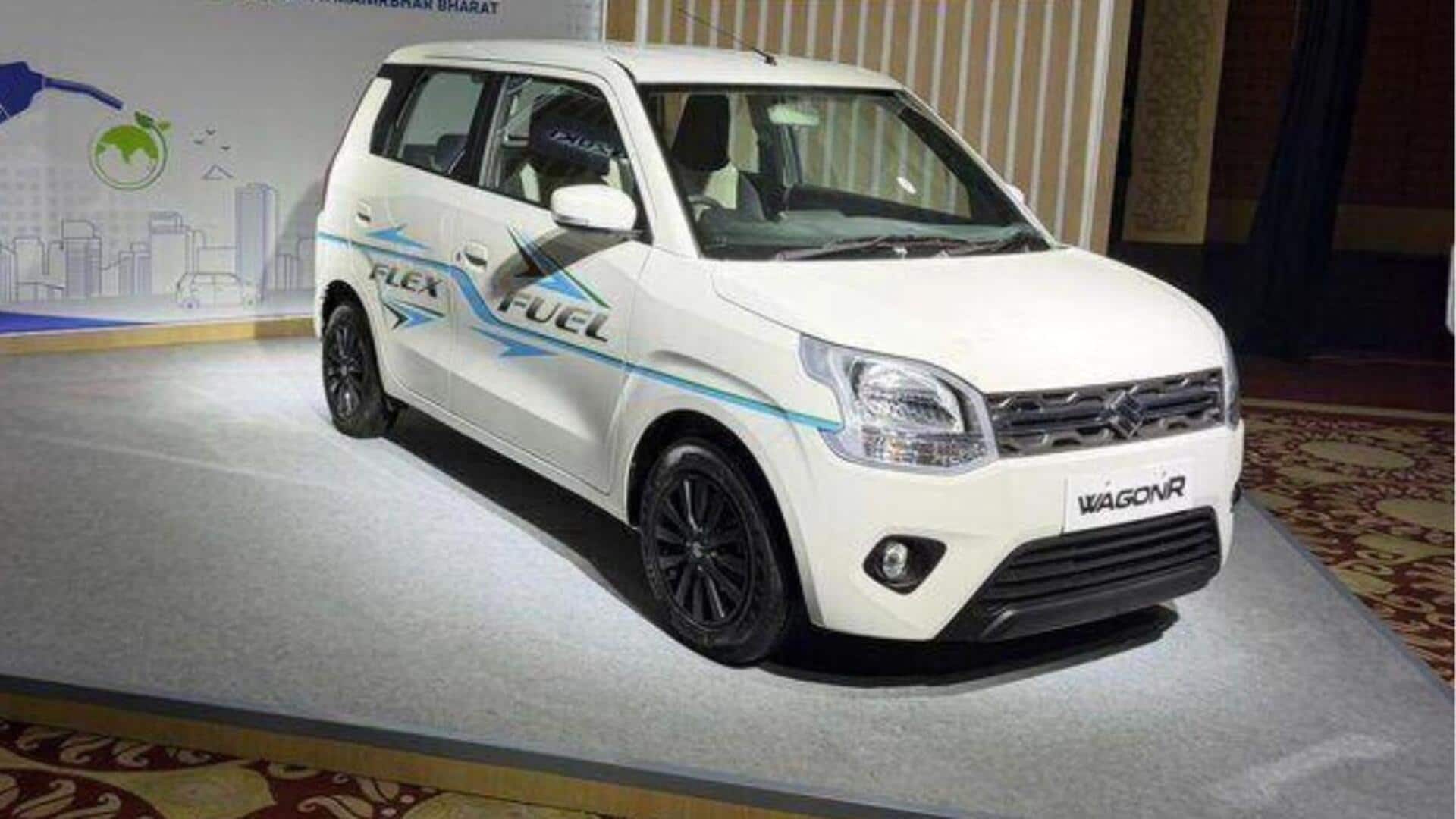
No takers for flex-fuel cars in India
What's the story
India's ambitious flex-fuel vehicle program is off to a slow start, with only three units of the Maruti Suzuki Wagon R Bioflex registered in the first month since its launch. The lackluster response highlights the gap between the government's ethanol ambitions and market readiness, industry analysts say. The sluggish uptake isn't limited to just this model but also extends to earlier flex-fuel motorcycles from Honda and Suzuki.
Adoption challenges
Factors affecting adoption of flex-fuel vehicles
The slow adoption of flex-fuel vehicles can be attributed to multiple factors. These include limited availability of E85 fuel, a narrow range of flex-fuel models, and uncertainty over running costs. As per Vahan data, only three units of the Maruti Suzuki Wagon R Bioflex had been registered by June 29. The vehicle was launched on June 4, with deliveries starting from June 17.
Vehicle versatility
Flex-fuel vehicles and E85 fuel
Flex-fuel vehicles can run on different blends of petrol and ethanol, giving consumers the option to use various ethanol concentrations based on fuel availability. The government's push for E85 is part of a larger strategy to reduce India's dependence on imported crude oil, lower vehicle emissions, and create a bigger market for domestically produced ethanol from sugarcane and surplus food grains.
Economic impact
Ethanol has less energy than petrol
Policymakers also see higher ethanol blending as a way to improve farm incomes and strengthen India's energy security. However, ethanol has less energy than petrol, which means vehicles running on E85 usually offer lower fuel economy despite the cheaper cost of fuel. This trade-off, coupled with limited fuel availability, has reduced its appeal for many consumers.
Market strategy
Limited availability of E85 fuel
India currently has 48 retail outlets selling E85 fuel, mostly in Delhi-NCR and Mumbai. This limited availability has forced manufacturers to take a phased approach instead of launching flex-fuel vehicles across the country. Despite being cheaper than petrol, higher ethanol blends generally offer lower fuel economy, diminishing much of the apparent cost advantage.
Market outlook
What have carmakers said?
Responding to Moneycontrol's questionnaire, a Maruti Suzuki spokesperson said, "The real question is how quickly stakeholders can come together behind a national priority that intend to strengthen India's energy security, support farmers' incomes and reduce carbon emissions." Other carmakers such as Toyota, Tata Motors and Hyundai have either showcased E85 and E100 vehicles or tested them but never launched them commercially.