
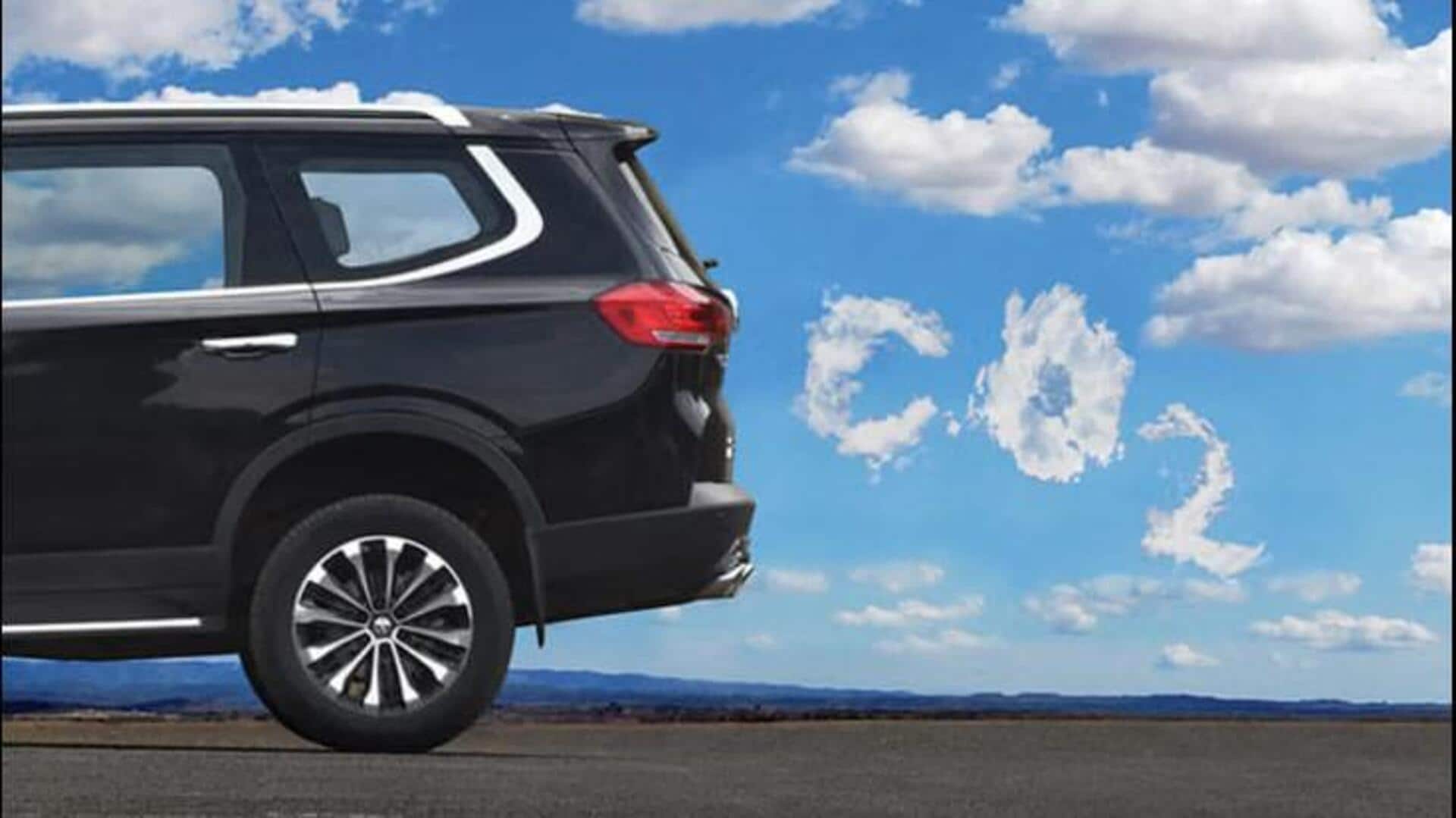
CAFE III: Will India relax emission targets for car manufacturers?
What's the story
The Indian government is reportedly considering easing the Corporate Average Fuel Efficiency (CAFE III) emission targets for car manufacturers. The proposed changes would allow Original Equipment Manufacturers (OEMs) to follow less stringent fleet-wide carbon dioxide emission target from 2027-28. Society of Indian Automobile Manufacturers (SIAM) has proposed a target of 89.6g of CO2 emissions by 2032, which is much more lenient than the Bureau of Energy Efficiency's (BEE) suggested target of 71.5g in its latest draft for CAFE III norms.
Regulatory approach
Government's stance on CAFÉ III norms
According to ET Auto, there will be no new drafts from BEE on CAFE III norms, only a final notification expected by the end of this month. The government has been receptive to SIAM's proposals during recent consultations, making it likely that the proposed flatter emission graph will be accepted. Earlier, SIAM had argued that BEE's 71.5g target would mean an unprecedented two-thirds reduction from current levels in CAFE II globally.
Industry impact
Concerns over strict emission targets
The automotive industry has expressed concerns that such a stringent threshold could lead to the premature scrapping of several vehicles. This, they say, would severely impact not just car manufacturers but also auto component suppliers. The BEE's draft CAFE III norms, released in September last year, set emission caps for OEMs's vehicle fleets over five years starting 2027-28.
Controversial proposal
Emission norms based on car weight
One of the most controversial proposals in the latest BEE draft norms is to set emission caps based on car weight. The amended BEE draft proposed a relaxation of three grams for cars weighing up to 909kg, dividing OEMs sharply. However, some stakeholders believe the government may not accept this weight criterion as it plans to adopt SIAM's proposal for less stringent overall emission targets from FY28.
Regulatory process
Stakeholder consultations and final decision
A senior official from one of the ministries involved in finalizing CAFE III norms had said that stakeholder consultations were over and the Ministry of Power would soon decide on this matter. The official indicated that the final CAFE III regulations would likely be based on 'real world' emission targets, with ICAT already defining those. He further noted these norms may tighten fleet-wide emission targets by 20-25% but not too steeply in the end.
Market disparity
Industry divide over emission standards
The proposed relaxation for small cars has sparked a public spat between OEMs with a large portfolio of small cars and those manufacturing bigger ones. The former group, including Maruti Suzuki India and Toyota Kirloskar Motors, has been lobbying for relaxation in the emission cap for small cars. Meanwhile, Tata Motors and Mahindra & Mahindra have been pushing for uniform emission standards across all vehicles irrespective of their weight.