India's two-wheeler market expected to grow 5-8% in FY27
What's the story
India's two-wheeler industry is expected to witness moderate growth of 5-8% in the fiscal year 2027. The prediction comes from a study by Jato Dynamics, which cites stable macroeconomic conditions and increasing urbanization as key factors driving this growth. Notably, the demand mix will be more important than volume in this segment.
Market leaders
Rise of scooters and EVs
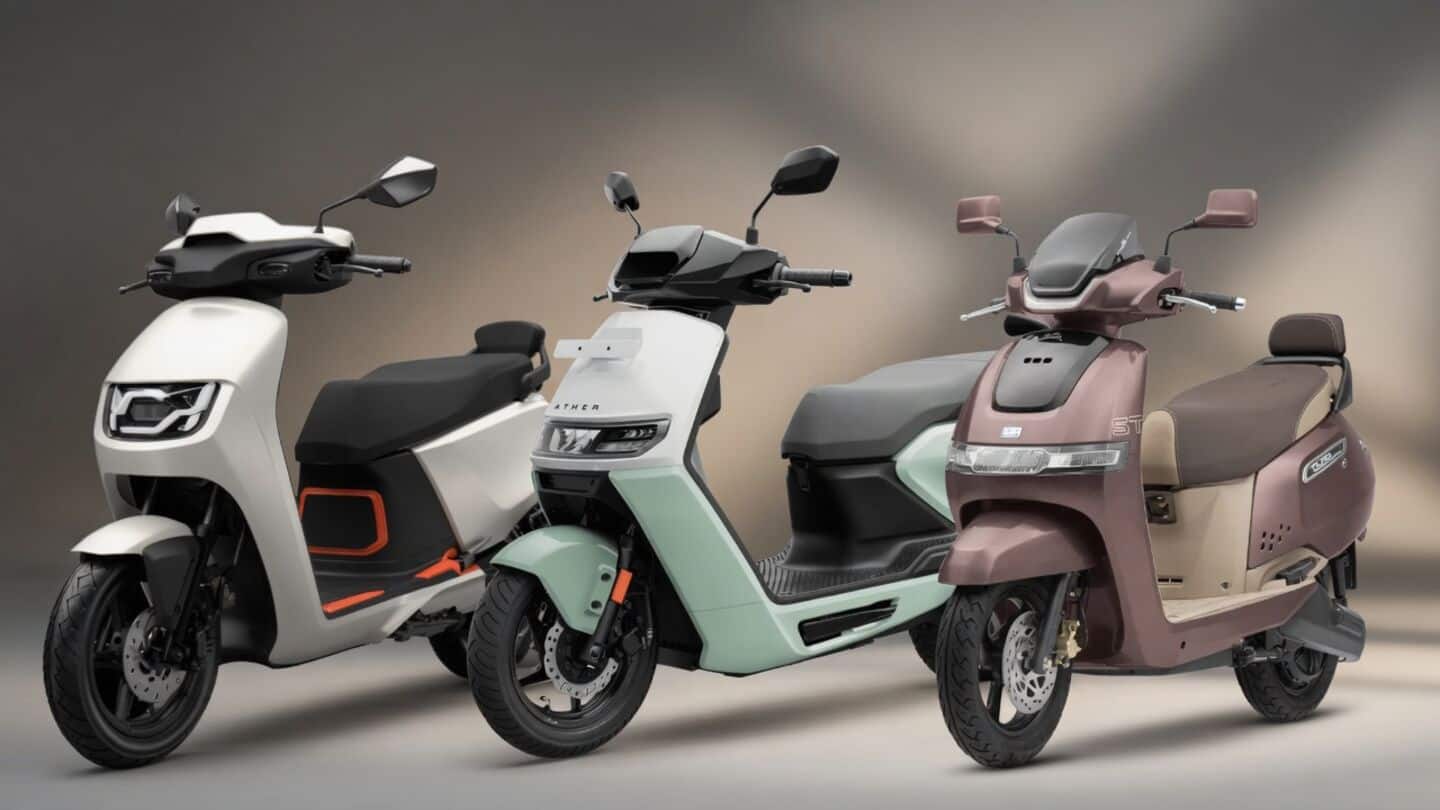
The Jato Dynamics study predicts that scooters will gain further share in the Indian two-wheeler market, driven by strong urban demand.
It also forecasts a rise in electric two-wheeler penetration in India, which could reach 7-9%.
However, this growth will depend on factors such as subsidy continuity, pricing strategy, and infrastructure development, elements that have so far fueled expansion in this sector.
Industry insights
OEM outlook
From an Original Equipment Manufacturer (OEM) perspective, the study predicts Honda will continue to gain traction in the motorcycle segment while retaining its lead in scooters.
Meanwhile, TVS Motor Company is making strides across both motorcycles and scooters.
However, Hero MotoCorp, despite its large volume share of 42% in motorcycles, remains underrepresented in scooters with only a 6.6% market share.
Future prospects
Scenarios based on EV adoption speed
The Jato Dynamics study suggests that if electric two-wheeler adoption in India picks up pace, brands strong in scooters such as TVS, Bajaj, and Ather could benefit.
However, if EV adoption slows down, motorcycle-heavy players may remain stable. This creates different scenarios depending on the speed of demand mix transition.
The report also highlights that seasonality will continue to play a key role in motorcycle sales spikes during festive seasons.
Market evolution
Structural shift in demand
The Jato Dynamics study also highlights a structural shift in the Indian two-wheeler industry.
It says incremental demand is no longer being driven by the traditional mass petrol-powered motorcycle model but increasingly by scooters and early-stage electrification within them.
This change reflects a broader transformation in consumer preferences and market dynamics, further underscoring the importance of scooters and electric vehicles (EVs) for future growth.