Why India's rich are going all in on EVs
What's the story
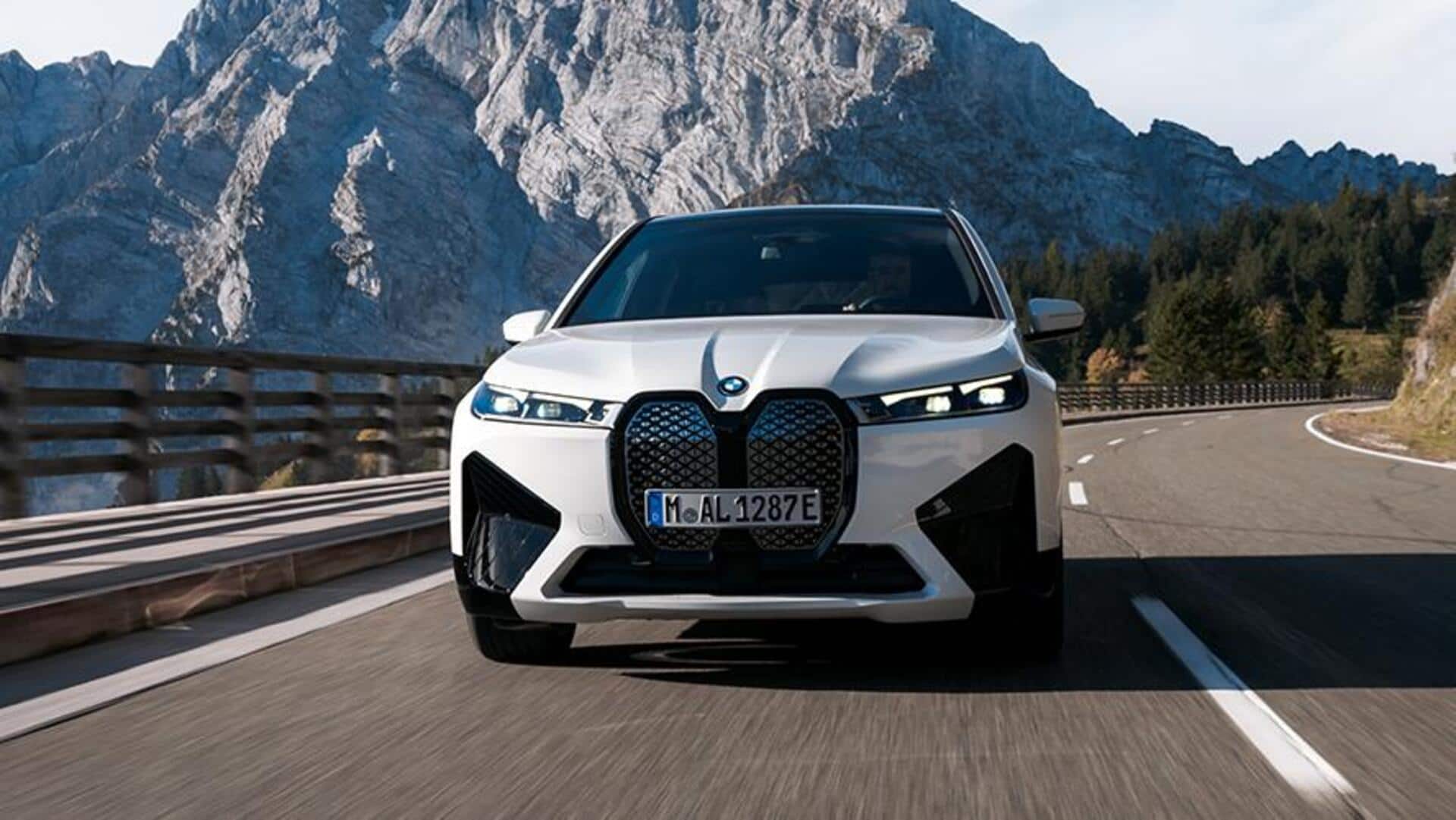
India's wealthy car buyers are embracing electric vehicles (EVs) at an unprecedented rate, outpacing the rest of the market. In the first half of 2026, one in four BMWs sold in India was an EV. This gives the German luxury carmaker an EV penetration rate nearly three times that of the overall passenger vehicle market, where EVs accounted for about 8-9% of sales during this period.
Market shift
Mercedes-Benz's top-end segment BEV sales
The trend is also seen at Mercedes-Benz, especially among its wealthiest customers.
In the same six-month period, the company sold one battery electric vehicle (BEV) from its 'top-end' segment - models priced above ₹1.4 crore - roughly every three hours.
Its CLA BEV, which starts at ₹57 lakh, has already been sold out for 2026 with new buyers waiting until next year for deliveries.
Adoption factors
Barriers keeping mainstream buyers away from EVs
Industry experts say the difference in sales numbers is due to the fact that many of the barriers keeping mainstream Indian car buyers away from EVs - charging availability, range anxiety, and higher acquisition costs - don't matter much for affluent households.
Gaurav Vangaal, Associate Director, LVP Forecasting Mobility Global, said, "These buyers have covered parking with a charger at home, so charging is never a problem."
Growth potential
Growth despite slowdown in conventional luxury car sales
Despite the slowdown in conventional luxury car sales, EVs are giving BMW and Mercedes-Benz a much faster-growing customer base.
In the first half of 2026, Mercedes-Benz's sales excluding BEVs grew just 2.3%, while BMW's non-BEV volumes increased by 5%.
However, once electric cars are factored in, Mercedes's overall growth rises to 9% and BMW's to an impressive 17%.
Sustainability appeal
Appeal of EVs goes beyond environmental concerns
Hardeep Singh Brar, President and CEO of BMW Group India, said the appeal of EVs goes beyond environmental concerns.
He noted that "EVs are not only zero-emission vehicles; they also offer sustainable mobility without any compromise on performance, significantly lower running, maintenance and taxation costs."
This proposition seems to resonate even at prices where fuel savings wouldn't be a deciding factor for customers.
Market response
Mercedes-Benz's top-end portfolio recorded whopping growth
Mercedes-Benz's top-end electric portfolio, including the EQS SUV priced around ₹1.4 crore and the ₹2.4-crore EQS Maybach SUV, recorded a whopping 27% year-on-year growth in the first half of 2026.
At the more accessible end of the luxury market, Mercedes has already sold out its entire 2026 allocation of CLA BEV.