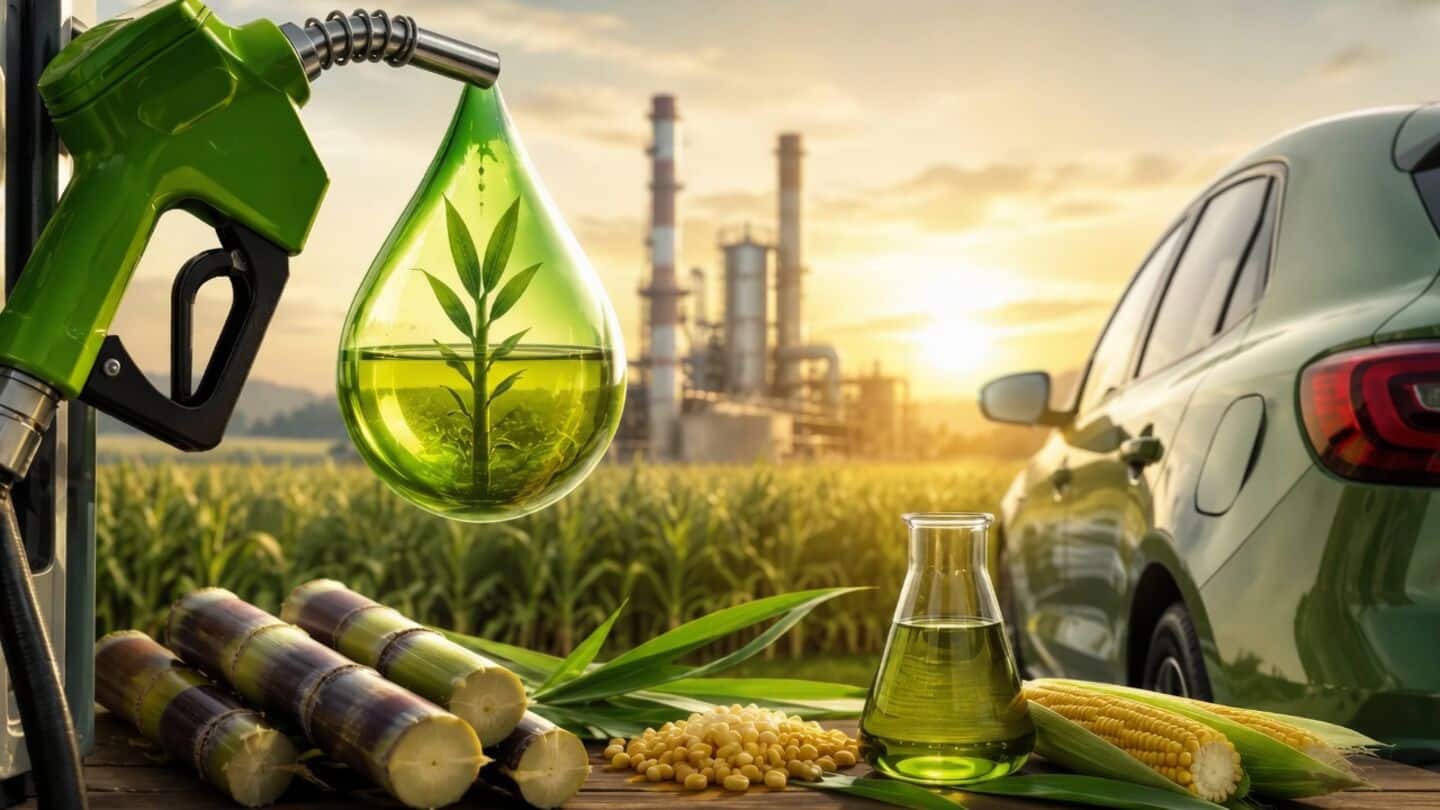
India to adopt E100 fuel: What it means for vehicles
What's the story
India is set to embrace E100 fuel, a 100% ethanol standard approved by Union Minister Nitin Gadkari. Unlike the current E20 standard that blends 20% ethanol with petrol, the new E100 is a pure form of ethanol. This means it can't be used in conventional petrol vehicles and requires specially designed engines. The move comes as part of India's efforts to reduce dependence on imported crude oil and promote cleaner mobility options.
Biofuel benefits
Renewable biofuel
E100 is a renewable biofuel, mainly produced from sugarcane, corn, and other agricultural feedstocks.
In India, most of the ethanol comes from sugarcane-based products like molasses.
The new fuel standard will allow automakers to launch vehicles that can run purely on ethanol without any petrol or diesel.
This could drastically reduce India's dependence on fossil fuel imports and contribute to energy security while supporting farmers and the agriculture industry.
Energy independence
Energy security
The introduction of E100 fuel is a major step toward India's energy security.
The country imports nearly 90% of its crude oil needs, making it vulnerable to rising oil prices and geopolitical uncertainties.
However, with the new ethanol standard, India can produce more of its own fuel domestically.
This could significantly cut down on foreign oil dependence and bolster the country's economy by reducing dollar outflows for oil imports.
Vehicle compatibility
Boost for flex-fuel vehicles
The new E100 standard is also a major boost for flex-fuel vehicles, which are designed to run on gasoline, pure ethanol, or any blend of both in a single fuel tank.
Several automakers are already working on flex-fuel cars. Maruti Suzuki has launched a 100% ethanol-compatible version of its popular WagonR model while Hero MotoCorp has introduced two motorcycles that can run on pure ethanol.
Tax benefits
Government waives excise duty on ethanol-blended petrol
The Indian government has also waived excise duty on petrol blended with higher levels of ethanol.
The finance ministry exempted 22%, 25%, 27%, and 30% ethanol-blended petrol (E22, E25, E27 and E30) from central excise duty.
This is part of an effort to promote the use of ethanol-blended fuels in India and reduce dependence on fossil fuels.