Why Maruti Suzuki's small cars are seeing a sales dip
What's the story
Maruti Suzuki, India's largest automaker, is facing a capacity crunch post GST 2.0. The firm has reported its highest-ever monthly sales of 2.14 lakh units but is currently operating above its installed production capacity. "Our production capacity is 24 lakh units annually, but we are currently operating at more than 100%," said Partho Banerjee, Senior Executive Officer-Marketing and Sales at Maruti Suzuki.
Sales dip
Decline in mini and compact segment
Despite the record sales figure, Maruti Suzuki witnessed a 7.86% decline in its mini and compact segment.
The company sold 76,624 units in February 2026, as opposed to 83,168 units during the same period last year.
Banerjee attributed this decline to capacity constraints and said they are rotating production across segments every month to balance waiting periods for customers.
Production balance
Calibrating production month-on-month
Banerjee said Maruti Suzuki is calibrating its production month-on-month to avoid long waiting periods for any model.
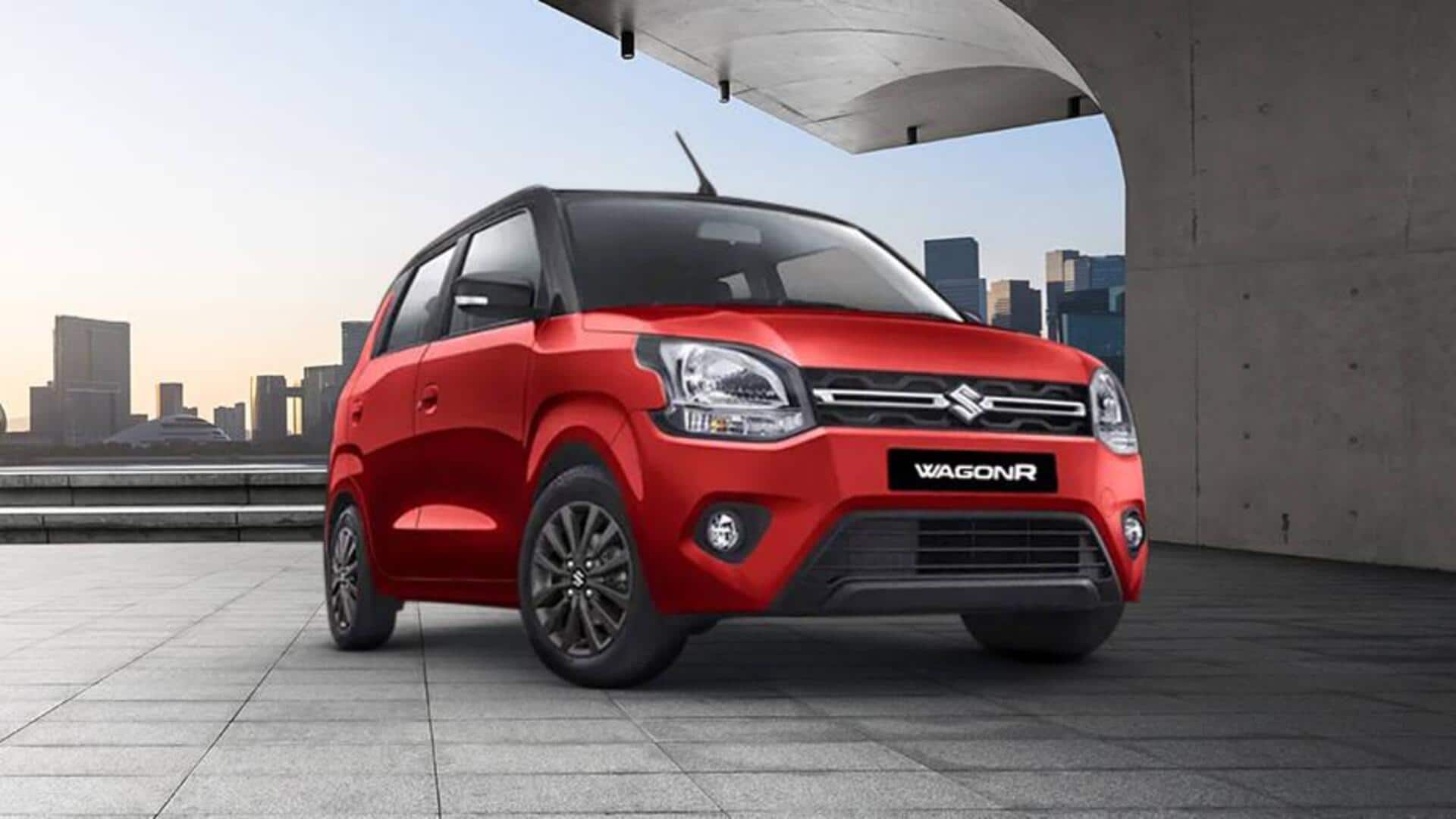
He highlighted that the company's popular car, WagonR, currently has a waiting period of over a month.
"We produced more WagonR units last month while in December we focused on mini-segment cars such as Alto and S-Presso," he added.
Expansion plans
Plans to commission new production line in April
Maruti Suzuki plans to commission a new production line in April, which will help improve supply from May onward.
The company's exports have also witnessed a major boost, with overseas shipments rising by 56.48% year-on-year to 39,155 units in February this year.
This growth is largely attributed to the success of its first electric vehicle (EV), the e-Vitara.