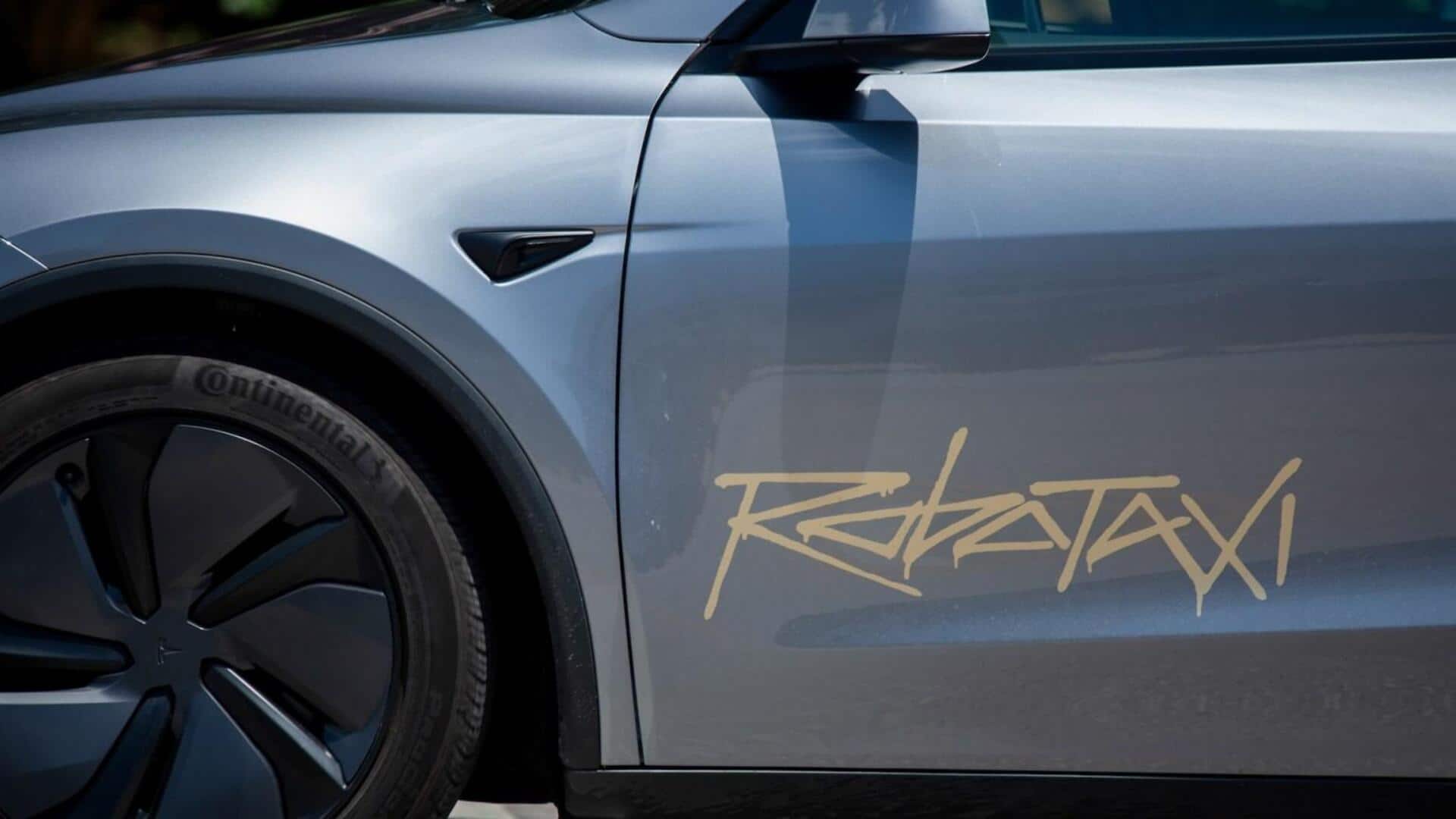
Tesla, Uber, Waymo win permits to deploy robotaxis in Nevada
What's the story
The Nevada Transportation Authority has approved permits for Tesla, Uber, and Waymo to operate commercial robotaxi services in Clark County. The unanimous decision will see as many as 8,000 robotaxis deployed across the county over the next year. Tesla's permit allows the company to deploy as many as 5,000 robotaxis in Clark County.
Deployment details
Breakdown of permits issued to Waymo and Uber
Waymo has been granted permission to operate up to 1,000 autonomous vehicles over the next year.
Uber also got approval for the same number of robotaxis but through partnerships with Hyundai subsidiary Motional and Zoox.
The latter already has a permit for an autonomous vehicle network company that permits it to operate 100 robotaxis.
Opposition voices
Concerns over rapid deployment of robotaxis
Despite the approval, there are concerns about the rapid deployment of robotaxis.
Eric Early, Tesla's Cybercab chief engineer, said during the meeting that "5,000 has always been a ceiling for us."
He added that they wouldn't be in a position to deploy that many vehicles by this time next year.
This sentiment was echoed by representatives from local taxi companies and the Livery Operators Association, who argued against oversaturation of commercial transportation in Nevada.
Market competition
Impact on local workforce and transportation ecosystem
Even if Tesla, Uber, and Waymo deploy only half of their permitted robotaxis, Clark County will become a major battleground for these companies.
They will all be competing for the same riders in Las Vegas.
This fast-paced deployment of robotaxis could have a huge impact on the city's workforce. It could either create new jobs to maintain and clean these vehicles or eliminate human taxi and gig drivers altogether.
Strategic stance
Uber's hybrid model proposal
Uber has been pushing for a hybrid model where ride-hailing networks consist of both humans and robotaxis.
The company even proposed a system that would require robotaxis to operate on a ride-hailing network with human drivers.
This position puts it at odds with Waymo and serves as a safeguard against its own autonomous ambitions not matching up to Tesla's or Waymo's.