Why no Indian electric two-wheeler maker is profitable yet
What's the story
The Indian electric two-wheeler (e2W) industry has seen phenomenal growth, outpacing other EV segments in sales. According to the Federation of Automobile Dealers Associations (FADA), over 1.4 million units were sold in FY26, compared to just 199,000 electric passenger vehicles and over 800,000 electric three-wheelers. However, despite this growth and an increase in market penetration from 6.1% to 6.5%, profitability remains elusive for most e2W manufacturers.
Financial challenges
e2W sales in FY26 and profitability challenges
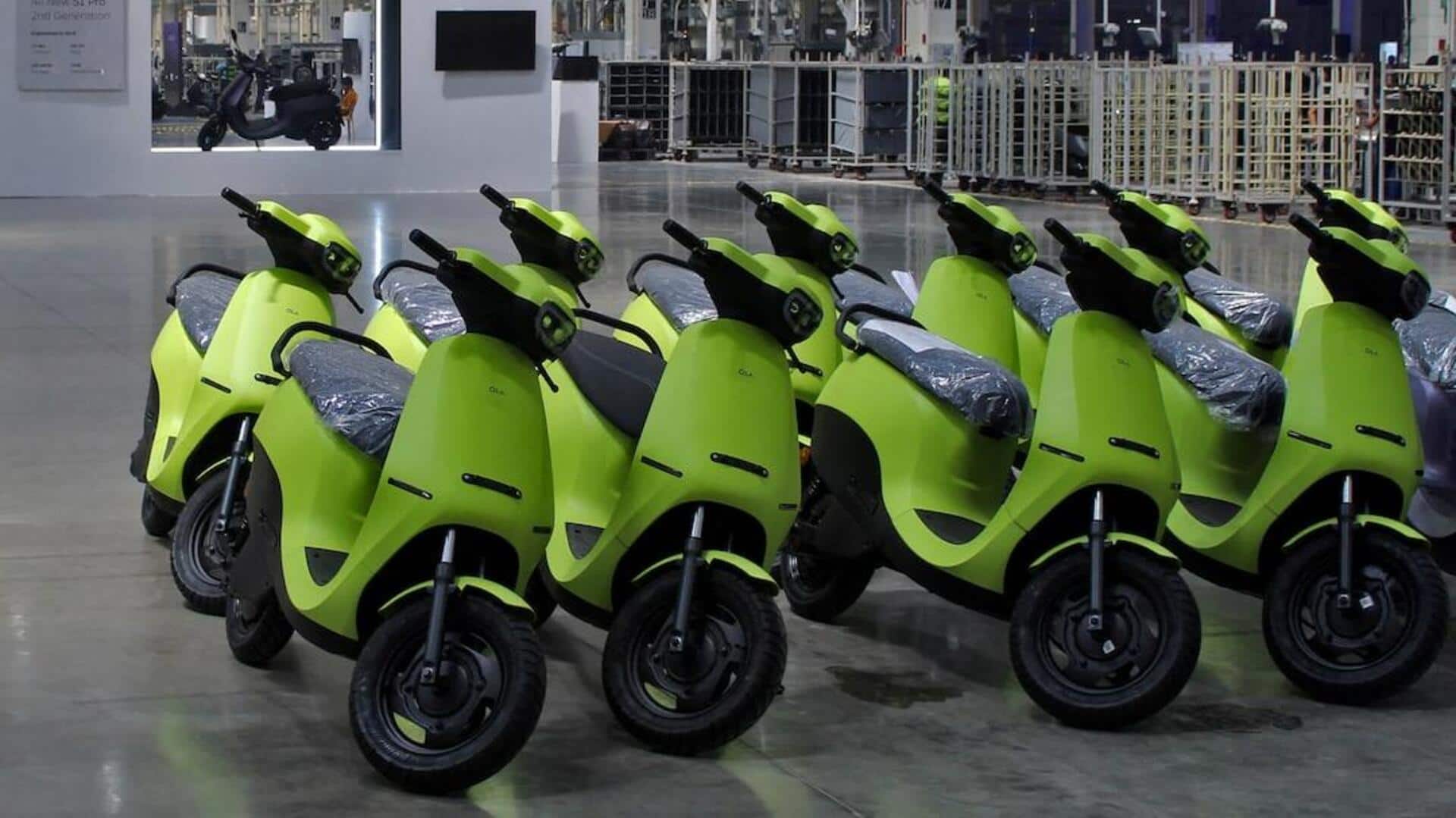
A 2024 Bernstein report revealed that the Indian e2W industry generates annual revenues of around $1.3 billion but suffers an estimated EBIT loss of $300-400 million without incentives. The sector is home to several players, including dedicated EV manufacturers like Ola Electric and Ather Energy as well as traditional internal combustion engine (ICE) manufacturers such as Bajaj Auto and Hero MotoCorp. However, none have turned a profit yet from their e2W ventures.
Cost pressures
High component costs and limited localization
Industry experts attribute the lack of profitability to high component costs, limited localization, and the need for continued investments in technology and distribution. Ashim Sharma, Senior Partner and Group Head, Business Performance Improvement Consulting (Auto, Engineering and Logistics) at Nomura Research Institute, said battery cells account for as much as 50% of vehicle costs but are largely imported. He added that motors and power electronics also have limited localization with many components still sourced from overseas suppliers.
Production challenges
Investment spread over fewer units
Despite rapid growth, e2W volumes are still much lower than conventional ICE vehicles. This means that investments in R&D, software development, manufacturing facilities and product engineering are spread over fewer units. New-age EV manufacturers also have to build sales and service networks from scratch unlike legacy two-wheeler makers who already have these established systems in place.
Signs of progress
Some companies witnessing improvements in unit economics
Despite industry-wide profitability pressure, some companies are witnessing improvements in unit economics. Bajaj Auto's electric scooter business has reached an important milestone with its Chetak model becoming EBITDA neutral. This indicates that scale, product maturity and procurement efficiencies can significantly improve economics over time. Manufacturers are also focusing on deeper localization and technology ownership to cut costs further.
Future prospects
Push for local manufacturing and government initiatives
Industry executives believe that improving domestic manufacturing capabilities will be crucial for long-term profitability. Government initiatives like Production Linked Incentive (PLI) schemes for advanced chemistry cells and auto components are expected to promote local manufacturing of batteries and electronics in the coming years. Several manufacturers, including Ola Electric, are also investing in localization by pursuing battery cell manufacturing as part of their broader efforts to reduce import dependence.