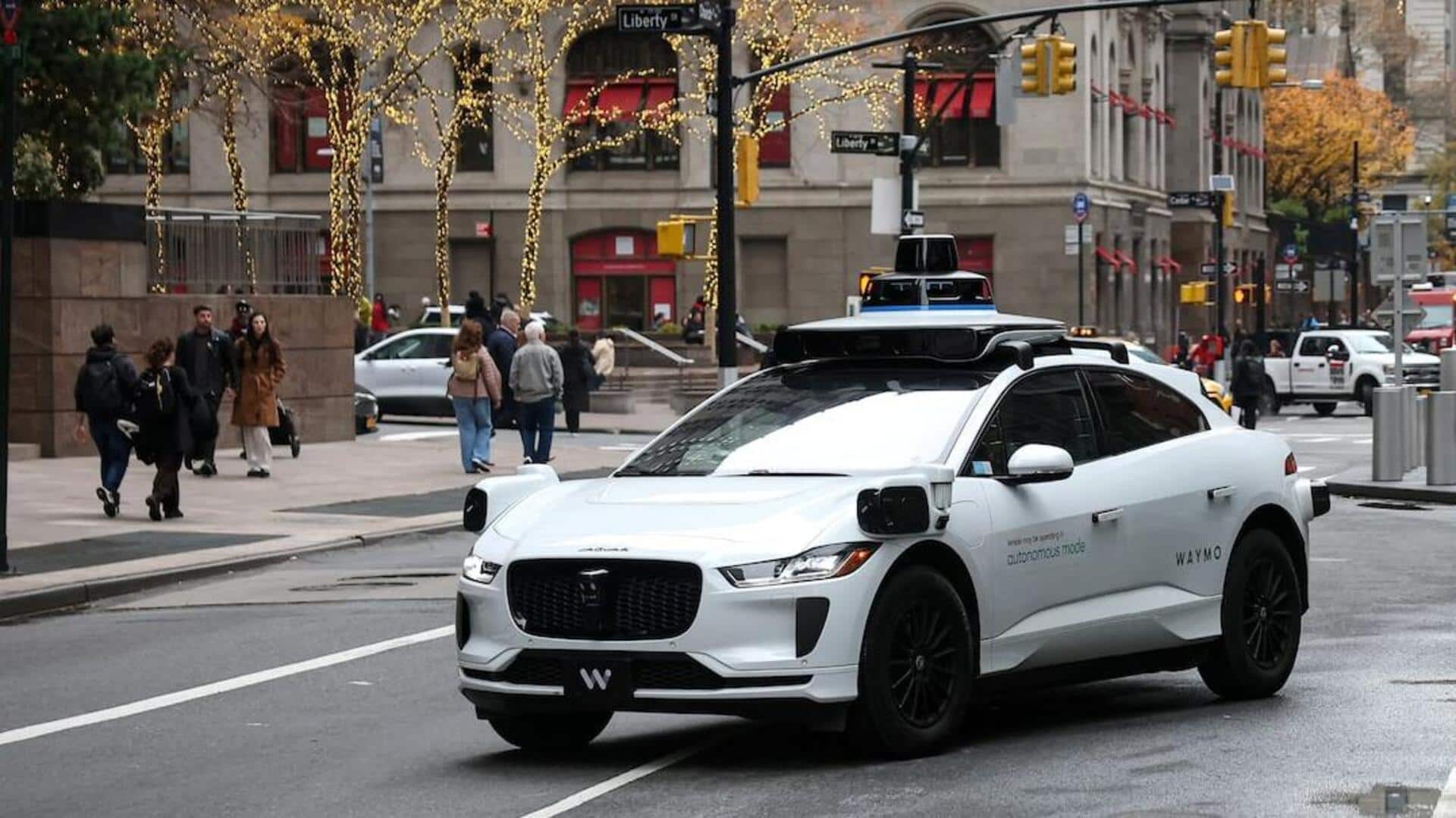
How Waymo's robotaxis stalled during San Francisco blackout
What's the story
Waymo, the self-driving car division of Alphabet, has issued a software update to improve its robotaxis' performance during power outages. The move comes after a major blackout in San Francisco last weekend left many of the company's autonomous vehicles stuck at intersections. The issue was mainly due to their system treating non-functioning traffic lights as four-way stops, just like humans do.
System response
Confirmation checks caused traffic congestion
Waymo's self-driving system can perform "confirmation checks" with its fleet response team to ensure correct operation.
During the widespread outage, there was a "concentrated spike" in these requests, leading to the traffic congestion seen in videos.
The company said it created this system "out of an abundance of caution during our early deployment," but is now refining it for better performance at scale.
Update details
Software update to enhance navigation during outages
The new software update will give Waymo's self-driving software "specific power outage context," enabling it to navigate more decisively through dark intersections.
The company also said it will improve its emergency response protocols by "incorporating lessons from this event."
Despite the challenges posed by the blackout, Waymo's vehicles managed to successfully navigate over 7,000 dark signals.
Operational pause
Waymo's response to the San Francisco power outage
In light of the blackout that left nearly a third of San Francisco in the dark, Waymo proactively paused its operations.
The company said it worked with city officials throughout the blackout, safely returning vehicles to depots or pulling them off the road as emergency crews worked to restore order.
This was done as traffic lights were completely dark during one of the busiest shopping weekends of the year.
Vehicle response
Vehicles treated dark signals as 4-way stops
Waymo's vehicles are programmed to treat dark signals as four-way stops.
However, the scale of the outage caused cars to stay stationary longer than usual while they tried to confirm intersection conditions amid widespread signal failures.
The company has faced criticism over this incident, with some residents and lawmakers questioning how well autonomous vehicles can handle rare but predictable "edge cases," such as large-scale power outages.