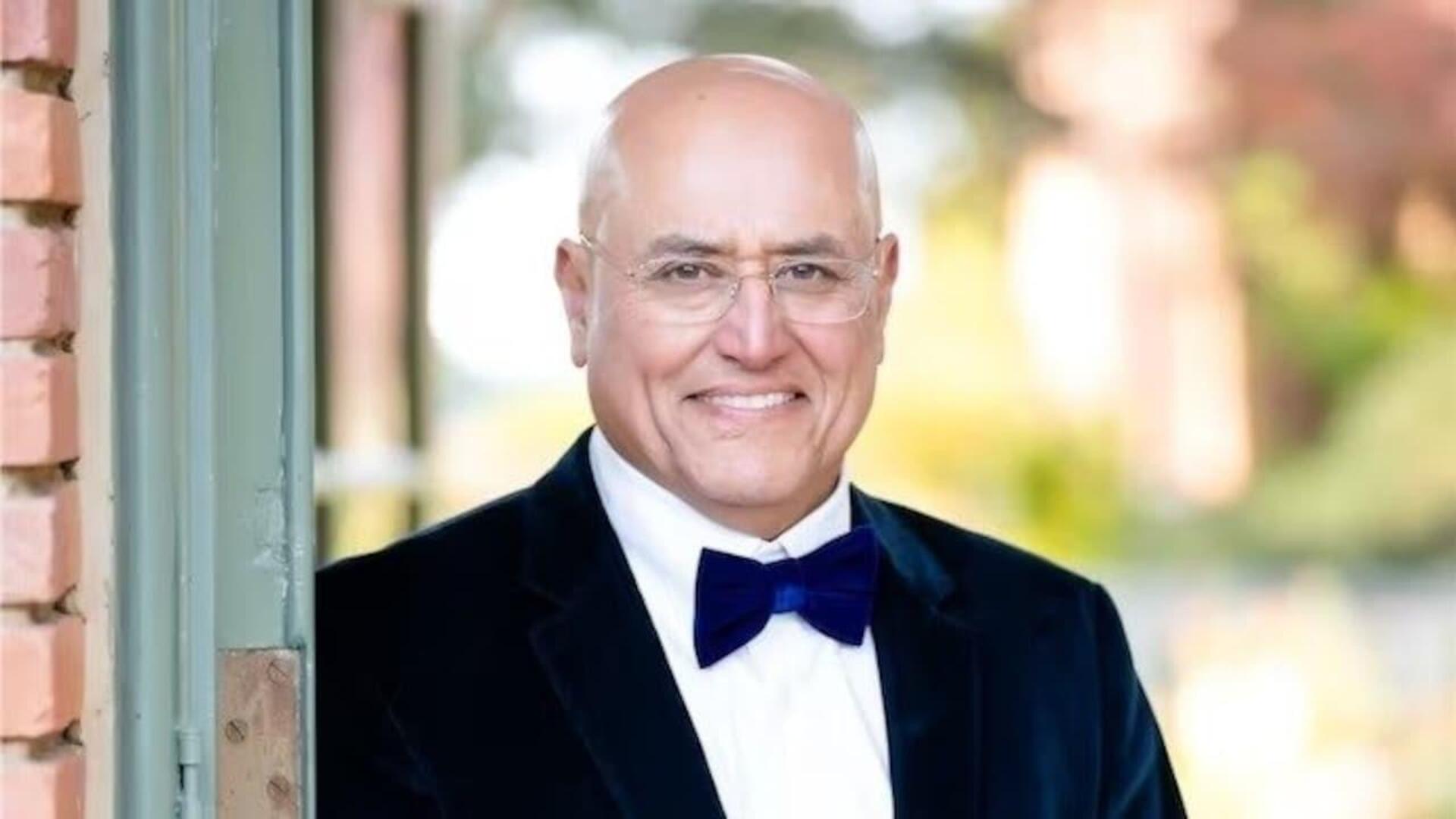
Why Hotmail founder Sabeer Bhatia wants 55% inheritance-tax in India
What's the story
Sabeer Bhatia, the co-founder of Hotmail, has sparked a fresh debate over inheritance tax in India. He recently took to social media platform X to advocate for a 55% levy on inherited wealth. Bhatia argued that a competitive India should create opportunities from what people build, not what they inherit. He clarified that this proposed tax would only impact India's wealthiest 2-3%.
Wealth distribution
Bhatia's stance on wealth distribution
Bhatia stressed that India's wealth should create opportunities for all citizens, not be permanently concentrated in a few family dynasties.
He said, "A 55% inheritance tax won't affect 97-98% of Indians. It will primarily affect the super-wealthy top 2-3% who control a disproportionate share of the country's wealth and resources."
This statement highlights his belief that such a tax would only target those at the top of the economic ladder.
Tax history
India's current stance on inheritance tax
India currently does not have an inheritance tax.
The country had an estate duty under the Estate Duty Act, 1953, but it was abolished in 1985.
Himank Singla, a partner at SBHS & Associates, explained that if an inheritance tax were to return to India, its biggest impact would be on the wealth one inherits, which may not be what one finally receives.
Tax implications
Potential impact of proposed tax
Singla further explained that if a ₹10 crore estate were fully taxed at 55%, ₹5.5 crore would go toward tax, leaving ₹4.5 crore for heirs.
However, the actual liability would depend on exemptions, thresholds, and the structure of any future law.
He also highlighted how inherited wealth tied up in property rather than cash could create liquidity requirements if tax has to be paid at succession time.
Business concerns
Wealthy families' response to potential inheritance tax
The proposed inheritance tax could also affect how wealthy families structure their assets before succession.
Pranshu G, a partner at Ashok Pranshu & Co, said many HNI and UHNI families are now structuring inter-generational ownership through family trusts and lifetime arrangements well in advance.
He added that existing structures may not automatically remain outside the tax net.