AI could double US GDP growth by 2027: Elon Musk
What's the story
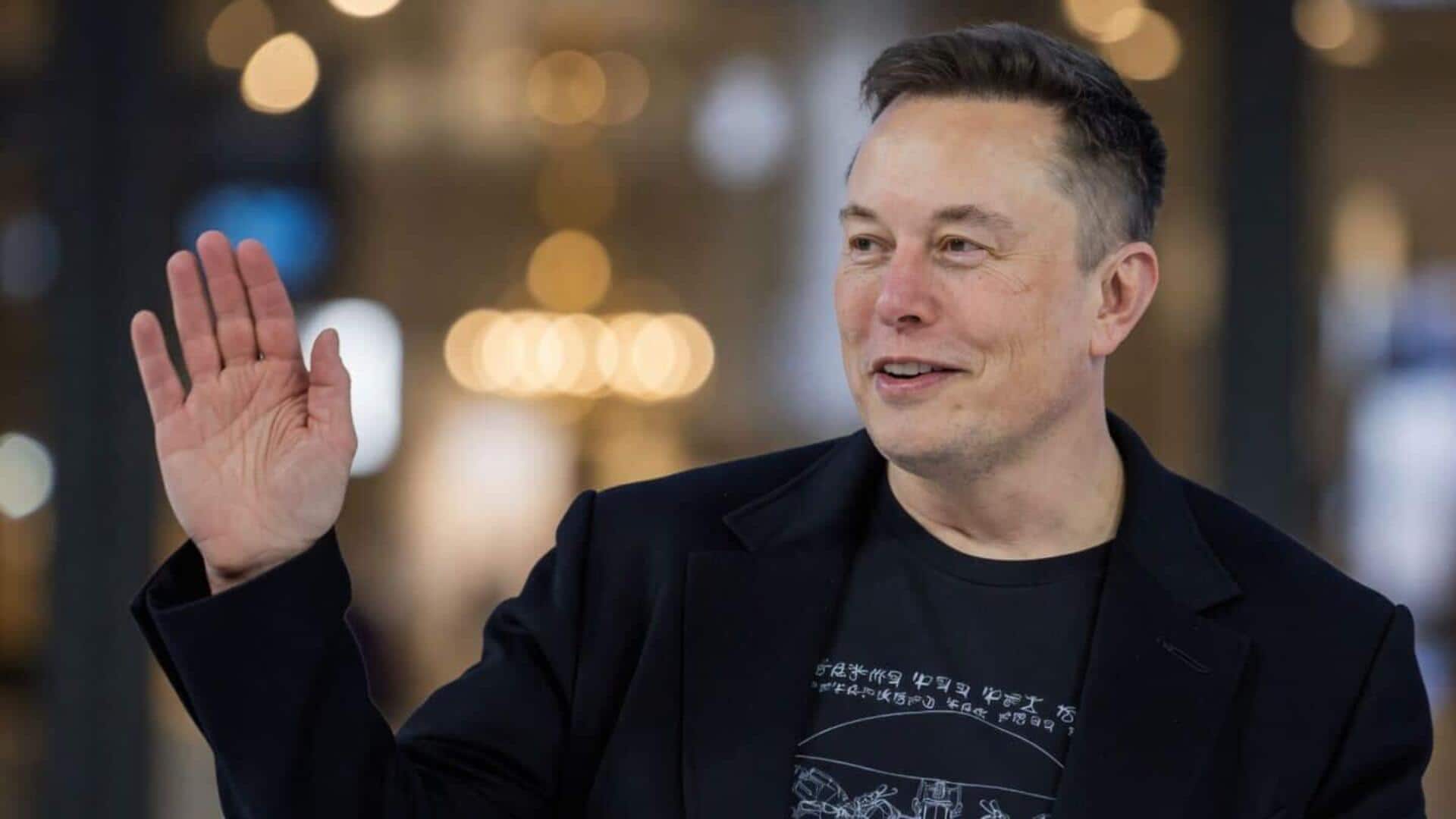
Tesla chief executive Elon Musk has predicted that artificial intelligence (AI) could significantly boost the US economy. He believes that by 2027, AI could double the country's GDP growth rate to around 4%. This is much higher than the Federal Reserve's forecast of a median growth rate of 2.4% for real GDP in 2027.
Economic impact
Broader debate on AI's economic impact
Musk's prediction comes amid a broader debate over the potential economic impact of AI.
He has previously suggested that AI could boost the global economy by 20-30%, or $20 trillion-$30 trillion annually.
However, his latest estimate is much higher than the US Federal Reserve's latest projection.
Market hurdles
Current AI investment cycle challenges
Musk's prediction comes as the AI investment cycle grapples with high borrowing costs and uncertainty over the returns from heavy spending on data centers, chips, and computing infrastructure.
A recent report by Dolat Capital noted that this cycle is different from previous tech booms because major cloud-computing companies have shifted their focus from shareholder payouts to capital-intensive AI infrastructure programs.
Funding challenges
Impact of interest rate hikes on capital costs
Dolat Capital said the AI capex cycle is entering its first meaningful macro test, with a more hawkish central-bank stance raising the funding hurdle for an already capital-intensive investment cycle.
The Federal Reserve recently raised its benchmark interest-rate range by 25 basis points to 3.75% to 4%, citing persistent inflation.
This has added pressure on the global cost of capital, along with higher bond yields and heavy US government borrowing.
Revenue concerns
Monetization remains a concern for AI investments
Dolat Capital highlighted monetization as the main unresolved question for AI investment.
It warned that falling token costs, improved model efficiency, and the short commercial life of successive models could hinder companies' ability to generate revenue quickly enough to sustain current spending levels.
The report said, "The key risk is not demand for AI, but whether incremental investment continues to generate sufficient returns."