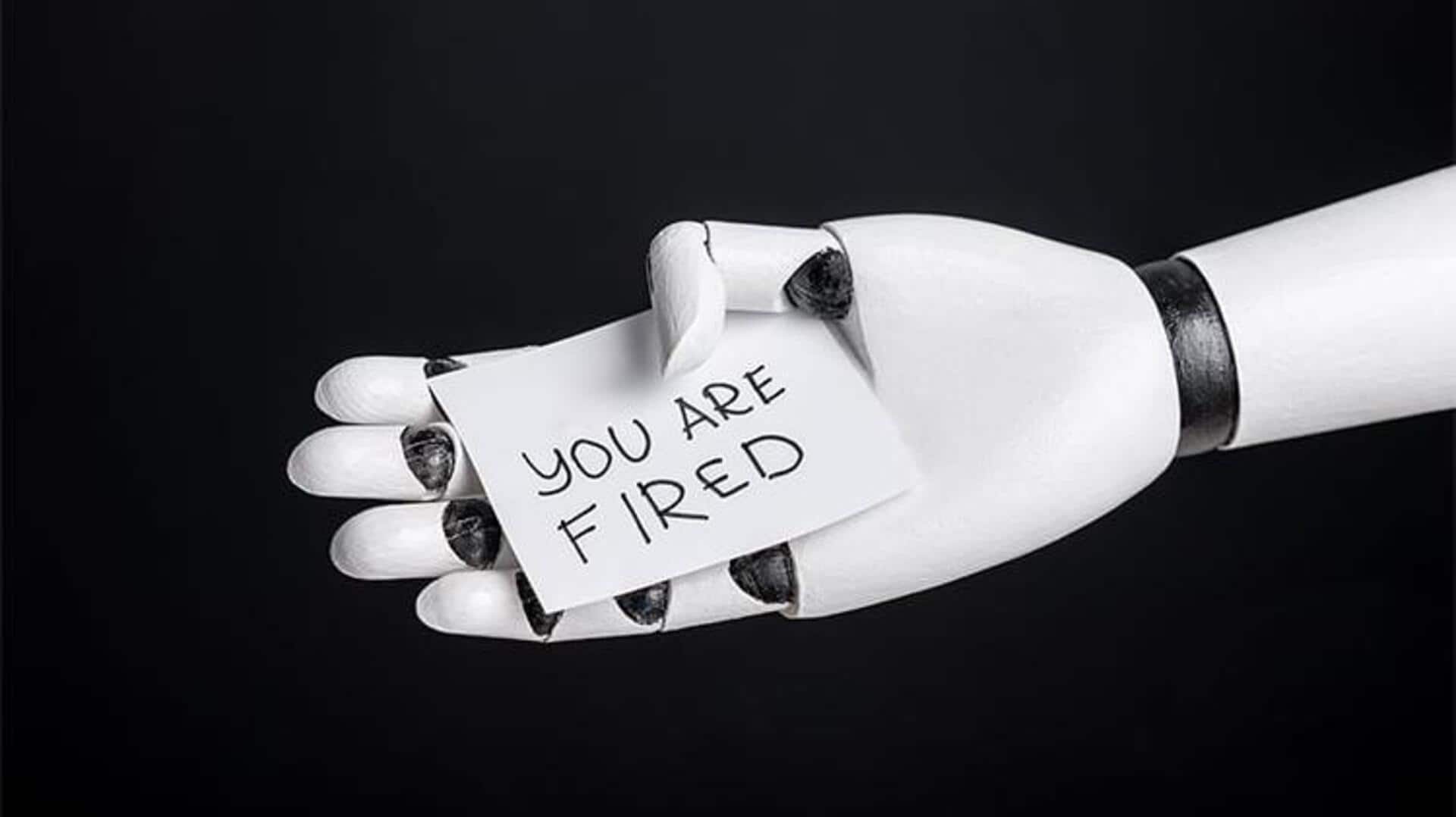
AI now top reason for layoffs in US
What's the story
A recent report by Challenger, Gray & Christmas has revealed that artificial intelligence (AI) is the top reason for job cuts in the US this year. The number of AI-related layoffs in the first five months of 2026 (87,714) has already surpassed the total for both 2024 (12,742) and 2025 (54,836). In May alone, US employers announced over 97,000 job cuts, the highest since the onset of the COVID-19 pandemic in 2020.
Job market shift
AI-related job cuts surge
AI was cited as the reason for nearly 40% of all announced job cuts in May, a dramatic rise from just 7% in January.
The number of job cuts attributed to automation also hit a record high for the year.
In May alone, 38,579 layoffs were linked to automation, the highest since Challenger began tracking AI-related layoffs in 2023.
Sectoral impact
Tech sector most affected
The technology industry has been hit hardest by these job cuts.
US-based tech companies announced 38,242 layoffs in May alone, the highest since August 2024.
Year-to-date, job cuts in the tech sector have jumped 66% to 1.23 lakh.
This makes it three times more affected than any other industry, according to Challenger's report.
Expert opinions
Not all layoffs due to AI
Despite the surge in AI-related layoffs, some economists and researchers have warned against assuming that automation is solely responsible for these job cuts.
Daniel Keum from Columbia Business School said the overall labor market remains strong with US payrolls rising by 172,000 in May.
He added that AI's impact is limited to certain sectors like technology rather than the entire economy.
Hiring trends
Hiring activity at historic low
The hiring activity has been slow despite positive employment growth.
Challenger reported that employers announced 80,742 planned hires in May, a historically low number compared to pre-pandemic levels.
Experts say this mismatch between available jobs and displaced workers is causing uncertainty in the labor market.
Thomas Thompson from Havas Edge said, "The jobs that are open aren't replacing the jobs that are lost."