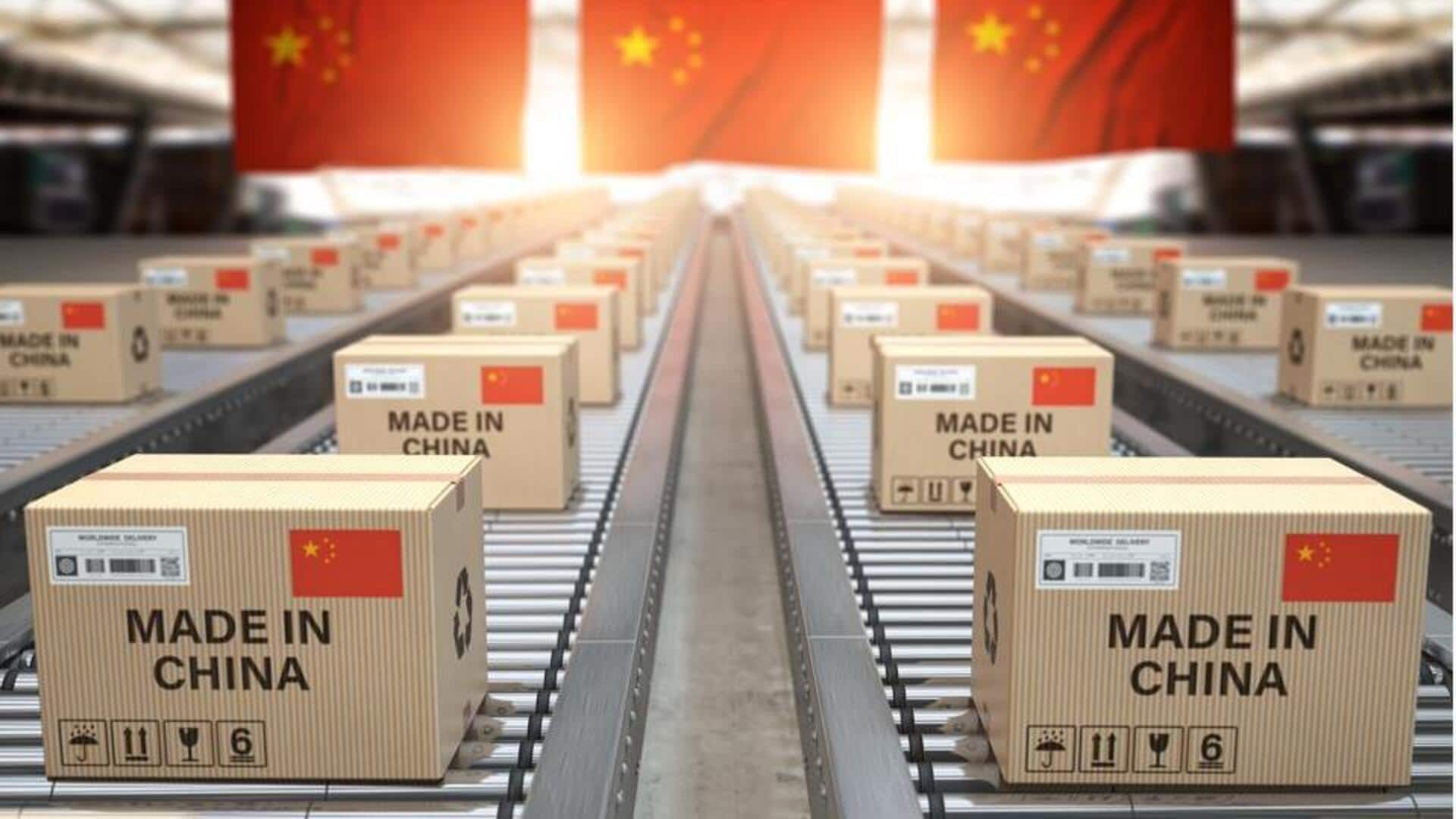
China's factory growth hits 1-year high despite war-related disruptions
What's the story
China's factory activity expanded at its fastest rate in a year during March, an official survey showed on Tuesday. The surge is mainly due to improved demand and comes as a relief for an economy struggling with global supply chain disruptions and energy market fluctuations. The official manufacturing purchasing managers' index (PMI) jumped to 50.4 from February's 49.0, surpassing analysts' expectations of a 50.1 reading in a Reuters poll.
Recovery indicators
Sub-indexes show return to expansion territory
The sub-indexes for output and new orders both rose above 51, indicating a return to expansion territory after being below 50 last month.
The sub-index for new export orders also improved from February's 45 to March's 49.1, though it still remained in contraction.
The non-manufacturing PMI, which covers services and construction sectors, also increased slightly to 50.1 from February's reading of 49.5.
Data distortion
Caution over seasonal distortions in economic data
Economists have warned that the improvement in China's economic data could be due to seasonal distortions related to the Lunar New Year, which fell in February this year.
The extended holiday period, usually marked by widespread factory shutdowns, was longer than usual this time around.
NBS statistician Huo Lihui told Reuters that businesses had accelerated their resumption of work and production after the holiday period ended.
Economic resilience
China's economy showed resilience in early 2026
China's economic performance in the first two months of this year had already exceeded expectations, driven by strong holiday consumption and a rebound in property and infrastructure investment supported by government stimulus.
Exports have remained a key growth driver, with the country posting a record trade surplus last year amid strong global demand for electronics such as semiconductors.
However, the intensifying conflict in West Asia poses risks for policymakers in Beijing.
Economic challenges
Risks from West Asia conflict and cost pressures
The ongoing conflict in West Asia could disrupt global supply chains, drive up energy prices, and create uncertainty across key trade routes. These factors may impact China's export-driven growth model.
Manufacturers, many already operating on thin margins, face rising cost pressures that could erode profitability.
The PMI data reflected these strains with the sub-index for input costs surging to 63.9 in March from February's 54.8 due to higher commodity prices and accelerated procurement by firms seeking to hedge against supply disruptions.