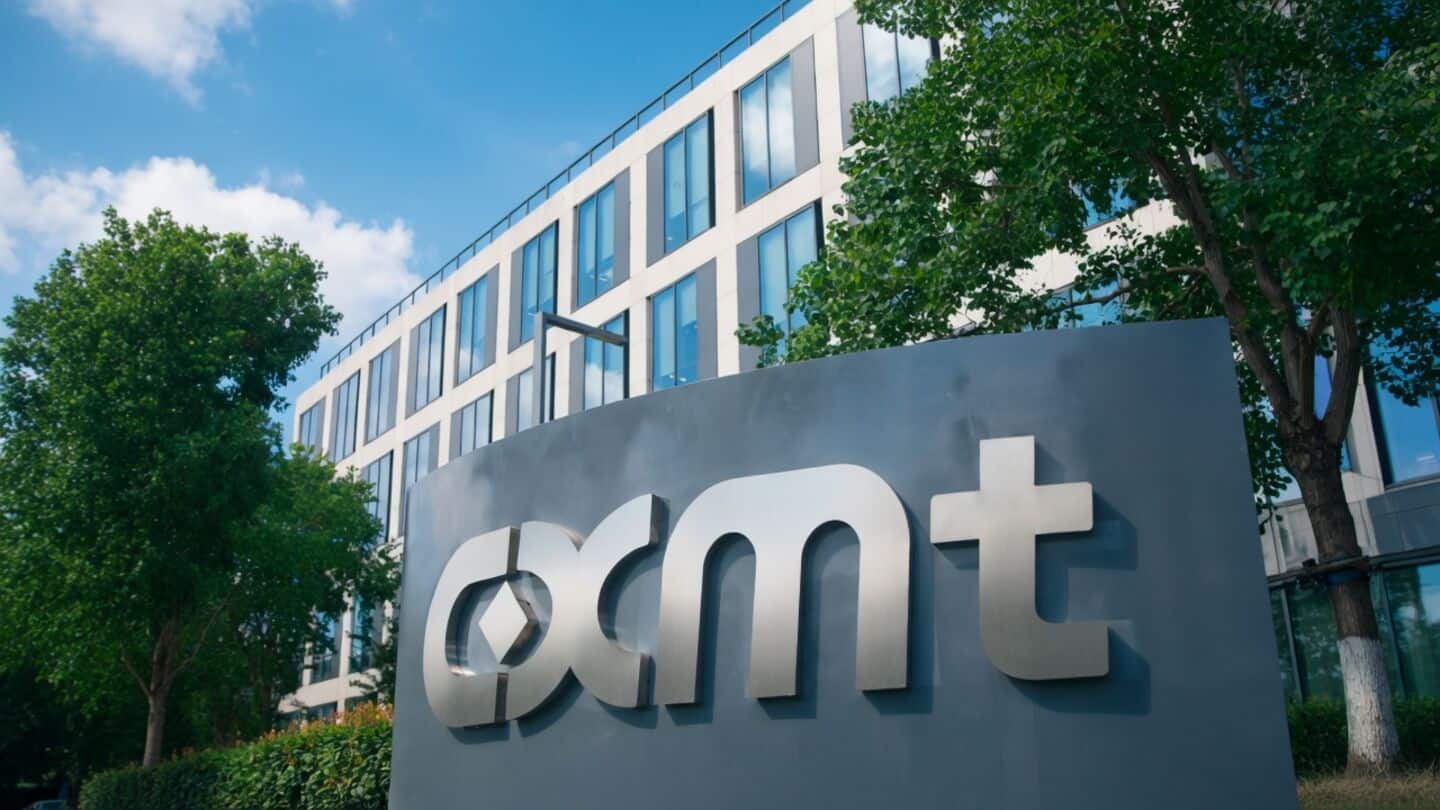
Chinese chipmaker CXMT jumps 470% in blockbuster market debut
What's the story
China's memory chipmaker Changxin Technology Group (CXMT) has witnessed an unprecedented surge of 472% in its debut on Shanghai's STAR Market. The company's shares were last trading at 52 yuan, giving it a market cap of about 3.5 trillion yuan. This makes CXMT the most valuable company listed in China. The Hefei-based firm raised $9.8 billion through its IPO, making it Asia's biggest this year.
Market dominance
Impressive market share and future growth potential
According to its IPO prospectus, CXMT had a 7.67% share of the global DRAM market in Q4 2025.
DRAM chips are used in electronic devices from smartphones to servers.
The global DRAM market is dominated by Samsung Electronics, SK Hynix, and Micron Technology.
Theodore Shou, CEO at Yiyi Capital, told CNBC that he has no doubt "the company is going to grow to be a global leader."
Financial recovery
Strong demand for retail offering and impressive financial turnaround
CXMT swung to an operating profit of 35.43 billion yuan in Q1 from a loss of 2.83 billion yuan a year earlier. This was due to continued growth in global computing power demand and capacity allocation by major manufacturers.
The company's IPO attracted strong demand from retail investors, with the retail portion of the offering oversubscribed 212 times, reflecting growing investor interest in the memory chip industry amid the global AI boom.
Strategic goals
Plans to use IPO proceeds to boost technological capabilities
CXMT, founded in 2016 by Chairman Zhu Yiming, plans to use the IPO proceeds to boost its technological capabilities and core competitiveness.
The company is working to expand its presence in advanced memory technologies such as high-bandwidth memory (HBM), which is increasingly important for AI data centers.
However, Shou warned that while these memory chip businesses are sustainable, the great margins and net profitability seen today aren't sustainable and have to normalize over a cycle.