Delhi airport to phase out Terminal 2 by 2033
What's the story
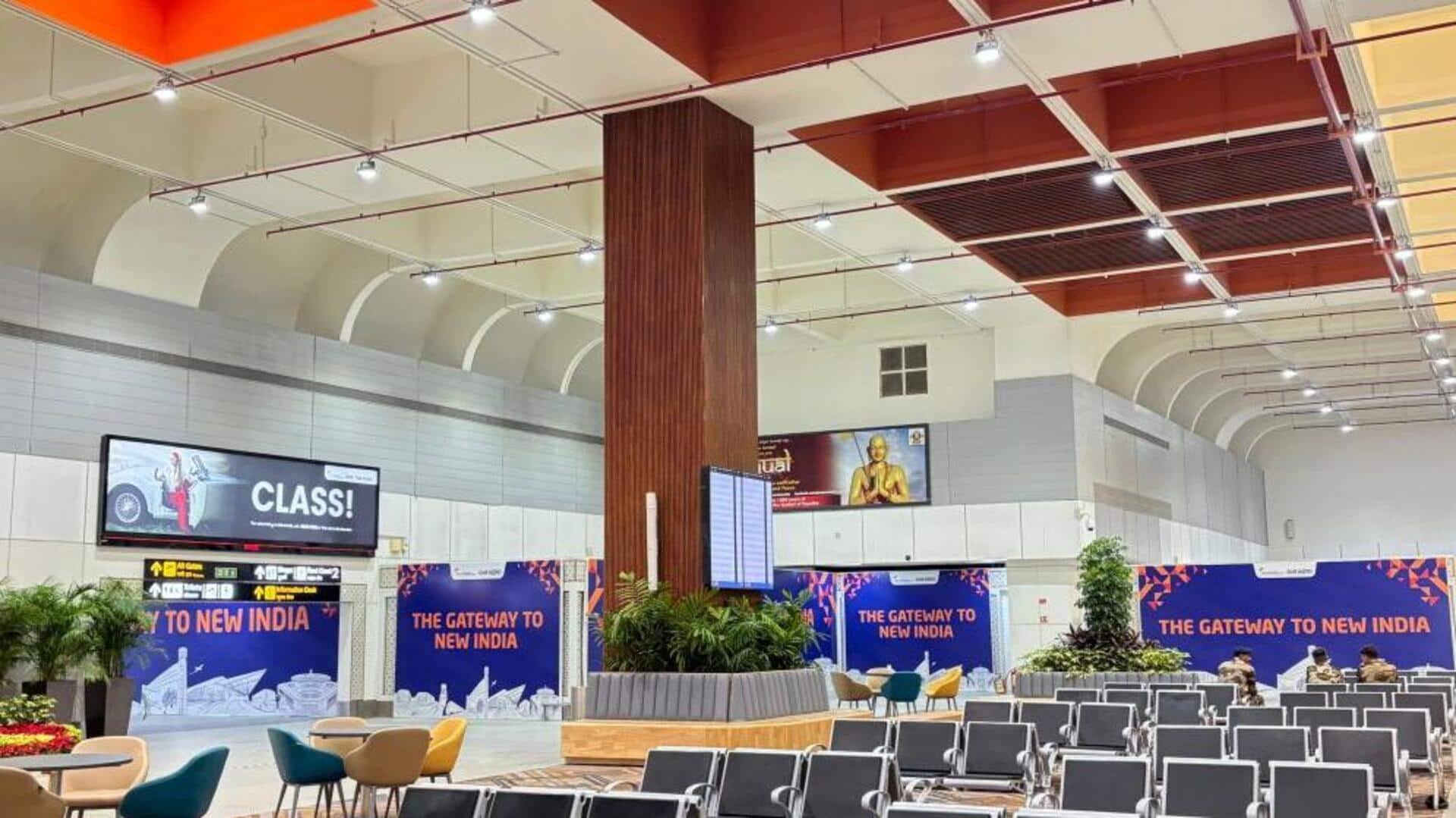
Delhi International Airport Limited (DIAL) plans to phase out the nearly four-decade-old Terminal 2 (T2) by 2033. The decision comes as part of a major expansion plan for Terminal 3 (T3), which will accommodate future passenger traffic. DIAL, a GMR Airports subsidiary, is considering building a fifth pier at T3. This new addition, Pier E, would have the capacity to handle an estimated 12 million passengers annually, roughly equal to T2's current capacity.
Transition plan
Transition to Pier E will lead to T2's closure
Once Pier E is operational, all domestic flights currently operating from T2 will be shifted to this new addition at T3.
This transition will eventually lead to the closure of T2.
"T2 can be used for a maximum of six to seven more years, and then it will have to be abandoned," GBS Raju, Chairman of GMR Airports, told TOI.
He added that the future use of the T2 site would depend on traffic growth.
Future developments
Expansion part of new master plan for Delhi airport
The expansion plan is part of a new master plan for Delhi's Indira Gandhi International Airport.
It includes the construction timeline for Pier E and the introduction of an automated people mover, or air train, expected to be operational within 30 months.
DIAL is consulting airlines before finalizing this timeline as carriers reassess fleet expansion plans amid global supply chain disruptions affecting aircraft deliveries from Airbus and Boeing.
Crisis effects
Cautious approach due to geopolitical factors
The ongoing conflict in West Asia and rising oil prices have further clouded aviation demand forecasts.
This has led to a more cautious approach toward long-term infrastructure planning.
"The master plan will be aligned with airlines' strategy. Due to the West Asia crisis, it is taking a little longer to finalize the plan," Raju told TOI.
Infrastructure improvements
Proposed upgrades around T3
The proposed expansion also involves major upgrades around T3, including wider access ramps and a bigger forecourt area.
After the recent conversion of the Pier C from domestic to international operations, the T3 now has three international piers with a combined capacity of 34 million passengers annually.
Its only domestic Pier D can handle around nine million passengers a year.