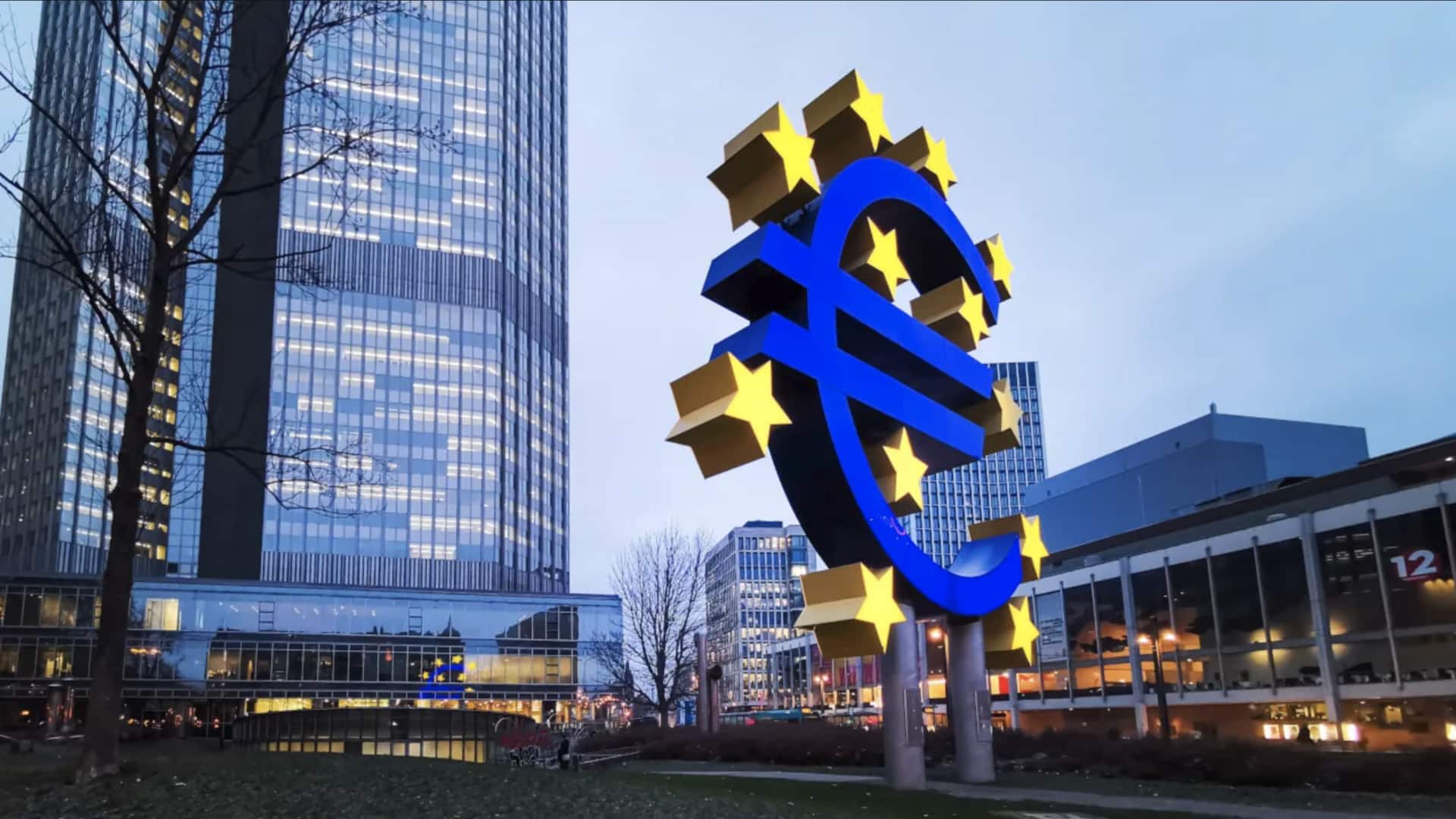
ECB raises interest rates for first time since 2023
What's the story
The European Central Bank (ECB) has raised its benchmark interest rate by a quarter point to 2.25%. This is the first hike since 2023 and is aimed at tackling rising inflation fueled by the energy shock caused by the US-Iran conflict in West Asia. Despite fears that this move could hurt the struggling eurozone economy, the ECB has gone ahead with its decision.
Policy adjustment
ECB revises inflation, growth projections
The ECB has acknowledged that "the war in the Middle East is generating inflation pressures."
It also noted that "the outlook remains uncertain, with upside risks for inflation and downside risks for economic growth."
The central bank has revised its inflation forecast for this year to 3%, up from an earlier estimate of 2.6% in March.
Meanwhile, it has lowered its eurozone growth projection for this year to 0.8% from a previous estimate of 0.9%.
Inflation spike
Eurozone inflation hits 3.2% in May
Eurozone inflation has been on the rise since the US-Israeli war against Iran began, hitting 3.2% in May, well above the ECB's 2% target.
The Strait of Hormuz, a key oil and gas transit route, remains nearly completely closed.
A ceasefire in the three-month-old war is under strain after the US launched new strikes and Tehran retaliated with attacks in the region.
Economic impact
Rate hike may not do much against inflation
The ECB's rate hike comes as a response to the energy supply shortages that have been driving inflation.
Higher borrowing costs usually curb demand, thus helping to bring down inflation.
However, some economists have warned that this move may not do much against inflation mainly caused by an energy supply shortage rather than strong consumer demand.
Economic concerns
Rate hike could affect eurozone economy
The ECB's decision to raise rates could also affect the 21-nation single currency area, especially after the eurozone economy contracted in Q1 due to a slump in Ireland.
This comes at a time when high energy costs are already straining households and businesses.
Analysts say ECB officials may be wary of delaying monetary policy tightening, particularly after being criticized for acting too slowly against an inflation surge in 2022.