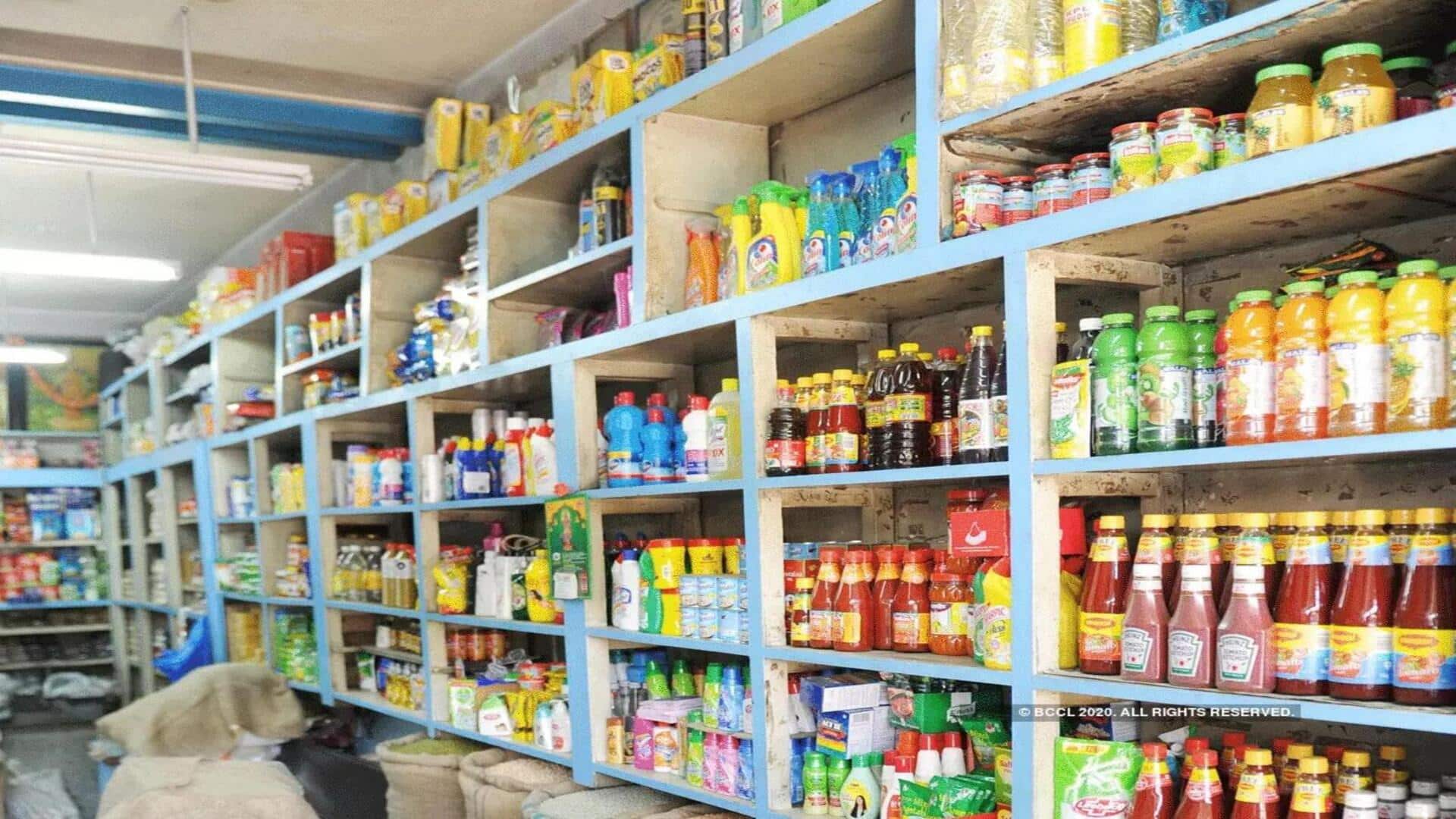
FMCG goods unlikely to become costlier this festive season
What's the story
Despite rising commodity prices, including sugar, and geopolitical disruptions, Fast-Moving Consumer Goods (FMCG) firms are likely to maintain their prices through the festive season. The move is aimed at protecting consumer demand and sustaining volume growth amid improving consumption. Leading industry executives have said that companies had already taken judicious price hikes of about 2-5% in the June quarter to partially offset higher input costs.
Cost challenges
Geopolitical disruptions and supply concerns
The FMCG sector is facing renewed cost pressures with the sugar prices touching a new high.
This comes along with a sharp rise in the costs of key inputs such as edible oils, coffee, cocoa, and crude oil derivatives used in packaging.
These changes come amid geopolitical disruptions and supply concerns in global markets.
Growth strategy
ITC to hold prices through festive season
Most FMCG companies have absorbed a major chunk of inflation via cost-control initiatives and portfolio management.
They are now focused on protecting volume growth, even as pressure on margins remains high.
ITC's Foods Division CEO and Executive Director Hemant Malik said the firm would hold prices through the festive season despite cost inflation.
He emphasized that firms have been absorbing a large part of commodity price hikes through cost management initiatives and portfolio actions.
Future considerations
Revisit pricing decisions later in financial year
Malik hinted that companies may have to revisit their pricing decisions later in the financial year if cost pressures persist.
He said most FMCG firms have so far done only modest price hikes of roughly 3-5%, despite facing much higher cost increases.
Dabur India's CFO Ankush Jain said the company has taken up prices on a few goods over the past few months to partly mitigate inflationary impact due to geopolitical situations, while keeping competitive intensity in mind.