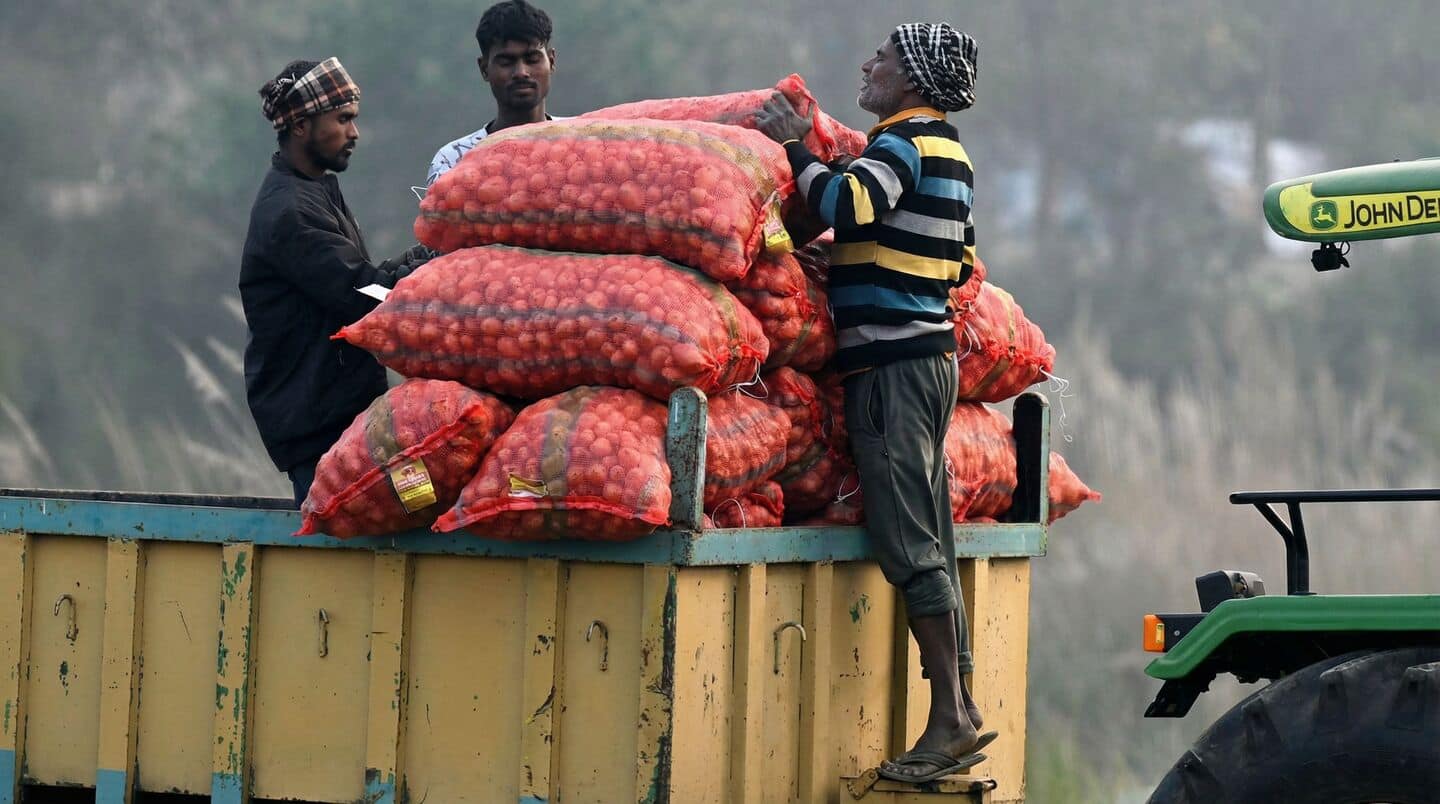
Iran conflict could impact India's agricultural exports to West Asia
What's the story
India's agricultural sector could take a major hit if the war in Iran continues for an extended period. A report by the Global Trade and Research Initiative (GTRI) has revealed that agricultural exports to West Asia were worth $11.8 billion in 2025, accounting for over a fifth of India's total farm exports. The report highlights that cereals, especially rice, fruits, vegetables, spices, meat, and dairy products are likely to be impacted by this ongoing conflict.
Market impact
Direct impact on farmers, food processors, exporters
Ajay Srivastava, the Founder of GTRI, emphasized that many Indian farm products are heavily reliant on Gulf markets.
He warned that continued disruption could directly impact farmers, food processors, and exporters in several Indian states.
The report also highlighted rice exports as facing the largest potential impact due to their significance in India's global rice exports and dependence on Gulf markets.
Export reliance
Other high-risk products with over 70% exports to West Asia
The GTRI report notes that Gulf markets are vital for producers in Punjab, Haryana, Uttar Pradesh, Andhra Pradesh, and Telangana.
It also lists other high-risk products with over 70% of India's exports going to West Asia.
These include sheep and goat meat (98.9%), fresh or chilled beef (97.4%), copra or dried coconut kernel (83.9%), beer (81%), bananas and plantains (79.6%) as well as nutmeg mace and cardamom (70.5%).
Export exposure
Products with 40-60% exports to West Asia
The report also highlights high-risk products with 40-60% of exports depending on West Asia.
These include butter and dairy fats (58.1%), soft drinks and non-alcoholic beverages (55.6%), coconut and palm kernel oil (52.5%), manufactured tobacco products (50.9%) as well as other fresh vegetables (50.8%).
Medium-risk products where about one-quarter to one-third of exports go to West Asia include rice (36.7%), coconuts and cashew nuts (35.8%) among others.
Export stability
Exporters need to diversify markets, reduce over-dependence on 1 region
The report also lists lower-risk products with relatively limited dependence on West Asia.
These include coffee (17.7%), bread biscuits and bakery products (17.7%), raw tobacco (16.9%) as well as other food preparations (16.9%).
The GTRI report warns that if instability around the Strait of Hormuz persists, it could have a ripple effect on India's agricultural economy, stressing the need for exporters to diversify markets and reduce over-dependence on one region.