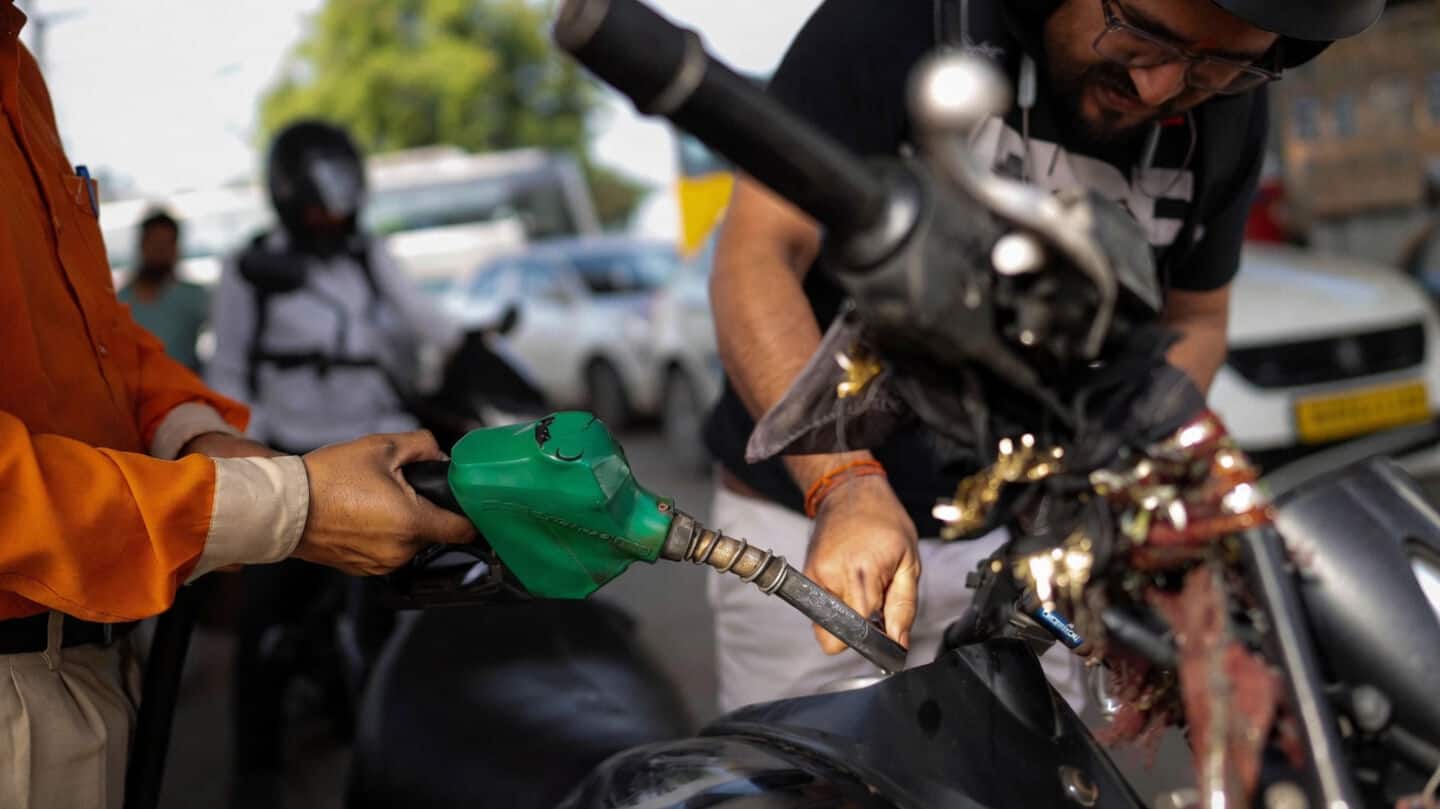
Petrol would cost ₹125/l in Delhi sans ethanol blending: Centre
What's the story
The Indian government has claimed that petrol prices would have hit ₹125 per liter in Delhi if ethanol blending wasn't used during the recent spike in global crude oil prices. The Ministry of Petroleum and Natural Gas (MoPNG) made this statement, highlighting the role of domestically produced ethanol in stabilizing fuel costs amid global market fluctuations.
Consumer protection
MoPNG highlights benefits of ethanol blending
The MoPNG emphasized that the real value of ethanol blending lies in safeguarding Indian consumers from extreme fluctuations in global oil markets.
The ministry stressed that it's not just about making fuel cheaper every day, but about strengthening India's energy security and keeping more of its fuel bill within the Indian economy rather than sending it overseas.
Energy security
Ethanol blending as energy insurance
The MoPNG described the ethanol blending program as an insurance policy against global oil shocks, and not a day-to-day price competition.
The ministry also clarified that ethanol blending isn't a taxpayer subsidy but India's energy insurance that has already delivered when the crisis hit.
This comes amid concerns over claims that ethanol blending impacts vehicle mileage and engine life.
Allegations addressed
Response to allegations of loss in rice sale to distilleries
The MoPNG responded to allegations that the government sold Food Corporation of India (FCI) rice worth ₹37 per kg to distilleries at ₹23 per kg, causing a loss of ₹10,000 crore.
The ministry clarified that only surplus certified by the Department of Food & Public Distribution after every food security obligation has been met is approved for ethanol production.
Program advancement
Progress of the ethanol program
The MoPNG also highlighted the progress of the ethanol program through the Pradhan Mantri JI-VAN Yojana. This initiative is rapidly expanding second-generation (2G) ethanol production from agricultural residue, reducing dependence on food grains altogether.