India intensifies oversight on Chinese herbicide imports
What's the story
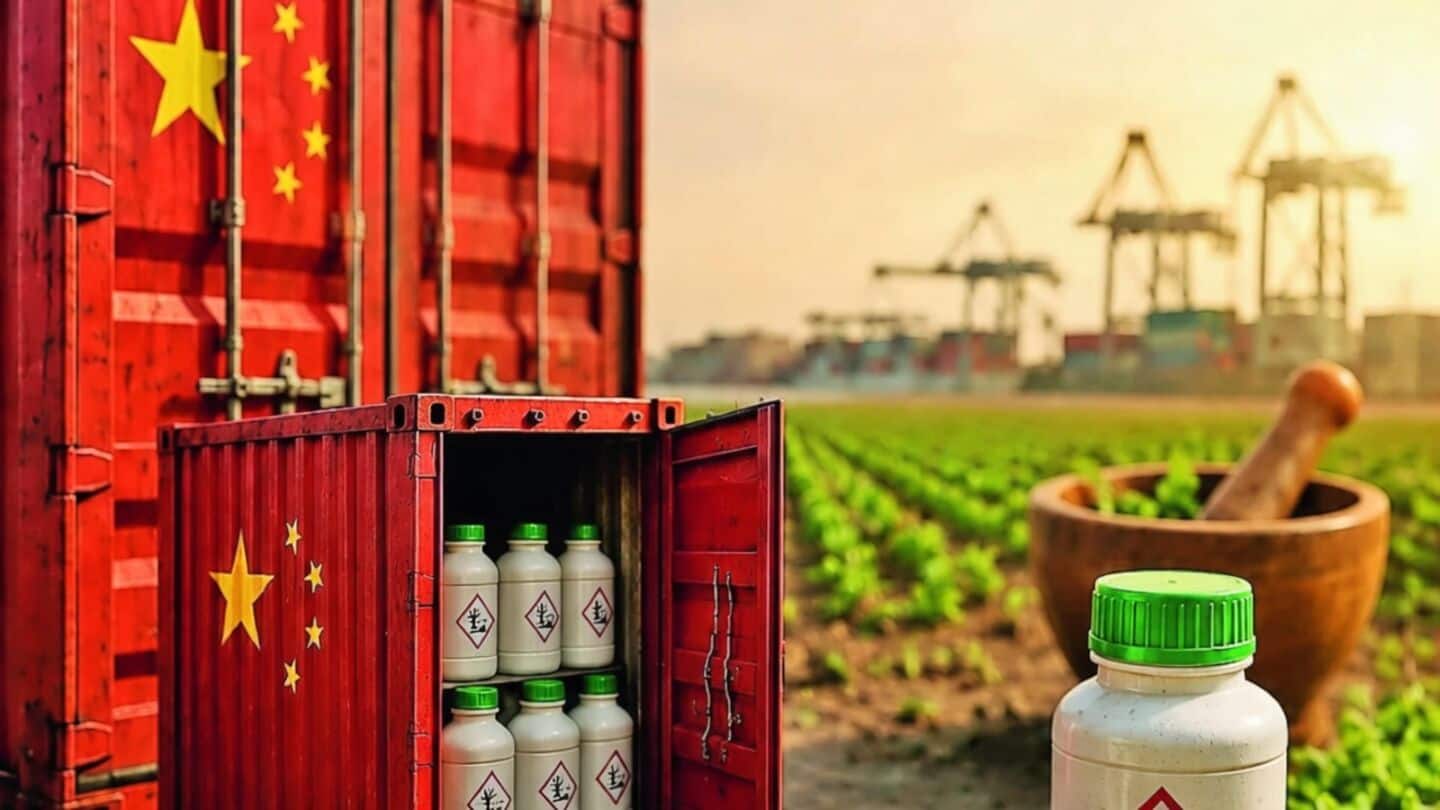
India is intensifying its scrutiny of glufosinate and its salts, a key herbicide from China. The move comes as authorities investigate whether Chinese exporters are absorbing anti-dumping duties to dilute their impact. The Department of Revenue has directed customs authorities to provisionally assess these imports until an anti-absorption review by the Directorate General of Trade Remedies (DGTR) is complete.
Duty implications
Financial guarantees required
Under this directive, importers will continue paying the current anti-dumping duty. However, they will also have to provide financial guarantees for any additional duty that could be imposed after the review.
This is a precautionary measure until the DGTR completes its investigation into possible pricing strategies by Chinese exporters aimed at circumventing anti-dumping duties imposed in May 2025.
Herbicide usage
Herbicide's significance and preliminary findings
Glufosinate is a broad-spectrum herbicide widely used for weed control in crops like maize, soybean, cotton, and canola.
It is also employed in large-scale commercial farming operations.
The DGTR's preliminary finding suggests that Chinese exporters may have lowered export prices or adopted other pricing strategies to offset anti-dumping duties imposed in May 2025.
Duty extension
Extension of anti-dumping duties on butyl alcohol imports
Separately, the Indian government has extended anti-dumping duties on butyl alcohol imports from the US, Malaysia, and South Africa for another five years.
This move is aimed at protecting domestic producers from unfair trade practices by foreign exporters.
The extension highlights India's commitment to safeguarding its domestic industries against potential price undercutting or dumping by international competitors.