India's fertilizer subsidy bill may jump 20%: Here's why
What's the story
India's fertilizer subsidy bill is likely to witness a 20% increase in the current fiscal year. The spike comes as the Strait of Hormuz blockade disrupts West Asian supplies and pushes up global nutrient prices. Aparna Sharma, Joint Secretary in the Department of Fertilizers, confirmed this yesterday. She said they are closely monitoring global fertilizer prices and will inform the Department of Expenditure if there's a need for further subsidies.
Farmer assurance
Farmers won't be affected by rising prices
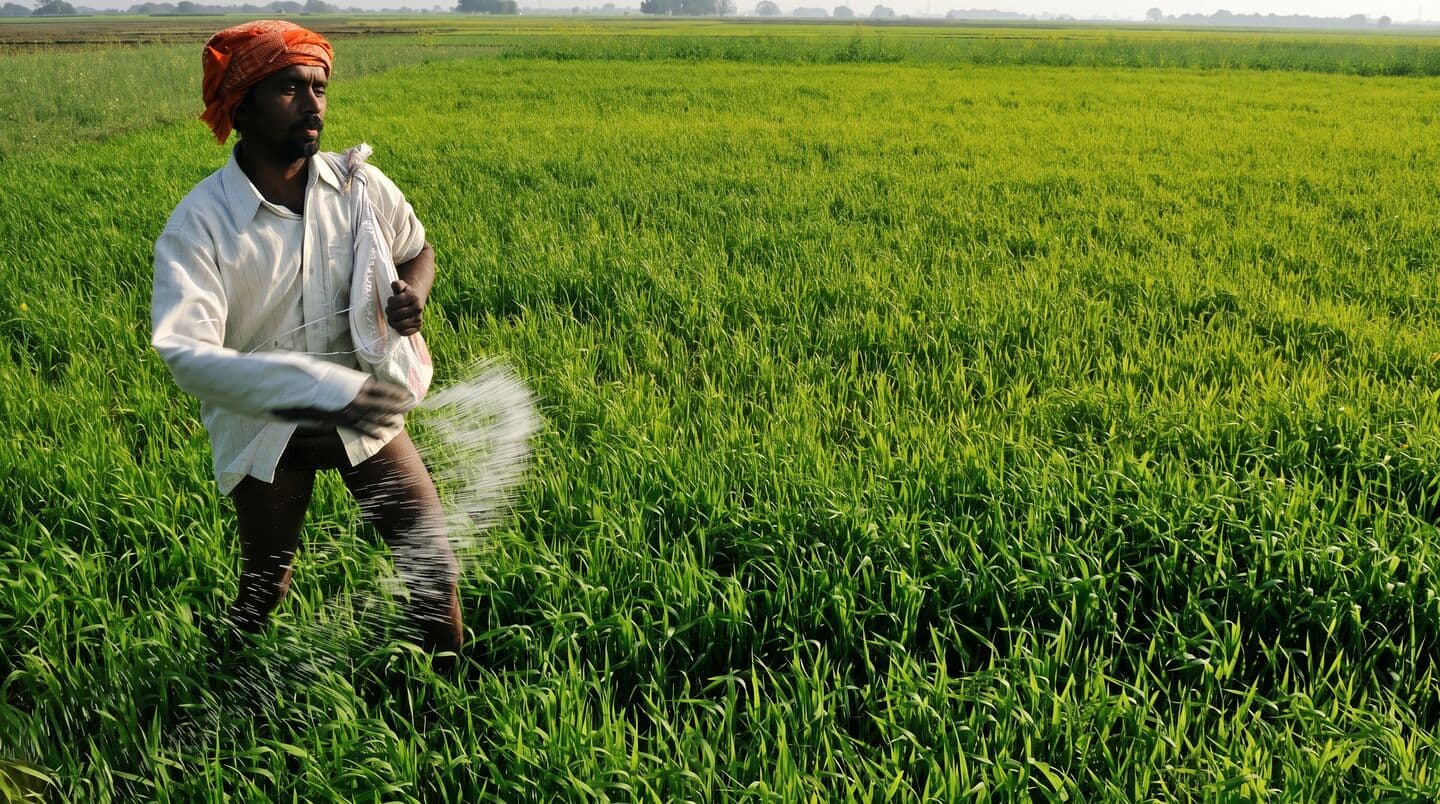
Sharma assured that the increase in global prices won't affect Indian farmers. She said the maximum retail price (MRP) of fertilizers will remain unchanged in the Indian market. Currently, fertilizer subsidies are paid to companies and not directly to farmers. These subsidies are vital for making farming sustainable and keeping food inflation under control by reducing costs of essential nutrients such as urea, di-ammonium phosphate (DAP), and potash.
Global standing
India is the 2nd-largest fertilizer consumer in the world
India is the world's second-largest fertilizer consumer and importer of diammonium phosphate and urea. Despite being the second-largest agricultural producer, it imports 60% of its DAP requirements and 15% of its urea and NPK (Nitrogen, Phosphorus, Potassium) fertilizers. India also imports raw materials/intermediates like rock phosphate, phosphoric acid, potash due to limited domestic availability.
Supply chain
West Asia meets India's urea needs
West Asia meets 30% of India's urea requirement, 30% of DAP demand, and 50% of LNG (liquefied natural gas) requirement for fertilizer production. Sharma said India currently has 19.02 million tons of fertilizers, which is 49% of the required 39.05 million tons for the upcoming kharif season. The Union Cabinet recently approved nutrient-based subsidy rates for phosphatic and potassic (P&K) fertilizers for this season.