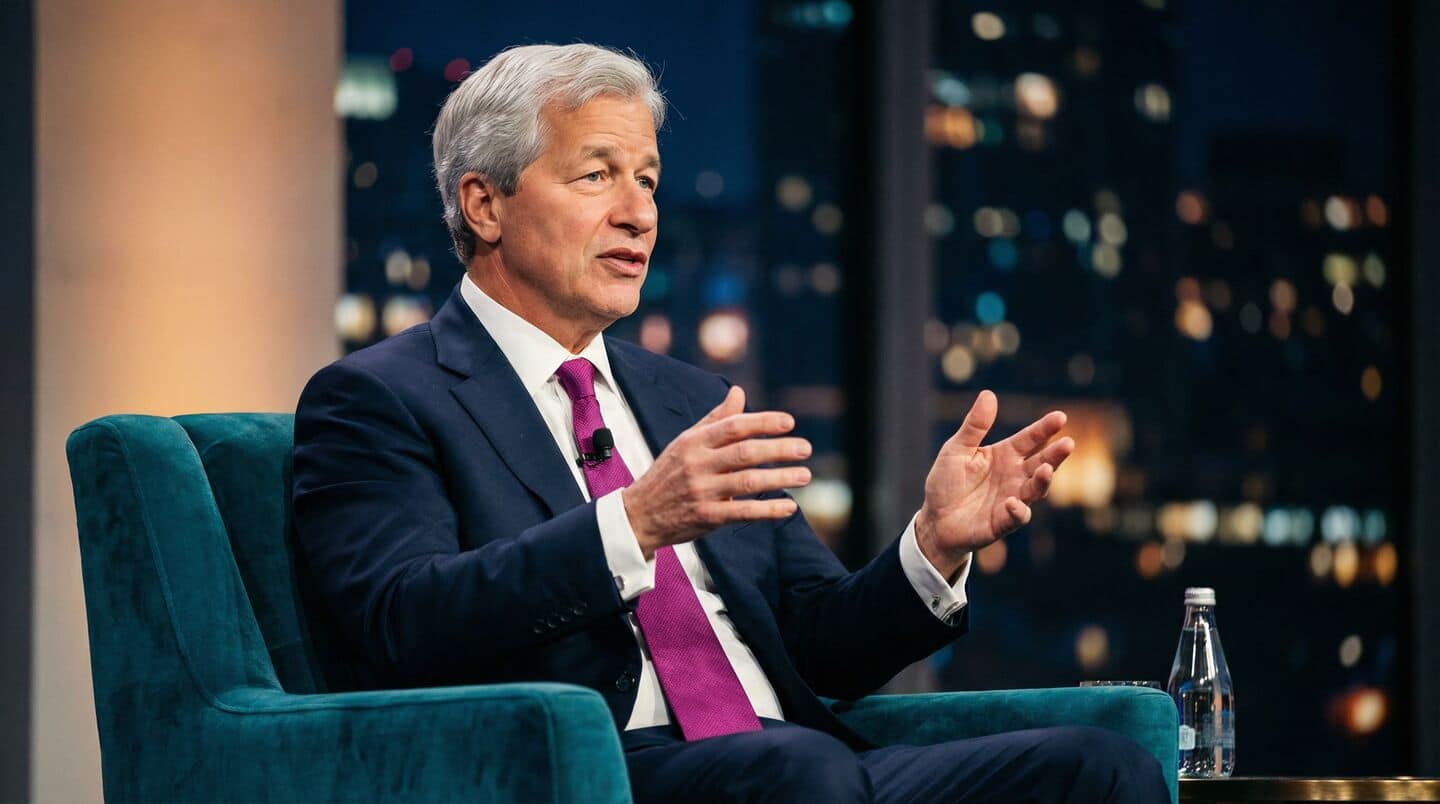
World's largest bank prepares for major AI-driven workforce reset
What's the story
JPMorgan Chase, the world's largest bank by market capitalization, is gearing up for a major shift in its workforce due to artificial intelligence (AI). The bank's CEO Jamie Dimon confirmed at an investor meeting that they are already implementing "huge redeployment plans" for their employees. This comes as part of the bank's broader strategy to adapt to the changing work environment brought about by AI technology.
Workforce transition
Stability in headcount
Despite the rapid adoption of AI, JPMorgan's total headcount has remained largely stable at 318,512 over the past year.
However, there have been some changes in its workforce composition. Operations staff and support roles have seen a decline of 4% and 2%, respectively.
On the other hand, client-facing and revenue-generating positions have witnessed a growth of 4%.
Productivity gains
Tech investments boosting productivity
JPMorgan has credited its tech investments with boosting productivity.
According to the bank's data, operations employees now handle 6% more accounts than before.
Additionally, fraud-related costs per unit have dropped by 11%, and software engineers are about 10% more efficient due to these technological advancements.
AI expansion
Generative AI usage doubles
JPMorgan's Chief Financial Officer Jeremy Barnum revealed that the bank's use of generative AI has doubled this year, especially in customer service and internal tech teams.
The firm leverages AI models from OpenAI and Anthropic through its proprietary platform.
Dimon reiterated that the bank's focus is on using these technologies to improve customer service, despite concerns about potential job losses due to rapid advancements in this field.
Societal concerns
Dimon's concerns about job displacement
Dimon has often compared the potential of AI to that of electricity and the printing press.
However, he also warned that unchecked adoption could lead to job displacement in entire professions.
He cited autonomous trucking as an example, questioning if society would accept putting two million people out of work for such advancements.