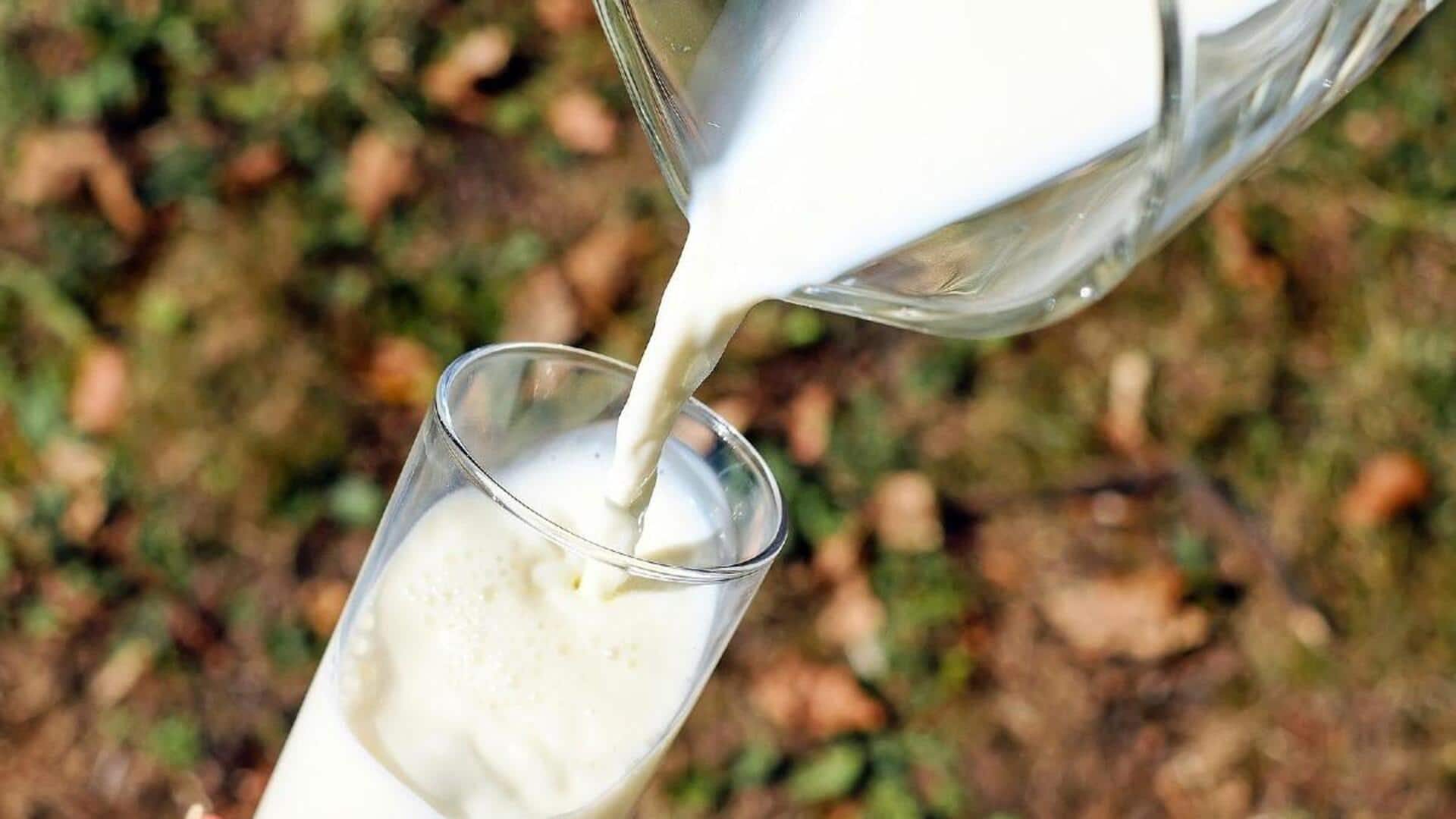
Milk in Maharashtra will become costlier from August 11
What's the story
From August 11, the cost of cow and buffalo milk in Maharashtra will go up by ₹2 per liter. The decision was taken at a meeting of the Milk Producers and Processors Welfare Association. According to the association, rising diesel prices and packaging costs have contributed to this price hike.
Cost factors
Dairy products to see price hike as well
The association noted that diesel prices have gone up by ₹10 per liter and packaging costs have risen by nearly 30%.
These increasing expenses, along with a rise in the procurement price of milk with potential for further hikes, have prompted the decision to increase selling prices.
The revised rates will also apply to dairy products, which could see a price hike of up to 10%.
Policy position
No plans to introduce MSP for milk
Last month, the government clarified in Parliament that there are no plans to introduce a Minimum Support Price (MSP) for milk.
It said prices will continue to be determined by cooperatives and private dairies based on market conditions.
The Minister of Fisheries, Animal Husbandry and Dairying, Rajiv Ranjan Singh, said this in response to a starred question in the Lok Sabha.
Support measures
Steps being taken to protect consumer interests
The government has also said it is taking several steps to safeguard the interests of dairy farmers, stabilize milk prices, and protect consumer interests.
These include strengthening quality monitoring across the country.
To bring more milk producers into the organized sector, 36,283 new Dairy Cooperative Societies (DCS) have been established at village level by March 2026.
Production increase
Milk production has increased by nearly 70% since 2014-15
According to the government, India's milk production has grown from 146 million metric tons (MMT) in 2014-15 to 248 MMT in 2024-25, a whopping increase of about 69%.
This growth is attributed to various measures such as breed development, genetic improvement, free artificial insemination, sex-sorted semen, as well as in-vitro fertilization.