Millions of migrant workers face safety risk amid US-Iran war
What's the story
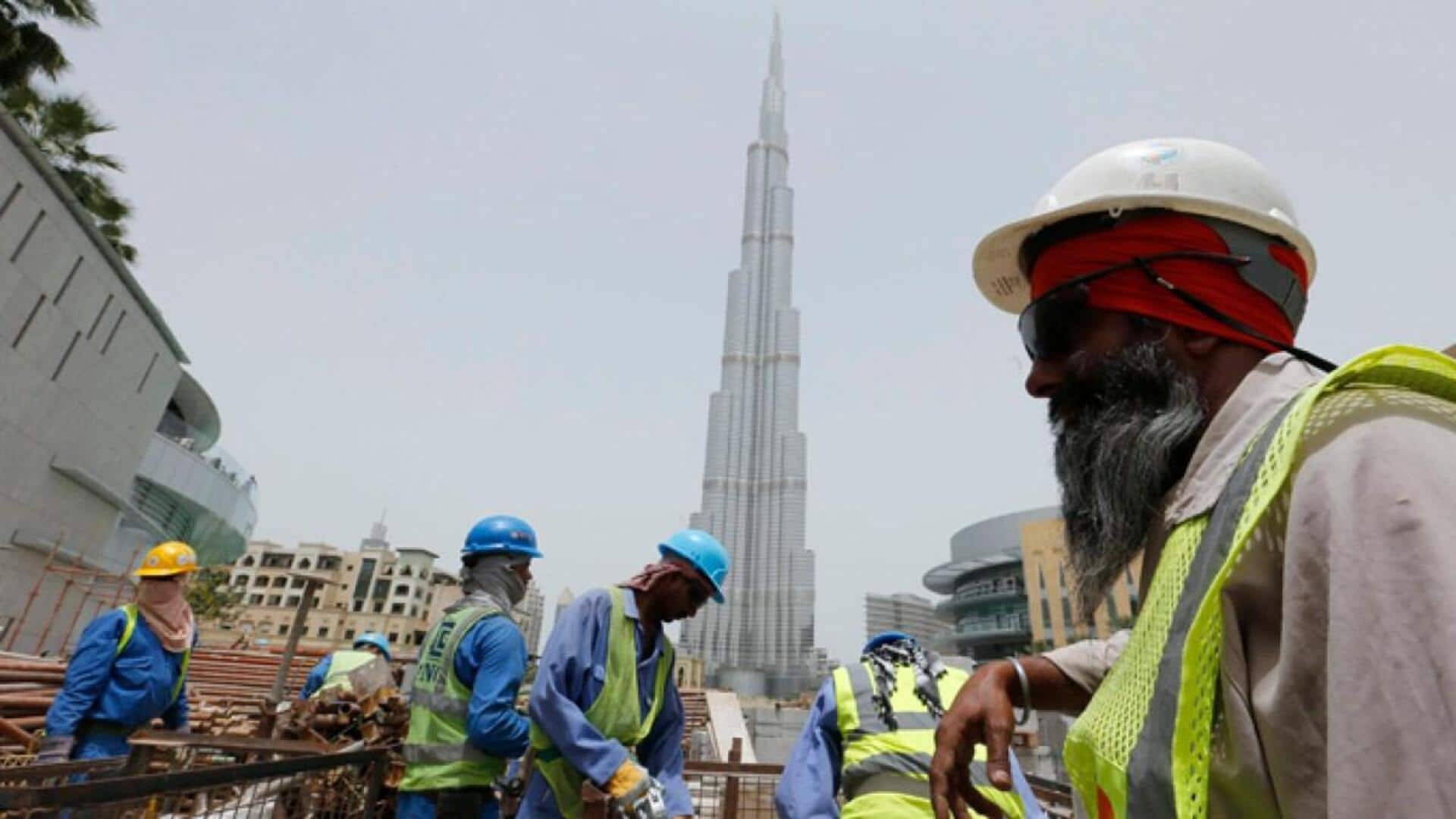
Millions of migrant workers, who are the backbone of key sectors in the Middle East, are now at risk. This comes as Iran retaliates against US-Israeli strikes. Southeast and South Asian countries, which contribute a major chunk of this labor force, are now closely monitoring their citizens and preparing for possible evacuations.
Preparedness measures
Preparing evacuation plans
Countries like the Philippines, Indonesia, and Thailand are keeping a close eye on their citizens' whereabouts in the Gulf. They have also urged their people to shelter in place amid these escalating tensions.
These nations are also preparing evacuation and repatriation plans if the situation deteriorates further. This comes as a precautionary measure to ensure the safety of their nationals working in this volatile region.
Indian response
India assures support to its citizens
Indian Prime Minister Narendra Modi has assured support for the country's nearly nine million workers in the Gulf.
He said he spoke to UAE President Mohamed bin Zayed about "taking care" of the Indian community amid these tensions.
His cabinet has also directed all ministries to "take necessary and feasible measures to assist Indian nationals affected by the development."
Casualties
Conflict claims lives of migrant workers
The ongoing conflict has already claimed lives among the migrant worker community.
A Filipino caregiver, Mary Anne Velasquez de Vera, was killed by shrapnel while helping her ward reach a bomb shelter in Tel Aviv. Another Filipino worker was injured.
The UAE also reported three deaths from Pakistan, Nepal, and Bangladesh among these migrant workers caught up in the violence.
Economic impact
Migrant workers' crucial role in Middle East economy
Migrant workers account for over 40% of the Middle East's labor force, according to the International Labor Organization (ILO). This is the highest proportion in the world.
However, many of these workers are engaged in low-income jobs without sufficient protection.
Past conflicts have seen some of them abandoned by employers without wages or travel documents.
Repatriation plans
Mandatory repatriation on the cards for Philippines
Philippine Migrant Workers Secretary Hans Leo Cacdac said they are ready to order a mandatory repatriation of its 2.4 million workers in the Middle East if the situation worsens.
However, Interior and Local Government Secretary Jonvic Remulla stressed that this decision would have to be considered carefully as such a large-scale relocation could have a "devastating" impact for both the Philippines and host countries.