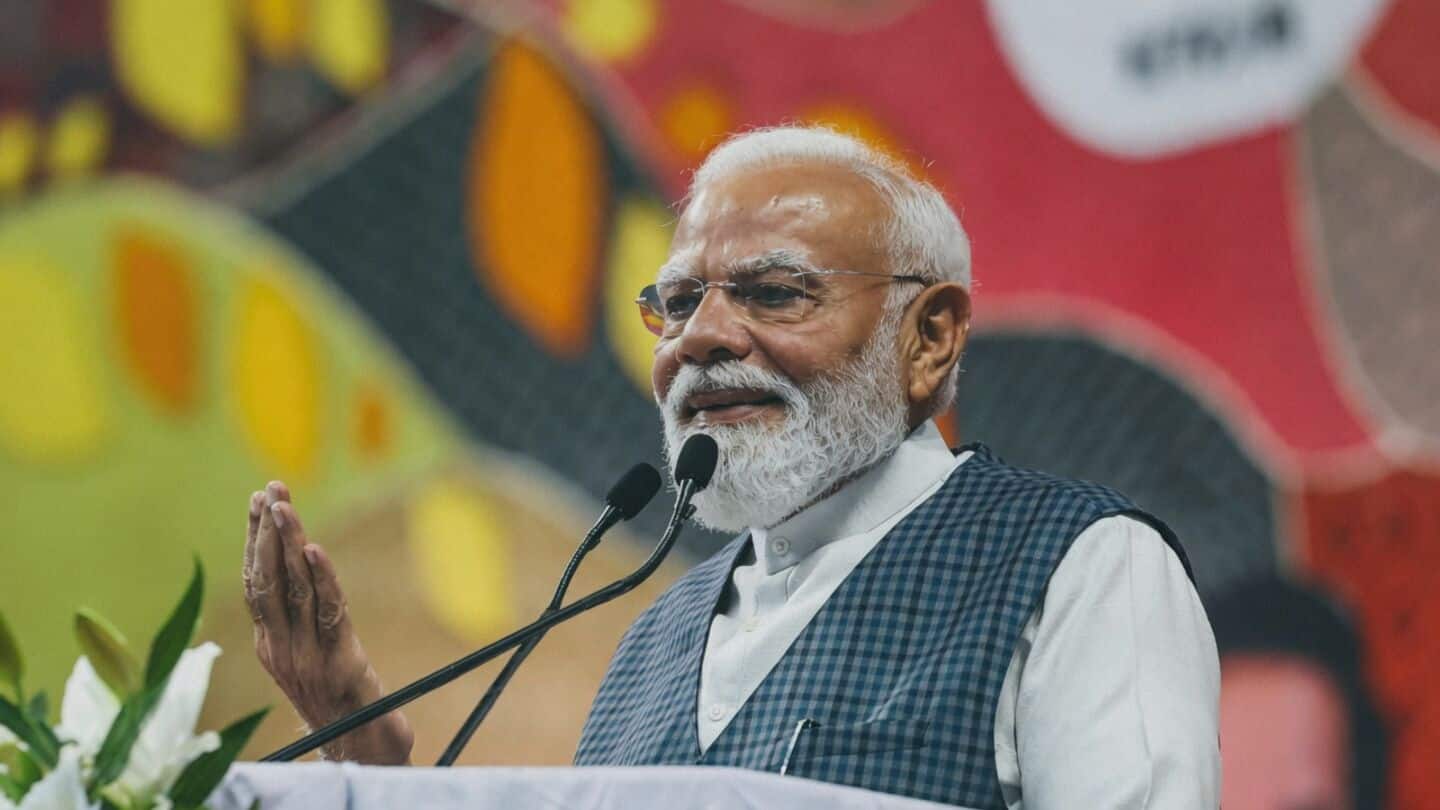
Modi government turns 12: A look at major tax reforms
What's the story
As Prime Minister Narendra Modi completes 12 years in office, several changes have been made to India's taxation laws and systems. The changes include Goods and Services Tax (GST) rate revisions, updates to income tax laws and rules, and new regulations for income tax return (ITR) filing. The Finance Ministry recently announced the new Income Tax Rules, 2026, which aim to simplify the taxation process for businesses and taxpayers alike.
Streamlining process
New Income Tax Rules, 2026
The new Income Tax Rules, 2026, have reduced the number of tax rules from 399 to 190 and tax forms from 511 to 333.
All forms now have a common format with improved readability and features like auto-filled data.
The aim is to make the taxation system more user-friendly for both businesses and taxpayers.
Tax reforms
Changes in tax slabs
The new tax regime, announced by Finance Minister Nirmala Sitharaman in her Union Budget speeches, introduced different tax slabs and exemption rules.
It increased the taxable income ceiling for salaried individuals to up to ₹12 lakh annually.
Last year, Sitharaman also simplified GST rates in India to ease business compliance and reduce cascading tax burdens.
Employee benefits
Other exemptions
Under the tax regime, corporate meal cards costing ₹200 or less per meal are tax-free.
Corporate gift cards, gift certificates or coupons worth up to ₹15,000 annually are also tax-free.
Loans with no interest or below-market interest rates will be taxed based on the difference between SBI's lending rate and the actual rate charged (with some exceptions).
Increased limits
Education and transport allowances
The exemption for children's education allowance has been increased from ₹100/month to ₹3,000/month per child.
The hostel expenditure allowance has also been raised from ₹300/month to ₹9,000/month per child.
The exemption limit for transport system employees' allowance has been enhanced from ₹10,000/month or 70% of the allowance (whichever is lower) to ₹25,000/month or 70% of the allowance (whichever is lower).
Tax adjustments
Increased Securities Transaction Tax
The Centre has increased the Securities Transaction Tax (STT) on equity derivatives, a move likely to affect futures and options traders.
The STT on futures is raised from 0.02% to 0.05%, while that on options transactions goes up from 0.1% to 0.15%.
This tax is levied on every purchase and sale of securities such as equity shares, futures, and options on recognized stock exchanges.